Manchester United's Midfield Dilemma: The Case for Manu Kone
Manchester United know what they’re missing. They just seem determined to look in the wrong place for it.
The midfield rebuild at Old Trafford has moved quickly. Andrey Santos and Youri Tielemans have arrived to plug the gaps left by Casemiro’s departure and Manuel Ugarte’s long-term injury. On paper, the numbers look right again. Premier League experience? Tick. Depth? Tick.
But the profile is still wrong.
United don’t just need another midfielder. They need a specialist who lives in front of the back four. Someone to patrol, to organise, to anticipate. Michael Carrick, now on the touchline, still hasn’t found a Michael Carrick on the pitch.
And that’s where the Manu Kone conversation starts to drift off course.
A midfielder being boxed into the wrong role
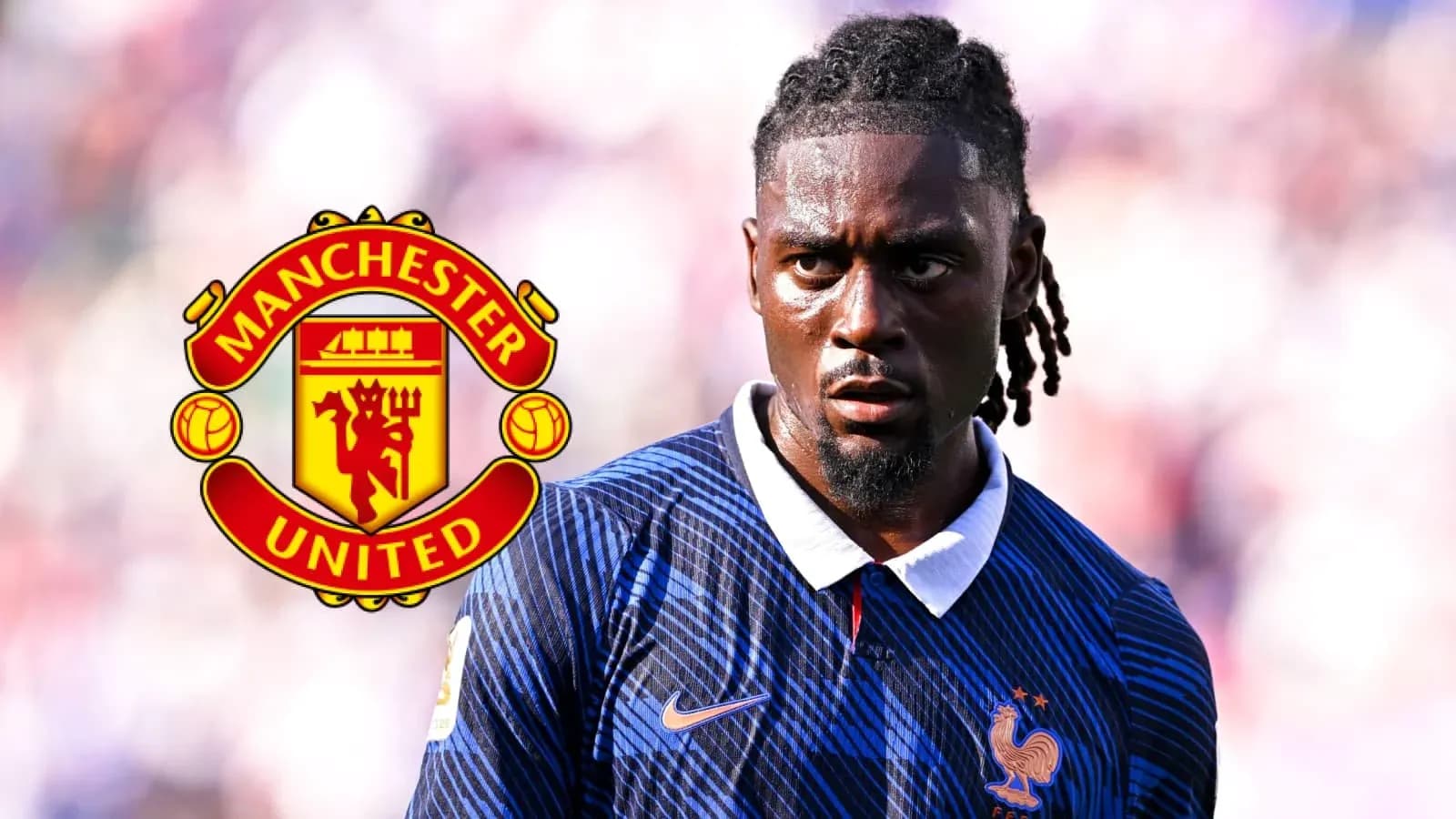
Kone has caught the eye at the World Cup with France. That stage can flatter some players, but this tournament has simply underlined what those who watched him closely at Borussia Monchengladbach and Roma already knew: he’s a serious talent, now entering his prime at 25 after five seasons in Europe’s top five leagues.
Roma see him as a jewel. He arrived on deadline day in the summer of 2024 and immediately injected life into their midfield. Not by snapping into tackles or sweeping up danger, but by driving his team up the pitch.
At his most natural, Kone doesn’t sit. He surges.
In his debut Serie A season, he played like a modern No 8. He carried the ball through pressure, bounced off opponents, and turned defensive phases into attacking ones with those long, aggressive strides. Roma gained territory every time he opened his legs and went.
That changed under Gian Piero Gasperini.
Gasperini’s tweak – and what it really showed
Gasperini’s arrival seemed tailor-made for Kone. High-intensity, man-to-man, vertical football. The script wrote itself: Kone as the perfect weapon in transition.
The reality was more nuanced. Gasperini pushed him into a more restrained role. Kone often dropped into the defensive line when Roma built from the back, offering a passing angle rather than a constant forward thrust. He still had a good season, but his influence became quieter, less explosive.
That shift is crucial for any club scouting him.
Even when asked to rein it in, Kone still ranked in the 78th percentile of Serie A midfielders for the average distance of his progressive carries. And that was in a campaign where he wasn’t allowed to go as often. The numbers simply confirm what the eye test screams: limit his forward licence and you blunt his edge.
So if United are eyeing him as a pure No 6, a fixed shield in front of the defence, they’re buying the right player for the wrong job.
United’s recurring midfield mistake
This wouldn’t be the first time Old Trafford miscast a midfielder.
Fred and Scott McTominay were thrown together as a double pivot that never quite fit. Both were asked to be something they weren’t, and United ended up with a pairing that did a bit of everything and mastered very little. The team’s structure suffered, and they’ve been trying to repair that damage ever since.
Casemiro briefly looked like the answer. His first season brought big moments and leadership, but he arrived at 30. United were essentially paying for a version of him they never got to own: the one from five years earlier.
Then came Ugarte, whose elite tackling numbers at PSG in Ligue 1 seduced the recruitment department. Those metrics never fully translated into United’s system.
Now Tielemans and Santos have joined with the clear understanding they are not the deepest midfielder in the structure. That label is being quietly reserved for Kone.
Yes, he can “do a job” there. He’s positionally disciplined enough to hold and physically strong enough to compete. But using him primarily as a sitter means sacrificing the very thing that makes him different: his ability to break lines with the ball at his feet.
A box-to-box force with rough edges
Strip away the labels and Kone is a central midfielder who can defend, not a defensive midfielder who occasionally joins in.
There are gaps in his game. If he wants to be considered a complete box-to-box player at the highest level, his shooting has to improve. Four goals in 82 games for Roma is a stark return for someone who often arrives in advanced areas. Too often, he reaches the final third and the conviction drains away.
Gasperini said as much in December, after Kone finally opened his account for the 2025-26 campaign. If he scored more, the coach suggested, he’d already be operating on a different tier. Since that strike, he has played 22 times for club and country and added just one more goal. The numbers reinforce the perception: people see the frame, the energy, the physicality, and assume he’s a holding midfielder.
He isn’t. Not at his best.
There’s also his work off the ball when his side are in possession. Kone can be guilty of drifting into the wrong pocket, failing to offer a clean passing lane, or even blocking one for a teammate. As a lone No 6, that simply isn’t acceptable. That role demands constant scanning, constant availability, constant clarity.
The price of potential – and the risk of misunderstanding it
In today’s market, the question of value gets messy very quickly.
Kone doesn’t bring big goal or assist numbers. Yet that hasn’t stopped midfielders commanding huge fees. Elliot Anderson delivered fewer than 10 goal contributions last season and still joined Manchester City for £116m. Mateus Fernandes cost Spurs £85m, another midfielder United liked but ultimately walked away from.
Roma will not let Kone go cheaply. They rejected around £38m from Inter last year and will now look for something north of £50m, a figure inflated by his World Cup exposure.
Any club writing that cheque needs absolute clarity on what they’re buying. He’s not a ready-made regista. He’s not a pure destroyer. He’s a dynamic central midfielder who thrives when his role is shared, not when he’s left alone to babysit the back four.
How he would actually fit at Old Trafford
United’s 4-2-3-1 does offer a possible compromise.
Kone could operate in a double pivot with Tielemans or Santos, sharing responsibility in and out of possession. One goes, one stays. Then they swap. Simple in theory, but it would need to be genuinely balanced, not a scenario where one player is permanently chained to the anchor role.
We’ve already seen a version of that with France at the World Cup. Kone has partnered Adrien Rabiot and Aurelien Tchouameni, both of whom are comfortable sitting when he bursts forward. At Roma, Bryan Cristante often took the deeper spaces, even if he, too, pushed on at times.
That’s the template for United. When Tielemans roams, Kone holds. When Kone drives, Tielemans covers. If Carrick wants a single, immovable screen, Kone isn’t the answer. If he wants a rotating, intelligent pair, then the Frenchman becomes a far more logical target.
Other suitors, other solutions
United aren’t alone in tracking him. Atletico Madrid have been mentioned. Arsenal, too, were linked before their focus drifted towards Bruno Guimaraes. Liverpool’s interest stretches back to his days in Germany and could easily re-emerge.
Look at Arsenal: with Martin Zubimendi as a fixed anchor, Kone could play higher, similar to the way Declan Rice initially flourished with a genuine sitter behind him. The structure would naturally protect Kone’s weaknesses and amplify his strengths.
At Liverpool, if Andoni Iraola leans into a 4-2-3-1, Kone alongside Ryan Gravenberch in a fluid double pivot starts to make sense. Both can carry, both can press, both can rotate. Neither should be chained to the role of pure No 6.
That’s the key theme with every potential destination. The system has to bend slightly towards him, not the other way round.
Kone is a high-level midfielder with time to refine his flaws and the physical and technical base to become even better. If this is the summer he crosses into the Premier League, someone will be getting a serious player.
Whether they get a solution or another misfit will depend entirely on one decision: do they ask him to sit, or do they let him run?