Manchester United Appoints Eva Olid as New Head Coach
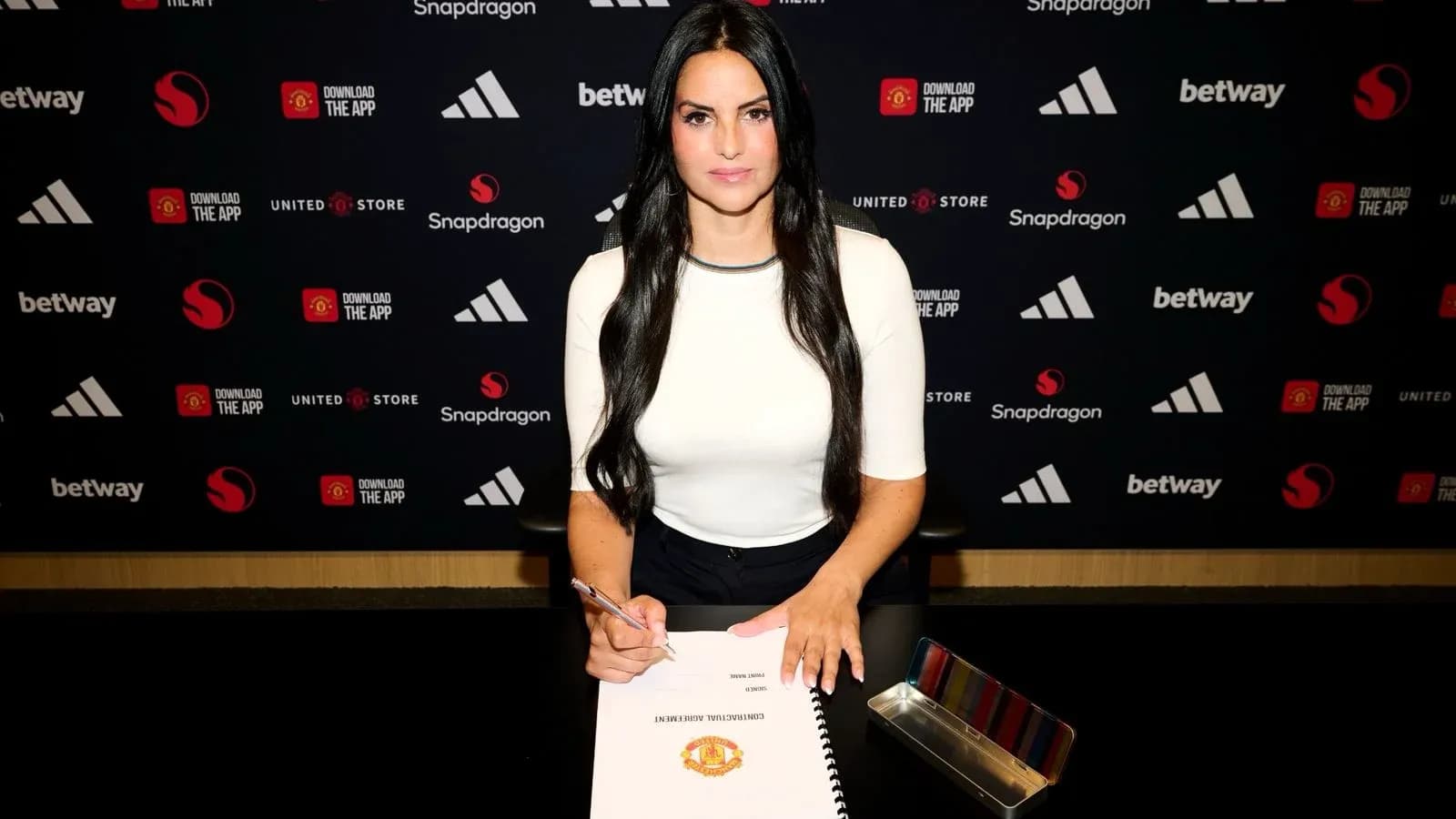
Manchester United Women have handed the keys to their future to Eva Olid – and, pointedly, to their academy.
The Spaniard has been confirmed as United’s new head coach, stepping into the role vacated by Marc Skinner on Monday, barely a month before the club’s WSL opener against London City Lionesses on September 4, live on Sky Sports. The timing is tight. The message is not. United are changing who they are, and Olid is being asked to lead that shift.
From Hearts history-maker to Old Trafford project
Olid arrives from Hearts with a reputation forged not on noise, but on results. She spent five years in Edinburgh after joining in 2021 and left having taken the club to places they had never been before.
Last season, Hearts claimed a historic first Scottish title, edging Rangers by two points to win the Scottish Women’s Premier League. They also reached their first Scottish Cup final in 2024, losing to Rangers on the day but underlining their rapid rise under Olid’s watch.
By April, it had already been announced that she would leave Hearts by mutual consent at the end of the season. She departed on a high, a champion, with a track record of building and improving squads over time rather than relying on headline transfers.
Now she steps into a very different environment, but one with similar demands: grow a team, not just a season.
“The opportunity to become head coach of Manchester United Women is a dream come true,” Olid said. “The club has outstanding infrastructure and everything we need to achieve our ambitions. We have an excellent training facility, an academy that is already producing players capable of performing in a competitive first team and an exceptional group of support staff.”
United see exactly that – her capacity to develop players – as the core of the appointment. In their eyes, she is the ideal candidate to squeeze more from what they already have and to accelerate those on the way up.
Ratcliffe’s reset: from title chase to talent factory
When Sir Jim Ratcliffe and INEOS arrived, the message around the women’s team was bold and uncomplicated: win the WSL by 2028. That target framed the Skinner era, underpinned big wages and big signings, and dragged United into the orbit of the league’s established heavyweights.
That era is over.
Inside the club, the outlook has shifted. The priority now is not to outspend the WSL’s “big three”, but to outdevelop them. The focus moves to the academy, to internal pathways, to turning promising youngsters into players who can deliver silverware over the long term.
United’s hierarchy believe that pouring more money into the transfer market is becoming unsustainable, both financially and competitively. They feel the return on investment in star names and high salaries has not matched the outlay, and there is growing concern about the escalating cost of trying to stay in a WSL title race that is increasingly expensive to enter, let alone win.
So they are going back to something that feels familiar on one side of the club and untested on the other.
The men’s academy has a storied history of producing trophy‑winning players. From the Busby Babes to the Class of ’92, Old Trafford has long celebrated homegrown success. The women’s team, by contrast, do not yet have that lineage. This is a gamble on time, patience and process in a part of the club where such luxuries are rarely granted.
Olid, with her track record at Hearts, fits that philosophy. She built a title winner there over several seasons, not overnight. United want her to replicate that slow burn in a league where the heat is far more intense.
Skinner’s legacy and the risk of a reset
Olid inherits a team that has already punched through the glass ceiling once. Under Skinner, United reached four major finals – three FA Cups and one League Cup – and finally lifted their first major trophy in the 2023/24 season. They broke into Europe, reached the quarter-finals of the Champions League last term, and, crucially, became the only side to consistently disrupt the WSL’s dominant trio.
That progress came at a cost. Competing for the league, for cups, for Champions League places required investment and experience. United bought ready-made quality and paid for it. The club now believes that model has a ceiling, and that chasing the “big three” on their terms risks becoming an arms race they cannot win.
The new approach is bolder in its own way. If youth and development are the route, the returns will not be instant. There will be seasons of growth rather than seasons of guarantees. The club knows it. Olid knows it. The question is whether everyone else around them can live with it.
Time is the rarest commodity in football. United’s new strategy demands it.
A new brief, a familiar pressure
Olid’s immediate task is brutally simple: get a squad in transition ready for the WSL kick-off against London City Lionesses. Behind that, the job is more complex. She must knit together established internationals with academy graduates, maintain standards set by a trophy-winning side, and do it all while the club pulls back from the transfer market.
United believe they have the infrastructure to support that. A top‑class training base. An academy already producing players capable of stepping into a competitive first team. An experienced backroom staff. Olid has highlighted all of that already. Now she has to turn those assets into a coherent, winning team.
This is not the United Women project that was sold a few years ago. It is something more long-term, more patient, and, in some ways, more uncertain. The club has chosen a coach who has already proved she can build and win with limited resources and a clear identity.
The WSL, and the “big three” she is tasked with challenging, will not wait. The league moves fast. Budgets grow. Pressure builds.
Olid walks into that reality with a title in her pocket, a development brief in her hand, and a club betting that the next great Manchester United story will be written not in the transfer market, but on the academy pitches.