Manchester City: Navigating Change Under Enzo Maresca
Manchester City stand at a crossroads.
A decade of Pep Guardiola has given way to something new, something uncertain, under Enzo Maresca. The banners and memories of the Treble still hang heavy, but the team that delivered it is already being dismantled.
Four of the starters from that 2022-23 high point – Manuel Akanji, Nathan Ake, Bernardo Silva and John Stones – have gone this summer. In their place, City have pushed £116m towards Elliot Anderson and handed a pathway to 17-year-old Jeremy Monga. It is not a gentle evolution. It is surgery.
And the most delicate operation of all is still to come.
Rodri at the centre of the storm
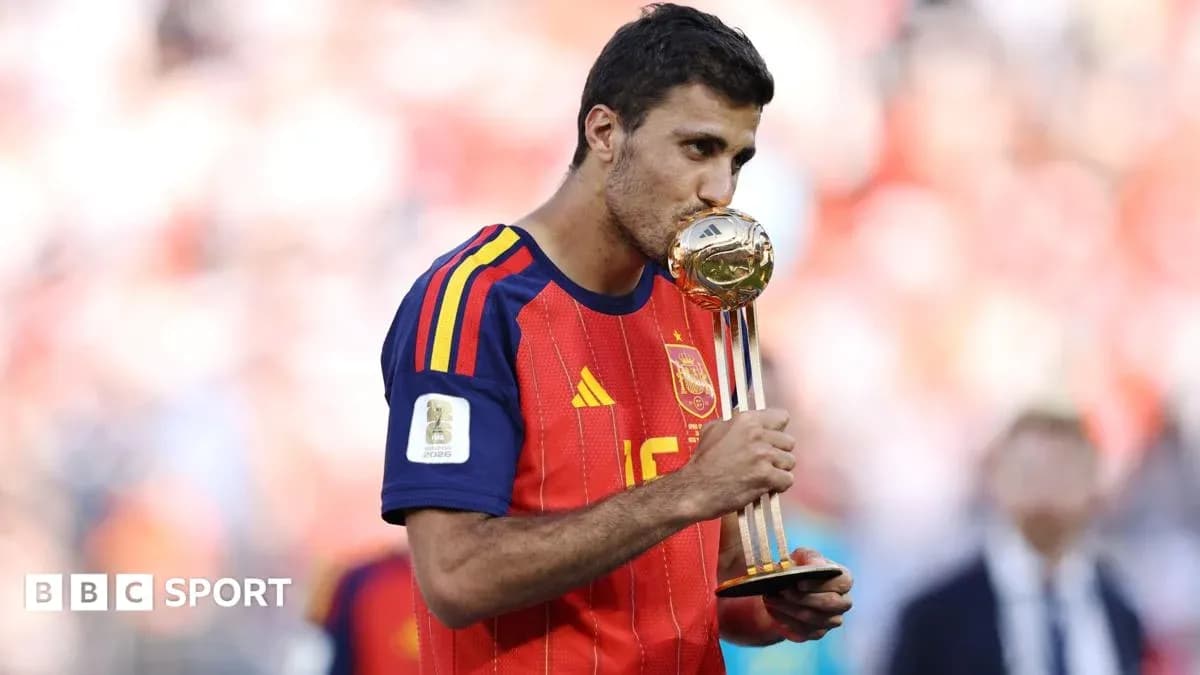
Fresh from captaining Spain to World Cup glory and collecting the Golden Ball as the tournament’s outstanding player, Rodri now heads not for a parade, but for a hospital. Back surgery on Monday. One year left on his contract. A future that has become the subject of daily speculation.
Real Madrid are reported to be “operating on the basis” that he will join them. City insist nothing is agreed. The clock ticks anyway.
Maresca, at least, did not equivocate in his first news conference.
“I think every manager wants to have Rodri because he is a top player,” he said. Then came the reality check: surgery, rest, recovery. Only after that, the football.
The intention from City’s new head coach is obvious – keep one of the best players in the world, build around him, not away from him. But intention does not stop a power like Madrid circling, nor does it solve the question that hangs over the Etihad: what do City do if their midfield metronome decides his next chapter lies in white?
Cash in once he proves his fitness? Dig in and back Maresca’s stance, even at the risk of losing him for less down the line? Those are boardroom questions. On the pitch, the challenge is just as stark: how does Maresca’s midfield function with Rodri, and how does it survive without him?
Maresca’s board, Rodri’s role
To understand the stakes, you have to understand the game Maresca wants to play.
A devoted disciple of positional play, he talks about football in the language of chess. “The most important is positional play and strategy,” he has said. “Develop a plan, study counter-moves, choose the arrangement of the pieces.” That is not just a metaphor. It is his blueprint.
His teams build in an on-the-ball structure that resembles a 3-2-2-3. The ball moves. The pieces rotate. The shape, though, remains. Within that, a player like Rodri is gold dust.
During the World Cup, he dropped into the back line when Aymeric Laporte stepped forward with possession, then slid back into his holding role without fuss. Mostly he anchored midfield, knitting Spain together. When space opened up, he strode into it, dictating the game higher up the pitch.
At City under Guardiola, the same intelligence allowed John Stones to step from centre-back into midfield alongside him, creating that familiar 3-2-2-3 from a 4-4-2 defensive base. Maresca watched that up close as Guardiola’s assistant during the Treble season. He knows exactly how valuable a midfielder who can shift between lines really is.
At Chelsea, Maresca’s tweaks were different but the principle stayed the same. He used Moises Caicedo at right-back, defending in a back four before asking him to slide into one of the holding midfield roles when they attacked. Again, the same pattern emerged: 4-4-2 without the ball, 3-2-2-3 with it. New routes, same destination.
Put Rodri into that framework and the picture is clear. He becomes the pivot in every sense – dropping into defence, holding the centre, stepping forward when the structure demands it. He reads risk, tempo and space at a level Anderson and any new arrivals will need time to reach.
It took him years to adjust to City’s demands after arriving under Fernandinho’s guidance. That learning curve will be no kinder to those who follow.
Life after Rodri – or life built around him?
City cannot simply hope. Contingencies are already in motion.
Anderson is one of them, brought in at significant cost and expected to grow into a central role. The club are also tracking 18-year-old Lille midfielder Ayyoub Bouaddi, who caught the eye for Morocco at the World Cup. The plan is not just to replace individuals, but to stock Maresca’s board with more pieces than Guardiola ever asked for.
Under the previous regime, City often preferred a lean squad, trusting a core group to carry the load. Maresca leans another way. He wants options. He wants players who can jump from line to line, like Stones did into midfield, like Caicedo did into full-back, like Marc Cucurella did when pushed into attacking midfield. He has shown a sharp eye for roles players have not yet explored.
If Rodri stays, that flexibility could turn City into something even more fluid, a side that morphs through games with a deeper pool of specialists and hybrids. If he goes, the same flexibility becomes survival strategy, a way to mask the loss of a generational holding midfielder by redistributing responsibility.
Either way, the system will demand time. Anderson will have to learn when to drop, when to hold, when to push. Monga will have to absorb the geometry of positional play before he can impose his talent on it. Bouaddi, if he arrives, will face the same education.
For now, everything comes back to the same figure, the same decision, the same surgery on Monday.
Rodri has already proved Guardiola right once, returning from a serious knee injury to scale Ballon d’Or heights and then carry Spain to the top of the world. Maresca would love to build his first great City side around that same player.
The question that will define City’s next era is brutally simple: when the pieces are finally arranged on Maresca’s board, will his most important one still be there?