Luka Modric's Spurs Exit: A Bittersweet Farewell
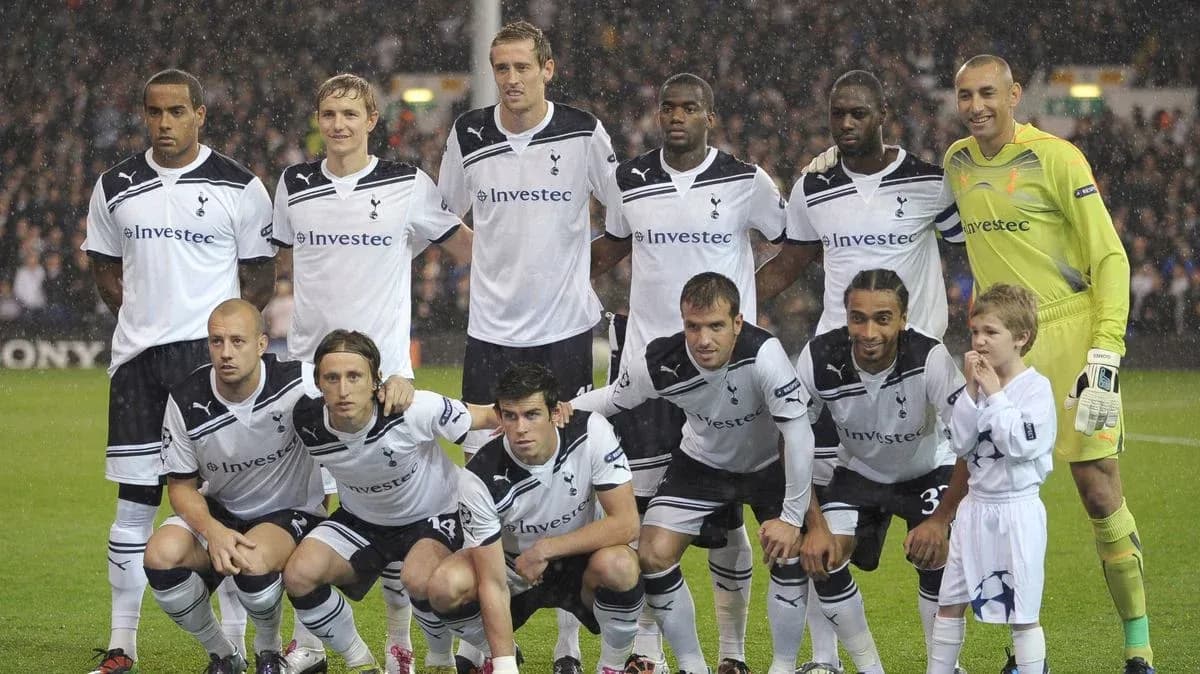
For a generation of Tottenham supporters, Luka Modric was the player who made everything make sense. The slight playmaker who took the ball in tight spaces, dictated games at White Hart Lane and made Spurs look like they truly belonged among Europe’s elite.
And then he missed a plane.
In the summer of 2012, Modric was 26, at the crest of his powers and right in the crosshairs of Real Madrid. Jose Mourinho had marked him out as a priority after Euro 2012, where Modric once again ran Croatia’s midfield with an authority that belied his frame. At Spurs, he had grown from clever signing to undisputed leader, the quiet heartbeat of a side that flirted with greatness.
Tottenham knew what they had. So did everyone else.
This was not Modric’s first attempt to leave. A year earlier, he had tried to force through a move to Chelsea, only to be blocked. That saga left scars but no separation. In 2012, he pushed harder. This time, he simply refused to board the team flight for the club’s pre-season tour of the United States, a deliberate act designed to force Tottenham’s hand.
It was a line crossed. Spurs fined him two weeks’ wages and dug in. They wanted to keep him, to build around him, to convince him that his future still lay in north London. For weeks, the club resisted the inevitable.
The inevitable won.
Late in August 2012, Modric finally got his move, completing a £33 million transfer to the Bernabeu. For Tottenham, it felt like losing the conductor of an orchestra just as the music had begun to soar. For Modric, it was the door to football immortality.
Andre Villas-Boas, then in charge at Spurs, admitted his disappointment at how it had unfolded. Modric apologised to him, but contrition couldn’t halt the momentum of a move that both player and Real Madrid had decided would happen. The relationship between player and club never quite got its proper goodbye.
Years later, Modric would admit that the way he forced the exit still troubled him. Speaking in 2018, he described that period as one of his biggest regrets, alongside a more familiar Spurs lament.
"My one regret is that I didn’t win a trophy with Tottenham, despite us being a strong team who played good, attractive football," he told FourFourTwo. "I’m sorry for the way I left. I wish we had parted in a nicer way. I hope fans understand that I followed my dreams."
Those dreams turned into one of the most decorated careers of the modern era. In Madrid, Modric became far more than a clever Premier League signing. He became a legend. Six Champions League titles. Four La Liga crowns. Five FIFA Club World Cups. Two Copas del Rey. A career that will be studied, not just remembered.
From the vantage point of the Bernabeu trophy room, that missed flight feels like a small, if unsightly, detail. From the Tottenham side of the story, it still stings.
Some Spurs fans never forgave him. For them, the refusal to travel was a betrayal, the moment their midfield maestro became just another star who saw the club as a stepping stone. Others take a different view. They look at what he went on to achieve and accept that Tottenham, for all their promise and style at the time, simply could not match the ambitions of a player destined for the very top.
Regret at Tottenham runs in a different direction too. Modric had four years remaining on a six-year contract when he left. Just a year later, Gareth Bale, his former team-mate, would move to Real Madrid for £89 million, a fee that underlined how the market was shifting and how underpriced Modric’s exit now looks in hindsight.
That £33 million deal brought in money and allowed Spurs to reshape, but it never truly reflected his value. Not as a player, and certainly not as the symbol of what Tottenham might have become had they managed to hold onto him and build properly around that rare, controlling talent.
Today, the picture at Spurs looks very different. The club has spent close to £250 million on new signings this summer, a statement of intent rather than a plea for patience. They are the ones applying pressure in the market, not fending it off. Yet Modric’s story still hangs in the background, a reminder of how quickly control can slip when an elite player decides his future lies elsewhere.
Now 40 and at AC Milan, Modric continues to stretch the limits of longevity. He has just signed a one-year extension at San Siro and will turn 41 next month, still operating at a level that defies both age and logic. The legs may not glide quite as they once did, but the mind remains several steps ahead.
His legacy at Tottenham, though, remains complicated. On one hand, a Premier League great, one of the club’s finest modern signings, the man who helped drag Spurs into the Champions League conversation. On the other, the player who skipped a plane to force his way out.
Both things can be true. The question for Tottenham now is whether, having spent so heavily and raised expectations once again, they have finally built a project strong enough that the next Luka Modric doesn’t feel the need to follow the same path.