Lucas Herrington's World Cup Heartbreak: A Tale of Regret
Lucas Herrington never should have been the face of this. Not this night, not this way.
Eighteen years old, the youngest starter the Socceroos have ever thrown into a World Cup match, and now forever stitched to one of Australian football’s cruellest endings. His penalty, a calm side-foot that rose just too high, crashed against the crossbar and back into the noise. The sound will follow him for years.
Awer Mabil went straight to him. No celebration, no protest, just a sprint to the teenager who knew instantly what he had done and what it meant. When Egypt finished the job from the spot a few kicks later, Herrington turned his back on the goal frame that had betrayed him, one arm buried in his mop of curls, shoulders folding in on themselves.
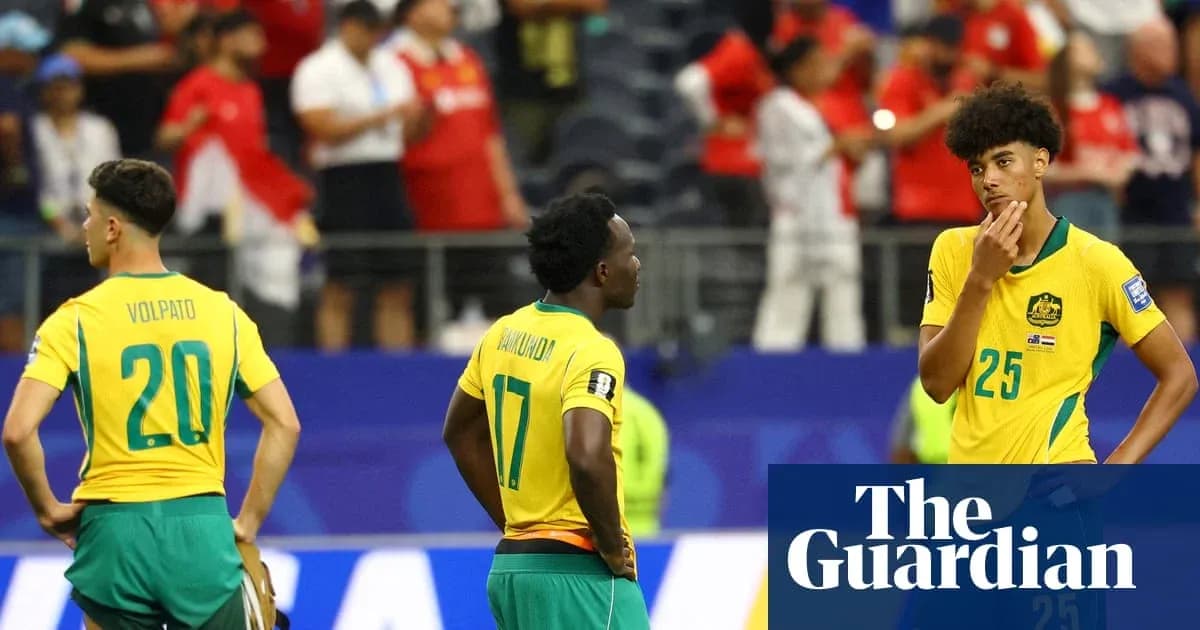
He bent over, trying to hide from 80,000 eyes and millions more beyond the stadium’s roof. Jackson Irvine found him first, then Nestory Irakunda – a foot shorter, a few years younger, but already part of the same burdened future. These two are supposed to carry Australian football forward. On this night, they were pinned under its weight.
Australia will now wait at least another four years for that first knockout win at a World Cup. The sense will linger that they might not see a better opening than this for a long time.
Herrington, of course, was not alone in his regret. Harry Souttar had walked the long walk first in the shootout, his huge frame visibly drained after 120 brutal minutes. His run-up looked heavy, his penalty even more so, scooped over the bar and gifting Egypt the early edge. From there, the Pharaohs never blinked.
Tony Popovic played his final card by summoning captain Maty Ryan for the dying moments, hoping for one more rescue act from a goalkeeper who has lived these nights before. It changed nothing. Egypt buried all four of their penalties and ended the contest before the fifth round.
By then, the game had already tested the limits of patience. Three hours at this World Cup without a goal and trailing 1-0, the Socceroos trudged into half-time with their belief scraping the floor. It sank even lower when Jordy Bos tried to put weight through his left knee after a challenge and realised he could barely walk.
First Half
The first half had been a tactical arm-wrestle more than a spectacle, both sides obsessed with avoiding each other’s press rather than tearing into space. Australia created fragments of hope – a Cristian Volpato effort that skimmed the crossbar, a surging Bos run into the box – but they never truly unsettled Egypt.
Then came the punch to the ribs. Down their right flank, the Socceroos yielded ground too easily as their press broke apart. On the edge of the area, Irvine was caught by Ziko and gave away a foul he never saw coming.
Emam Ashour’s free-kick struck Irvine in the wall, but the danger didn’t clear. The ball came back in, Australia switched off for a heartbeat, and Egypt’s No 8 drifted unmarked to the back post to nod home. One lapse, one punishment. A reminder that Egypt carry a cutting edge this Australian side still lacks.
Second Half
With Bos unable to continue after the break, Kai Trewin entered for his World Cup debut at right-back. Within 10 seconds, his direct opponent nearly scored. The second half opened in chaos, and for a moment it looked as if Australian hopes would be snuffed out before they could even reset.
They held firm. Then, at last, they hit back.
For the first time this tournament, the Socceroos scored from behind. Officially, the equaliser will live as a Mohamed Hany own goal, but it was Aiden O’Neill who painted the picture. From the left side of the box, he dropped a looping delivery into the corridor of doubt, begging for a mistake. Hany obliged, diverting the ball into his own net and dragging Australia back into the tie.
The setting deserved more. This roofed arena in Arlington, ringed by 24,000 parking spaces, is a modern cathedral of American sport, now repurposed as a temple for football. It did not get a classic. Stoppages broke the rhythm, tempers frayed, and after 100 minutes of football the two sides had managed just four shots on target between them.
For Australians and Egyptians, though, this was torture of a different kind – the slow, grinding tension of a knockout tie stuck at 1-1 with history hanging just out of reach. Crosses rained in. Defenders flung themselves at everything. Patrick Beach punched clear under pressure, while Egypt’s back line, short in stature but not in resolve, repelled wave after wave.
Then Mo Salah finally stepped out of the shadows.
In the closing minutes of normal time, he whipped in a vicious cross for Ramy Rabia, who seemed certain to score until Beach clawed the ball over the bar. Moments later, Salah went himself, then carved out another chance that Souttar blocked with a last-ditch intervention, the ball otherwise destined for the far corner.
Any doubts about Salah’s fitness evaporated in that spell – and in the grin he flashed at Souttar during the coin toss for extra time, two warriors acknowledging the fight still to come. Even he showed his limits, though, skying a bouncing ricochet early in extra time when the net seemed to be waiting.
As the minutes bled away, Egypt tightened the screw. They laid siege to the Australian goal, pushing bodies forward, sensing that one moment would decide a first-ever knockout win for either nation. Neither found it from open play. Nerves took over where tactics had failed.
The penalty shootout offered only one path to history. Egypt walked it. Australia watched it slip away. And an 18-year-old in green and gold walked off knowing that, fair or not, his name will be the one people remember.