
Liverpool's World Cup Performers: Insights and Expectations
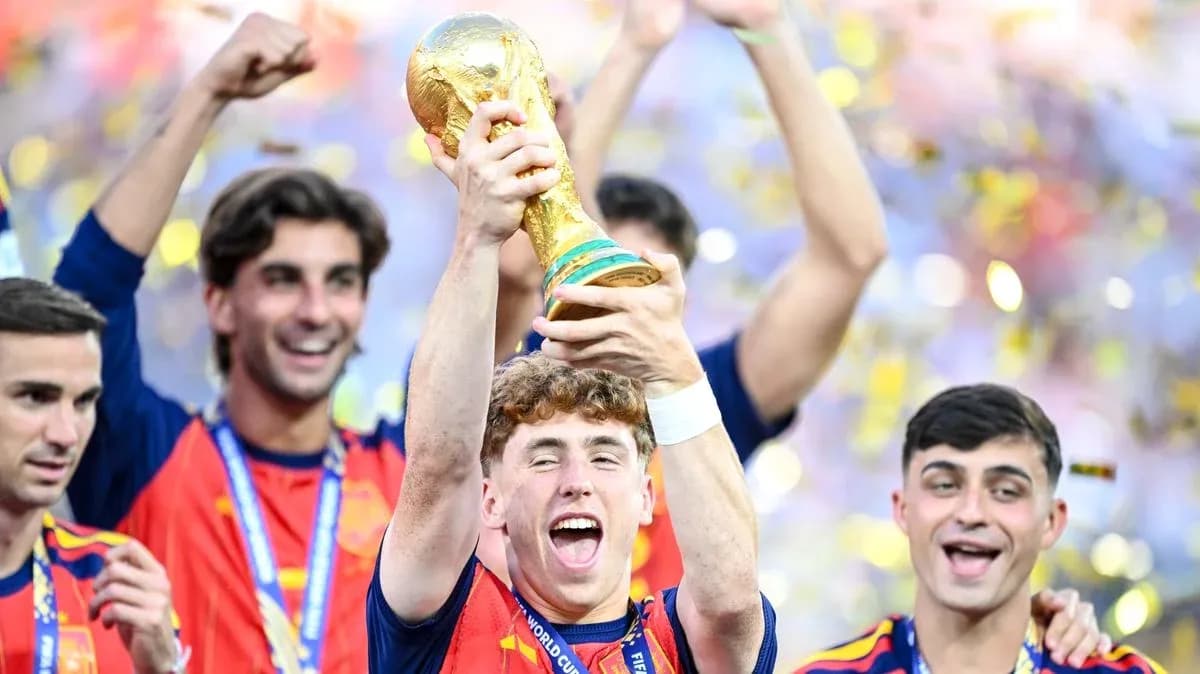
The World Cup finally exhaled after 104 games, a blur of drama, dissent and VAR-scarred arguments. Spain climbed out of the chaos with the trophy, Argentina sank into it in a bad-tempered final, and somewhere inside that sprawling story sat Liverpool’s eight representatives – one of them ending up with a medal without playing a single minute.
For Andoni Iraola, watching from afar, the tournament doubled as a scouting report on his inherited squad and his first signing. Some players came back vindicated. Others returned with questions still hanging over them.
Here’s how Liverpool’s World Cup cast really fared.
Victor Munoz – N/A
A World Cup winner without kicking a ball. That will do for a start.
Spain were still trying to work out how they’d failed to score against Cape Verde in their opener when news broke that Liverpool had triggered Victor Munoz’s £34.5m release clause at Osasuna. The timing lit up social media. Reds supporters settled in, ready to watch their new winger tear through the knockout stages.
Then nothing.
An injury ruled him out of the early games. By the time he was fit, Spain were rolling, and he never saw the pitch as they marched all the way to the title. Not a single minute, but a medal all the same, and a small slice of Liverpool history: only the sixth serving Red to win the World Cup, following Roger Hunt, Ian Callaghan, Gerry Byrne, Fernando Torres and Pepe Reina.
No evidence yet of how he fits Iraola’s system. No hint of how he copes at the very top level. Just a new signing returning to Merseyside as a world champion, and an intriguing mystery waiting to be solved on the US tour.
Alexis Mac Allister – 7
This wasn’t a repeat of his 2022 heroics, and the final will sting, but Alexis Mac Allister still walked away as one of Argentina’s more reliable performers.
He played almost every second of their campaign, rested only for the dead rubber against Jordan once top spot in the group was secured. From a more advanced midfield role, he knitted moves together, created a goal against Cape Verde and struck the opener in the quarter-final win over Switzerland.
The final? Like many of his team-mates not named Lionel Messi, he fell short. Argentina’s negativity and reliance on the dark arts finally caught up with them as Spain took control of a poor showpiece.
Even so, Mac Allister leaves the tournament with credit. Eight games, one booking – for a player who usually lives on the edge of the referee’s patience, that discipline stands out. Liverpool will expect him to carry that blend of composure and creativity into Iraola’s first season.
Alisson Becker – 7
Brazil looked a shadow of their great sides. Alisson Becker did not.
Back from injury, he restored calm to a disjointed team. His handling was clean, his positioning sharp, his presence obvious. When Brazil finally went out to Norway, Erling Haaland’s two goals said more about the defending in front of him than the man in goal.
There wasn’t much he could do about either strike. Across the tournament he reminded everyone why he still sits in the conversation for the world’s best goalkeeper. The only real question now is his fitness. If he stays on the pitch for Liverpool, the foundations of Iraola’s new era look a lot more secure.
Alexander Isak – 6
Three full 90-minute outings in four games for Sweden. None all season for Liverpool. That contrast will not go unnoticed on Merseyside.
Alexander Isak started the World Cup on fire. A goal and two assists against a poor Tunisia side showcased the full range of his attacking threat. He drifted into pockets, linked play, finished clinically. It looked like the launchpad for a statement tournament.
Then the returns started to shrink.
He added another assist in the heavy win over Holland, but his influence faded as the games grew tougher. The sharpness of that first outing gave way to frustration and longer, quieter spells on the ball.
Sweden saw more of the player Liverpool thought they had signed. Iraola’s task now is obvious: find a way to unlock that version of Isak every week, not just when he pulls on his national shirt.
Cody Gakpo – 8
Cody Gakpo needed this. He looked like a player unchained.
After a season in which sections of the Liverpool support judged him harshly, he slipped into Holland’s left flank and suddenly came alive. The shackles came off, the confidence returned, and defenders suffered.
His standout performance came against Sweden: two goals, one assist, constant menace. He drove at full-backs, cut inside with purpose, and played like a man who trusted his own instincts again.
Then came a very different moment. In the round of 32 defeat to Morocco, Gakpo scored shortly after learning of the loss of his unborn son. It was a goal wrapped in grief, an emotional flash in a game that ended in disappointment.
On the pitch, though, he looked revitalised. For Iraola, that version of Gakpo – direct, decisive, emotionally locked in – is exactly what Liverpool have been waiting to see at club level.
Virgil van Dijk – 7
Virgil van Dijk captained a Holland side built to thrill going forward and exposed at the back. He did his job more often than not, but the knives still came out at home.
He scored in the entertaining draw with Japan, rose above defenders like it was 2019 again, and added an assist against Tunisia. In both boxes, he made his presence felt.
Yet certain voices in the Netherlands remained unconvinced, as they have for years. Every lapse was magnified, every concession pinned on the captain. The reality was simpler: Ronald Koeman’s side were designed to attack, and the defence, as a unit, wasn’t good enough to cope. They conceded in all four games.
Van Dijk returns to Liverpool with another reminder of life under the microscope. The armband at Anfield will feel familiar. So will the scrutiny.
Ryan Gravenberch – 7
Ryan Gravenberch’s World Cup was a tale of two roles.
Early on, he flourished. Given licence to play higher up the pitch for Holland than he usually does at Liverpool, he opened the tournament with two clever assists against Japan, timing his passes and runs with a swagger that hinted at untapped potential.
Then the shape changed.
Shifted back into a more defensive role for the defeat to Morocco, he found himself firefighting rather than dictating. By the time Holland conceded the late equaliser that dragged the game to penalties, he was already off the pitch, watching the collapse unfold.
The tournament still counts as a step forward. He showed what he can do closer to goal and proved he can handle the stage. Now comes the challenge: can Iraola give him that freedom in a Liverpool midfield that already has Mac Allister and others vying for similar spaces?
Florian Wirtz – 6
The numbers tell one story. The eye test hints at another.
Florian Wirtz, operating mainly off the left, finished with assists in three of Germany’s four matches. On paper, that’s an impressive return in a side that never really caught fire.
Yet there was a nagging sense that he left something behind. His quality is obvious – his touch, his vision, his ability to slide passes through tight gaps – but too often he drifted on the edges of games instead of seizing them.
By the time Germany were controversially knocked out by Paraguay on penalties, Wirtz was already on the bench. It felt symbolic: a gifted player watching someone else decide his team’s fate.
He goes back to Liverpool with decent stats but an incomplete feeling. The talent is there. The question now is whether the next few months at club level turn him from promising contributor into dominant force.





