
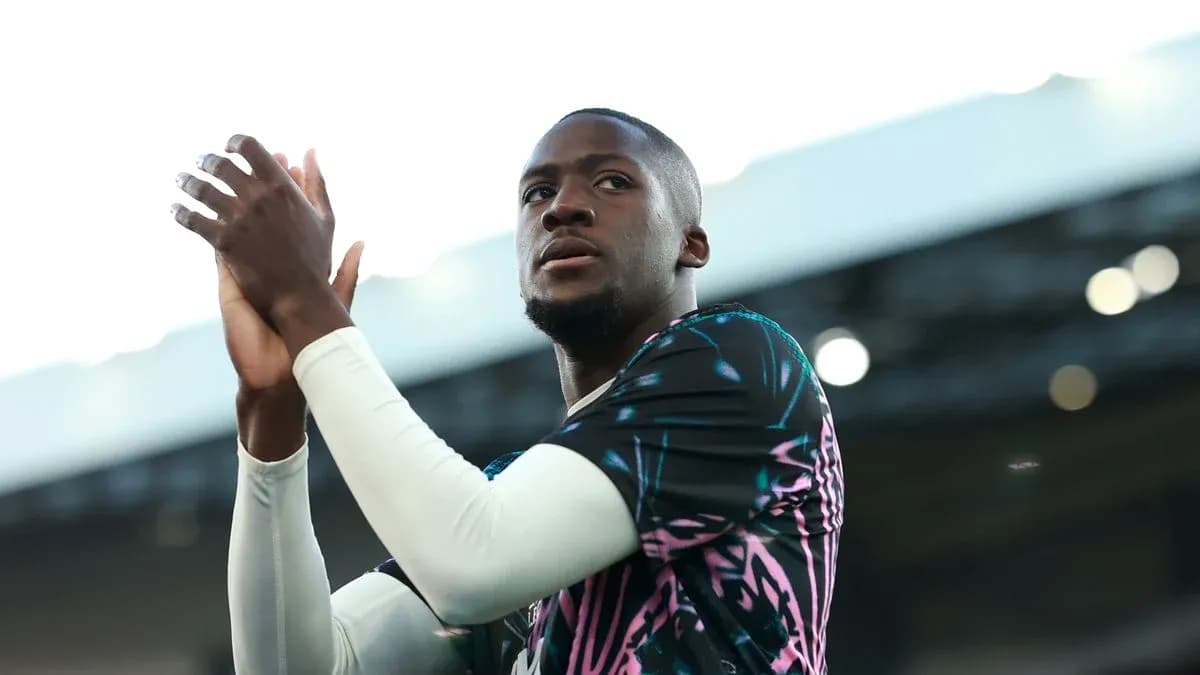
Liverpool Faces Defensive Crisis After Konaté's Departure
Ibrahima Konaté is heading for the Anfield exit. No new deal, no compromise, no fee. Just another cornerstone of Liverpool’s recent era walking away for nothing when his contract expires.
For a club that once prided itself on timing the market to perfection, the numbers now sting. Mohamed Salah, Andy Robertson, Konaté, and before them Trent Alexander-Arnold to Real Madrid – four of the most influential players of the last decade, bringing in only around £10 million combined. In modern football, that is not just bad business. It’s a structural problem.
Konaté’s departure rips a hole straight through the heart of Liverpool’s defence. Since 2021, he has been Virgil van Dijk’s primary partner, the athletic, front-foot foil to the captain’s calm authority. Centre-backs of that level are scarce, and the ones who are available are rarely cheap or straightforward.
Now Richard Hughes, Arne Slot and Liverpool’s recruitment team have to find a solution in a market where everyone knows they are shopping under pressure.
Four names stand out. None of them simple. All of them come with a different kind of risk.
Jan Paul van Hecke – Familiar Face, Familiar Football
If Liverpool want continuity of style, Jan Paul van Hecke makes a lot of sense.
The Brighton defender has already been linked with Anfield via reports in Voetbal International, and his profile reads like a checklist for a modern Liverpool centre-back. Comfortable in a back three or a back four. Happy on the ball in a possession-heavy side. Brave under pressure.
He has chipped in with three goals and three assists in the Premier League this season, numbers that underline his confidence in advanced areas rather than mark him out as some kind of attacking defender. More telling is how he handles the press. Van Hecke is fouled 1.21 times per 90 minutes in the league; Konaté’s mark is 1.19. Both invite contact, both are willing to step in and carry the ball through traffic.
Off the ball, van Hecke plays on the front foot. He sits in the 72nd percentile of Premier League centre-backs for interceptions per 90 (1.32), reading danger early and stepping in rather than retreating. At 6'3", he has the frame, even if he doesn’t dominate the air quite like Konaté.
Next to Van Dijk – and with imposing prospect Jeremy Jacquet arriving for pre-season – that might not be a problem. It might actually be a balance.
There is also the international angle. Van Hecke has only 10 caps for the Netherlands but has forced his way into their World Cup squad ahead of big names like Matthijs de Ligt and Stefan de Vrij. He is expected to play an important role alongside Van Dijk in North America. That familiarity with Liverpool’s captain is no small detail; it makes him an obvious candidate.
Timing complicates it. With World Cup duties, Liverpool either move fast before the tournament or wait until late in the window when competition could be fiercer.
His contract situation at Brighton is helpful and dangerous in equal measure. Van Hecke enters the final year of his deal this summer, which should make a transfer more attainable. It also means other clubs are circling. Tottenham have already been linked as Roberto De Zerbi reshapes his side. Chelsea are said to be watching too. Brighton are expected to demand around £50 million.
He fits. He won’t be cheap. And Liverpool will not be alone.
Joachim Andersen – The Pragmatic Fix
If van Hecke is the stylistic fit, Joachim Andersen is the grown-up option.
The Fulham defender, once an unlikely FPL cult hero at Crystal Palace, has carved out a reputation as one of the Premier League’s most dominant aerial centre-backs. He wins his duels, racks up clearances and interceptions, and still looks composed enough on the ball to function in a side that wants to play.
He is not as progressive in possession as van Hecke, but that may not be what Liverpool need right now. They need reliability, physicality, and someone who can ease the burden on Van Dijk in a league that is getting more intense by the month.
Andersen, just a centimetre shorter than van Hecke, brings six years of Premier League experience and 49 caps for Denmark. He sits in the top 10% of Premier League centre-backs for touches and aerial duels won. Those numbers matter in a Liverpool side that often defends large spaces and faces a barrage of crosses and long balls.
Crucially, his profile also allows him to deputise for Van Dijk himself. That could buy the captain some badly needed rest after playing more minutes than any other 34-year-old this season.
From a financial point of view, Andersen is the most accessible of the quartet. Fulham paid £30 million for him two years ago. Any deal now would still be substantial, but he would almost certainly be the cheapest name on Liverpool’s shortlist.
At 29, he offers a solid bridge rather than a long-term block. His presence would not close the pathway for Jacquet or Giovanni Leoni, both of whom project as long-term solutions. In fact, the data shows Jacquet profiles closely to Konaté, raising the possibility that Liverpool could opt for a stop-gap signing and trust their internal options rather than chase a like-for-like star.
If they do go down that route, there are few more suitable stop-gaps than Andersen. He is not the glamorous answer. He might be the sensible one.
Jarell Quansah – The One That Got Away… Then Comes Back?
This is the strangest name on the list. It might also be the most intriguing.
Jarell Quansah left Liverpool for Bayer Leverkusen only a year ago in a £35 million deal. Now, with Konaté on his way out and the market short on high-level, right-sided centre-backs in Liverpool’s preferred age range, his sale already looks like a decision they may have to correct.
The academy graduate showed real promise under Jürgen Klopp, displaying maturity beyond his years next to Van Dijk. His confidence took a hit in Arne Slot’s first season, notably when the Dutchman hooked him at half-time of his first game in charge. Soon after, Liverpool cashed in.
In Germany, Quansah has answered every question. At Leverkusen, he has re-established himself as one of Europe’s standout young defenders and earned a place in England’s World Cup squad this summer.
The numbers from his Bundesliga season are striking. He was dribbled past just twice all year. His pass completion rate stands at 90.3%, and he averages 0.55 successful dribbles per 90. Those metrics point to a defender who is not just safe on the ball, but increasingly confident and efficient with it.
Liverpool, to their credit, left themselves a way back. The deal with Leverkusen includes a multi-tiered buy-back clause and pre-negotiated contract terms. Quansah can be re-signed this summer for £69.4 million.
That figure is the problem. It is also why many at Anfield will be looking at the timeline. Reporting from BILD suggests any Liverpool return is more likely next year, when the buy-back drops to £52 million.
Another season in Germany would not harm Quansah’s development; if anything, his trajectory suggests it would accelerate it. But the optics are already awkward. Selling arguably the best pure defensive prospect from the academy since Jamie Carragher, only to consider paying almost double a year later, is the kind of misstep Liverpool used to force others into.
Do they correct it now at a premium? Or gamble that he will still be gettable – and affordable – in 12 months?
Alessandro Bastoni – The Galáctico Play
Then there is the big name. The statement signing. Alessandro Bastoni.
On paper, he does not replace Konaté. He replaces Van Dijk.
The Inter defender is left-footed, capable at centre-back and left-back, and profiles more as a long-term heir to Liverpool’s captain than as a straight swap for the departing Frenchman. In a back four, his presence would likely push Van Dijk over to the right side of the pairing.
Bastoni’s quality is undeniable. In Serie A, he ranks in the top 10% of centre-backs for assists, successful passes and accurate long balls. He is in the top 5% for big chances created, overall touches and xG conceded while on the pitch. Those numbers paint the picture of a defender who controls games as much as he defends them.
He would also help soften the blow of losing Robertson and the uncertainty around Kostas Tsimikas, while Milos Kerkez continues to grow into the left-back role. Bastoni can anchor the left side, step into midfield, and launch attacks from deep.
There was a moment this year when a departure from Inter felt possible. The backlash after his red card against Bosnia and Herzegovina, which triggered Italy’s collapse and World Cup elimination, created real tension. Interest from Barcelona was reported. A crack seemed to appear.
Inter moved quickly to close it. President Giuseppe Marotta told DAZN, via Goal, that Bastoni “has absolutely not expressed his desire to leave.” For now, he looks set to stay in Milan, the club he joined nine years ago.
That does not mean Liverpool should ignore him. If there is even a sliver of opportunity, they have to be in the conversation. You do not often get the chance to sign a defender capable of carrying a back line for the next decade.
Konaté’s exit forces Liverpool into a difficult corner. Do they chase familiarity with van Hecke, experience with Andersen, redemption with Quansah, or a seismic reshaping of the defence with Bastoni?
The market will not wait. And with Van Dijk edging into the final phase of his career and another pillar about to walk away for free, how Liverpool answer this question may define the next era at Anfield more than any forward signing ever could.





