Liverpool vs Brentford: Tactical Battle Ends in Draw
Liverpool’s 1-1 draw with Brentford at Anfield was a classic case of territorial and chance dominance meeting ruthless efficiency in transition. Across 90 minutes, Liverpool’s 4-2-3-1 under Arne Slot imposed the game with 60% possession, 24 total shots and 14 corners, yet Brentford, mirroring the same base structure under Keith Andrews, found enough vertical threat to turn limited attacking volume into a valuable away point.
Structurally, Liverpool’s shape was clear: Alisson (Liverpool) behind a back four of C. Jones, I. Konate, V. van Dijk and A. Robertson, with R. Gravenberch and Alexis Mac Allister as the double pivot. Ahead of them, D. Szoboszlai and R. Ngumoha operated as advanced interiors/wingers around M. Salah, with C. Gakpo as the nominal striker. In possession, this often morphed into a 2-3-5, Robertson and Jones stepping high, Mac Allister anchoring and Gravenberch joining the next line. The result was sustained occupation of Brentford’s half and 503 passes (434 accurate, 86%) that pinned the visitors back.
Brentford’s 4-2-3-1, with C. Kelleher (Brentford) in goal, a back four of M. Kayode, S. van den Berg, Nathan Collins and K. Lewis-Potter, and a double pivot of J. Henderson and Vitaly Janelt, was built to absorb and spring. The three of D. Ouattara, M. Jensen and K. Schade supported I. Thiago up front, but out of possession the structure collapsed into a compact 4-4-1-1, lines close together and central zones congested. With only 40% of the ball and 331 passes (262 accurate, 79%), Brentford accepted a low-possession, low-shot profile and trusted their counters and set moments.
Liverpool’s attacking pattern was defined by volume and width. The 24 shots were heavily concentrated inside the box (17), a sign that the hosts were able to progress through Brentford’s block and arrive in advanced zones. Eight shots on goal and eight blocked efforts underline how often they forced Brentford’s defenders to intervene at the last moment. The right side, with Salah drifting inside and Szoboszlai combining, created repeated overloads against K. Lewis-Potter, while Ngumoha’s presence on the opposite flank stretched the back line horizontally. Crosses and cutbacks generated a stream of corners (14), allowing Liverpool to apply continuous set-piece pressure around van Dijk and Konate.
The breakthrough on 58 minutes encapsulated this territorial superiority. C. Jones, nominally at left-back, had license to step into midfield and attack the half-space. When he scored, assisted by M. Salah, it reflected Liverpool’s full-backs being used as additional playmakers, with Salah’s inside positioning drawing markers and freeing the wide lane. That Jones, listed as a defender, arrived in a scoring position underlines how aggressively Liverpool’s back line was positioned in possession, often leaving Konate and van Dijk as the only rest-defence pair against Brentford’s counters.
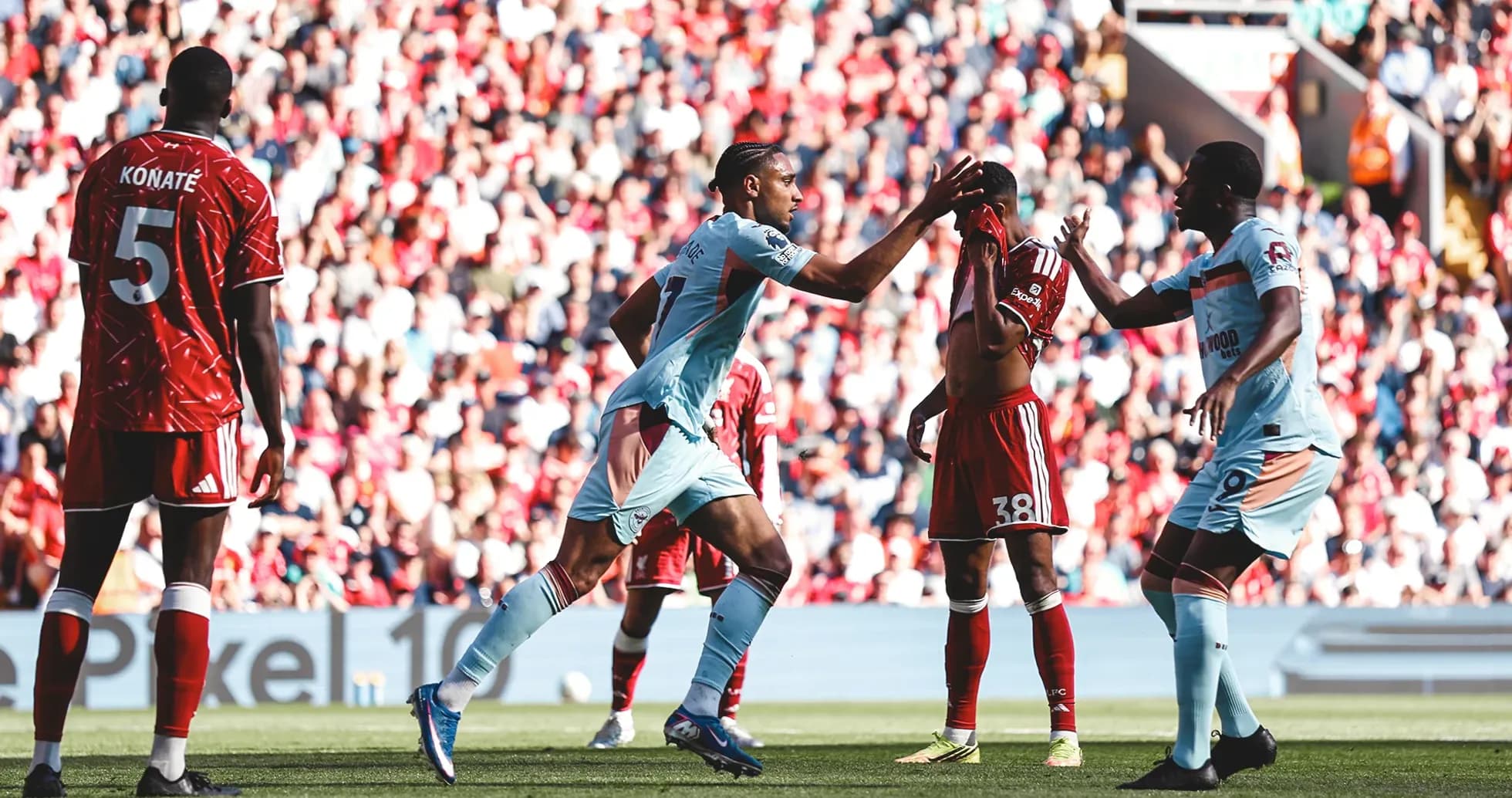
Brentford’s equaliser on 64 minutes through K. Schade came directly from their game model. With only 11 total shots (9 inside the box) and just 2 on target, they focused on high-value moments rather than sustained pressure. Their xG of 1.22 suggests that, when they did break, they created relatively clean looks at goal. Schade’s goal, unassisted, points to either a direct transition or a second-ball situation where Liverpool’s aggressive positioning left space to exploit behind the advanced full-backs and pivots. Here, Brentford’s compactness without the ball paid off: by forcing Liverpool to commit numbers forward, they maximised the impact of each rare foray.
Defensively, Liverpool’s control of territory meant Alisson (Liverpool) faced little direct danger. He was required to make only 1 save, supported by a structure that limited Brentford to 11 shots despite the visitors’ focus on counters. Liverpool’s goals prevented figure of 1.4 indicates that, across the quality of chances faced, the defensive unit and goalkeeper combined to outperform the xG conceded, reflecting strong last-line interventions from Konate and van Dijk and effective pressure on shooters.
On the other side, C. Kelleher (Brentford) was central to the result. With Liverpool registering 8 shots on goal and an xG of 2.9, his 7 saves were decisive. Brentford’s goals prevented number of 1.4 highlights how he, together with blocks from his back four (3 blocked shots in total), significantly overperformed the expected outcome. The defensive plan was clearly to funnel Liverpool into crowded central areas, accept shots from suboptimal angles when possible, and rely on Kelleher’s shot-stopping in the high-danger moments that inevitably emerged.
Discipline and game management also shaped the tactical rhythm. Both sides committed 9 fouls, but Brentford’s three yellow cards — including early and late “Argument” bookings for J. Henderson and later for Nathan Collins and Vitaly Janelt — hinted at the emotional strain of defending deep for long spells. Liverpool’s two cautions, both for “Foul” (I. Konate and Alexis Mac Allister), were more functional, tied to stopping transitions and protecting the rest-defence when Brentford tried to break.
Substitutions in the final quarter reinforced the respective strategies. Liverpool introduced F. Wirtz, J. Frimpong, M. Kerkez, T. Nyoni and J. Gomez, refreshing energy in wide and advanced zones to sustain pressure and protect against counters as legs tired. Brentford’s changes — A. Hickey, M. Damsgaard and R. Nelson — were aimed at shoring up the flanks and preserving counter-threat, ensuring that Liverpool could never commit absolutely everyone forward without risk.
Statistically, the verdict is stark: Liverpool’s 2.9 xG versus Brentford’s 1.22, their 24-11 shot advantage, 8-2 shots on goal and 14-2 corner margin all point to a home side that did more than enough, on volume and quality, to win. Their passing superiority (503 passes to 331) and higher accuracy reflected a team in territorial control, circulating the ball to probe for openings.
Yet Brentford’s defensive resilience and goalkeeping excellence balanced the ledger. With both teams posting identical goals prevented (1.4), the draw can be read as Liverpool under-converting their chances and Brentford maximising theirs. In tactical terms, it was a duel between a dominant positional side and a compact, transition-focused opponent — and on this occasion at Anfield, control did not translate into victory.