Liverpool and Brentford End Season with 1–1 Draw
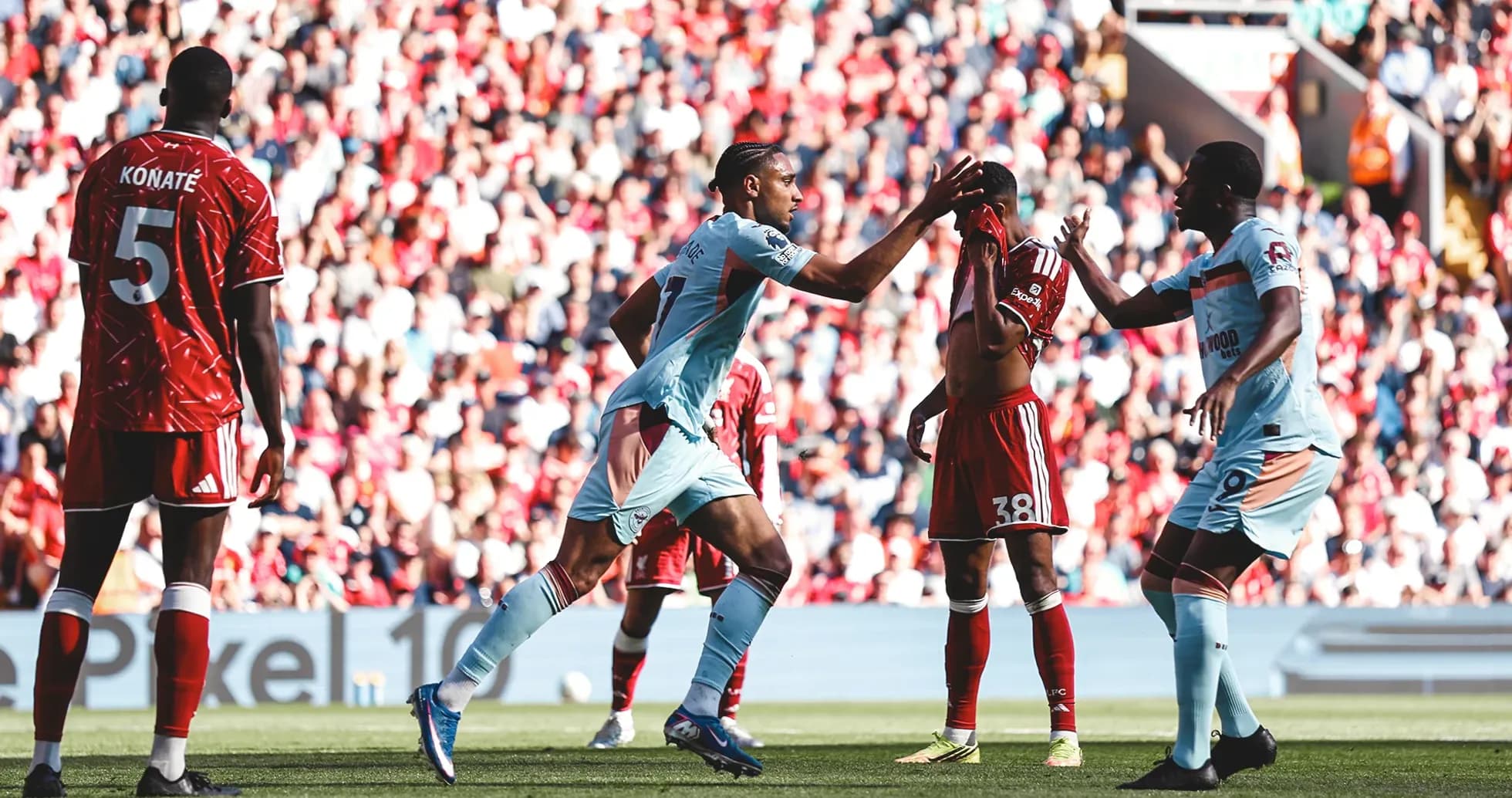
Anfield’s final act of the 2025–26 Premier League season ended in stalemate, Liverpool and Brentford locked at 1–1 after 90 minutes under the watch of Darren England. Following this result, Liverpool closed the campaign in 5th place on 60 points, Brentford in 9th with 53. The table underlines the contrast in their seasonal profiles: Liverpool’s overall goal difference of 10 came from 63 goals for and 53 against, while Brentford’s more modest cushion of 3 reflected 55 scored and 52 conceded.
Both sides leaned heavily into the same structural idea: a 4-2-3-1 that tells you as much about their footballing identity as any statistic. For Liverpool, Arne Slot’s choice of that shape was no surprise; they used 4-2-3-1 in 34 league matches overall. Brentford, under Keith Andrews, made it their default in 29 league games, occasionally flirting with back fives but returning to this more balanced platform for Anfield.
At home, Liverpool’s season-long averages framed expectations. Heading into this game, they were scoring 1.8 goals per match at Anfield and conceding 1.1, a profile of a side that usually imposes itself but is not airtight. Brentford’s away numbers were more cautious: 1.2 goals scored and 1.6 conceded on their travels, suggesting they often had to suffer without the ball and pick moments to strike. The 1–1 draw felt, statistically, like a midpoint between Liverpool’s attacking ambition and Brentford’s pragmatic resilience.
Tactical Voids and Discipline
Both squads arrived carrying scars. Liverpool were without S. Bajcetic (hamstring), C. Bradley (knee), H. Ekitike (Achilles tendon), and G. Leoni (knee). The absence of Ekitike was particularly significant: 11 league goals and 4 assists overall removed a direct, vertical attacking threat from Slot’s bench. It forced Liverpool to rely more heavily on Cody Gakpo as the central forward and on Mohamed Salah and Dominik Szoboszlai for end-product and creativity.
Brentford had their own gaps. F. Carvalho (knee), R. Henry (hamstring), and A. Milambo (knee) all missed out. Henry’s absence tilted the balance of their left side, making K. Lewis-Potter’s deployment as a nominal defender in the back four even more intriguing; his natural attacking instincts had to be tempered by positional discipline against Liverpool’s right-sided combinations.
Disciplinary trends from the season also shaped the tone. Liverpool’s yellow-card distribution revealed a late-game edge: 31.58% of their bookings came between 76–90 minutes, and another 17.54% between 91–105, a clear pattern of emotional spikes as matches tightened. Brentford, too, leaned into the chaos of the closing stages, with 26.09% of their yellows in the 76–90 window and 21.74% from 61–75.
Red cards were rarer but telling. Szoboszlai’s single league dismissal and Kevin Schade’s red for Brentford underscored how both sides’ key transitional players can overstep the line. That shared volatility meant this fixture always risked boiling over late, especially once fatigue set in and spaces opened.
Key Matchups
Brentford’s attacking focal point was never in doubt: Igor Thiago. With 22 league goals overall, plus 8 penalties scored and 1 missed, he arrived as one of the division’s most ruthless finishers. His duel with Liverpool’s central pairing of Virgil van Dijk and Ibrahima Konaté was the defining “Hunter vs Shield” narrative.
Liverpool’s overall defensive record – 53 goals conceded, 1.4 per match in total – paints them as solid but not impenetrable. At Anfield, the 1.1 goals against average hinted at a higher defensive ceiling, especially when Van Dijk and Konaté could control the box. Thiago’s 67 shots (43 on target) and 524 total duels, of which he won 202, made this a battle of attrition: constant wrestling for position, aerial contests, and second balls around the penalty area.
On the other side, Liverpool’s attacking core revolved around Salah, Szoboszlai, and Gakpo. Salah’s 7 goals and 7 assists overall, combined with 49 key passes, framed him as both scorer and supplier cutting in from the right. Gakpo added 7 goals and 5 assists, thriving between the lines and attacking the half-spaces. Brentford’s shield was a back four anchored by N. Collins and S. van den Berg, with J. Henderson and V. Janelt screening in front. Henderson’s positional sense and Janelt’s work rate were crucial in blocking central lanes into Gakpo and tracking Salah’s inside runs.
Engine Room
In midfield, the “Engine Room” confrontation was all about control versus disruption. For Liverpool, Szoboszlai and Alexis Mac Allister offered a blend of progression and press-resistance. Szoboszlai’s season numbers – 2,184 passes with 78 key passes at 87% accuracy – show a player who dictates tempo and pierces lines. He also brought steel: 55 tackles, 8 successful blocks, and 30 interceptions overall.
Brentford responded with Janelt and Henderson as a double pivot. Janelt’s job was to shadow the spaces Szoboszlai loves to occupy, while Henderson’s experience and range of passing were meant to launch counters toward Thiago, Schade, and Dango Ouattara. Schade, with 8 goals and 3 assists, plus 75 dribble attempts, was Brentford’s chaos agent between the lines, but his 6 yellow cards and 1 red showed the cost of his aggression.
Out wide, Salah versus Lewis-Potter, and Schade against Andrew Robertson, provided constant tactical subplots. Lewis-Potter had to decide when to overlap and when to stay at home, knowing any misstep could expose Brentford to Salah’s direct running. Robertson, by contrast, had to balance his trademark forward surges with the need to track Schade’s explosive counters.
Statistical Prognosis and xG Verdict
Even without explicit xG numbers, the season-long data points toward a fairly balanced expected-goals landscape for this match. Liverpool’s home attacking average of 1.8 goals, combined with Brentford’s 1.6 conceded away, suggests a typical Anfield outing would generate multiple high-quality chances for the hosts. Brentford’s 1.2 goals scored on their travels, against Liverpool’s 1.1 conceded at home, points to a consistent threat on counters and set pieces.
Liverpool’s 10 clean sheets overall and Brentford’s matching total of 10 underline that both teams are capable of locking things down when structure and concentration hold. Yet Brentford’s 12 matches overall where they failed to score – 7 away – highlight the risk they run when Thiago is isolated or starved of service.
Penalties were another subtle factor. Liverpool’s record of 1 penalty taken and 1 scored overall is perfect but limited in sample size. Brentford’s 8 penalties scored from 8 attempts overall, all converted by a team that includes Thiago, made them one of the league’s most reliable sides from the spot. With Szoboszlai having missed a penalty this season and Schade also missing one despite winning 2, the psychological edge from twelve yards tilted slightly towards Brentford’s centre-forward.
Following this result, the 1–1 scoreline feels like the logical intersection of these numbers: Liverpool’s structured, possession-heavy 4-2-3-1 generating enough to score once but not pull away; Brentford’s efficient, Thiago-led counter-punching finding a way through against a defence that, over 38 matches, conceded more than a title-chasing side but enough to secure European qualification.
In narrative terms, Anfield saw two teams whose identities are now fully formed. Liverpool, with Salah, Szoboszlai, and Gakpo as creative axes, look built for sustained Champions League-level football. Brentford, riding Thiago’s goals and a disciplined 4-2-3-1, have carved out a place in the league’s upper mid-table. The draw was not just a single afternoon’s story; it was the season’s statistical truth distilled into 90 minutes.