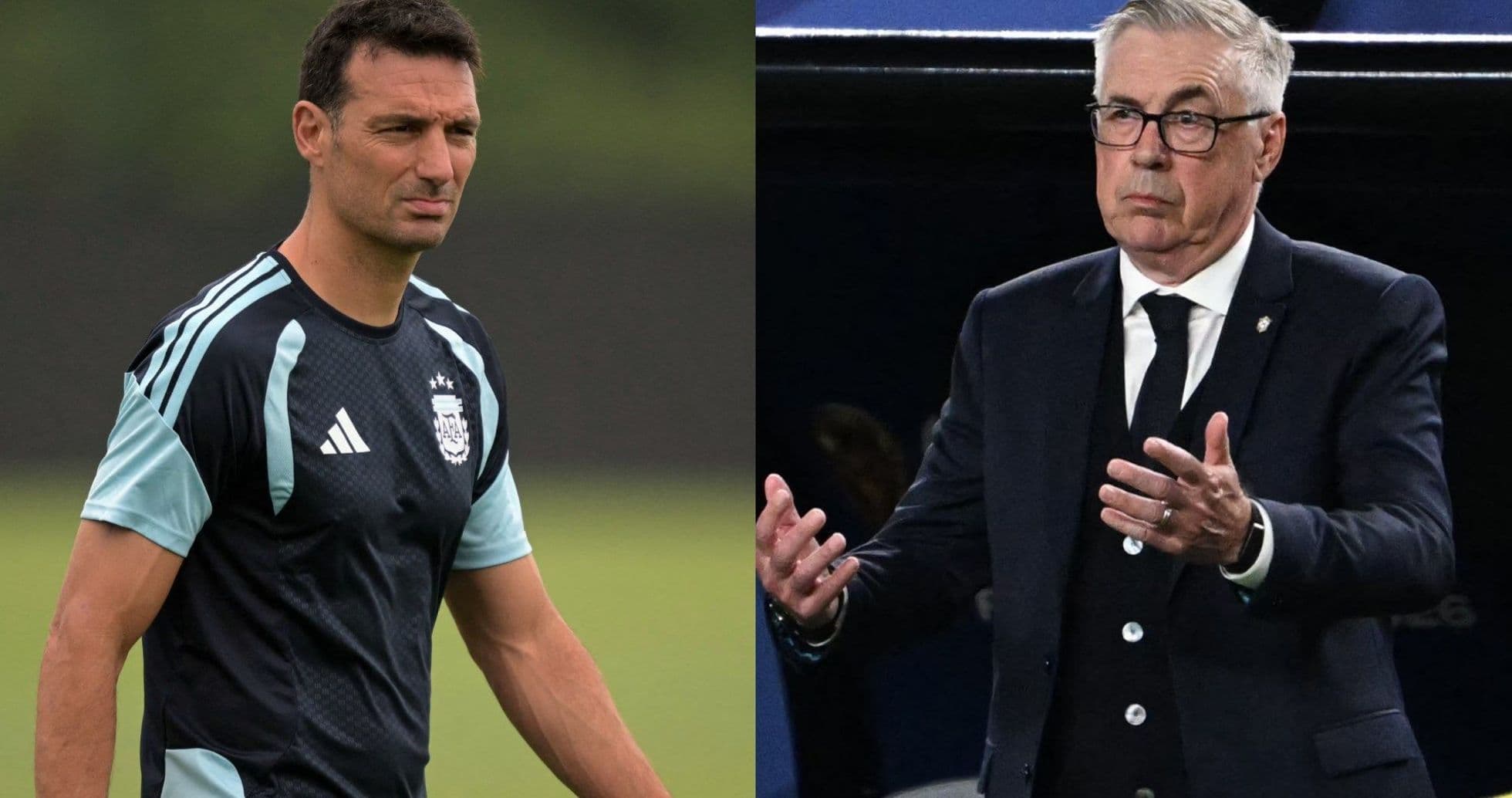
Lionel Scaloni's Coaching Philosophy Ahead of Austria Match
In the thick Texas heat of Dallas, Lionel Scaloni refused to bite.
On the eve of Argentina’s second Group J outing, the world champions’ coach was asked about Carlo Ancelotti’s recent remarks – the Italian having coolly observed that Argentina do not live off relentless pressing and high-octane running. The comment had stirred the usual online noise about intensity, fitness, and “modern football”.
Scaloni saw something else.
“I take it in a good way. He spoke highly of us, he didn't speak badly,” he said, calmly disarming the narrative before it could flare. Ancelotti’s blend of Spanish, Italian and Portuguese, he suggested, might have muddied the nuance, but not the message. “I understood it as a compliment and not a criticism. I'm very sure of that.”
No feud. No soundbite war. Just a coach using the moment to underline what his Argentina are really about.
Scaloni’s idea of intensity
Scaloni used the question as a springboard into his broader footballing creed. The obsession with pressing for pressing’s sake does not convince him. Control does.
“You have to see what is understood by intensity,” he said. For him, it starts when Argentina don’t have the ball. “When you don't have the ball, you have to try to ensure they don't hurt you.”
He sees the game shifting. The era of everyone flying forward to press man-to-man all over the pitch? That belongs to a narrower slice of the elite. Today, he argued, the best sides fortify the middle of the pitch and let the match be decided there.
“There aren't many who press you high and man-to-man. Teams become strong in the middle of the pitch and that's where the game is being defined,” he explained.
The shape – three forwards, three or five at the back – is secondary in his eyes. What matters is the team’s reaction in the instant they lose the ball. That beat of transition, that first step after a turnover, is where Scaloni believes trophies are won.
This is not a coach chasing chaos. It is a coach who just lifted the biggest prize of all by refusing to be dragged into it.
A new generation, same hunger
Since that night in Qatar, Argentina have changed – but not in the way many expected of a champion side. No complacency. No nostalgia tour. Scaloni has instead folded in fresh legs and new ideas.
He namechecked Nico Paz and Giuliano Simeone as examples of the young talent now threaded into the squad. They bring different profiles, options for a more direct attacking route when the match demands something sharper, more vertical.
“The team is on the right track even though three and a half years have passed,” Scaloni insisted. The core hunger, he said, has not faded. “They haven't shown signs of taking their foot off the gas and that’s why they are here.”
He knows the calendar has been brutal. Players arrive carrying long seasons in their legs, some far from peak condition. “It is very difficult for everyone to arrive at 100 per cent because of the number of games played,” he admitted. And yet, he stressed, all 26 are fit and ready to play. For a tournament coach, that is gold.
There is no talk of legacy in his words. Only the next match.
Austria next, and no margin for error
That next match comes against Austria in Dallas, a fixture that suddenly carries weight. Both sides sit on three points in Group J. Both know what a win would mean.
For Argentina, victory would likely lock up top spot and smooth their path into the knockouts. For Austria, it would be a statement against the reigning world champions and a fast track to the last 32.
This is precisely the kind of game in which Scaloni’s principles will be tested: a disciplined opponent, a draining climate, a group table tight enough to sharpen every decision. Does Argentina sit in and suffocate the middle as their coach preaches, or do they step higher and risk the space behind?
On the other side of the bracket, Brazil have already bought themselves a little calm. Ancelotti’s team brushed aside Haiti 3-0, a performance that gave them breathing room and a clear equation. They now need only a draw against Scotland to secure their own place in the round of 32.
The giants, then, are moving into position. Brazil with a cushion. Argentina with work still to do.
In Dallas, Scaloni has made one thing clear: his team will not chase intensity to please an external debate. They will chase it on their own terms – in the middle of the pitch, in the split second after losing the ball, in the moments that decide whether a title defence gathers momentum or stalls before it even begins.