
Lionel Messi's World Cup Journey: A Legacy in Transition
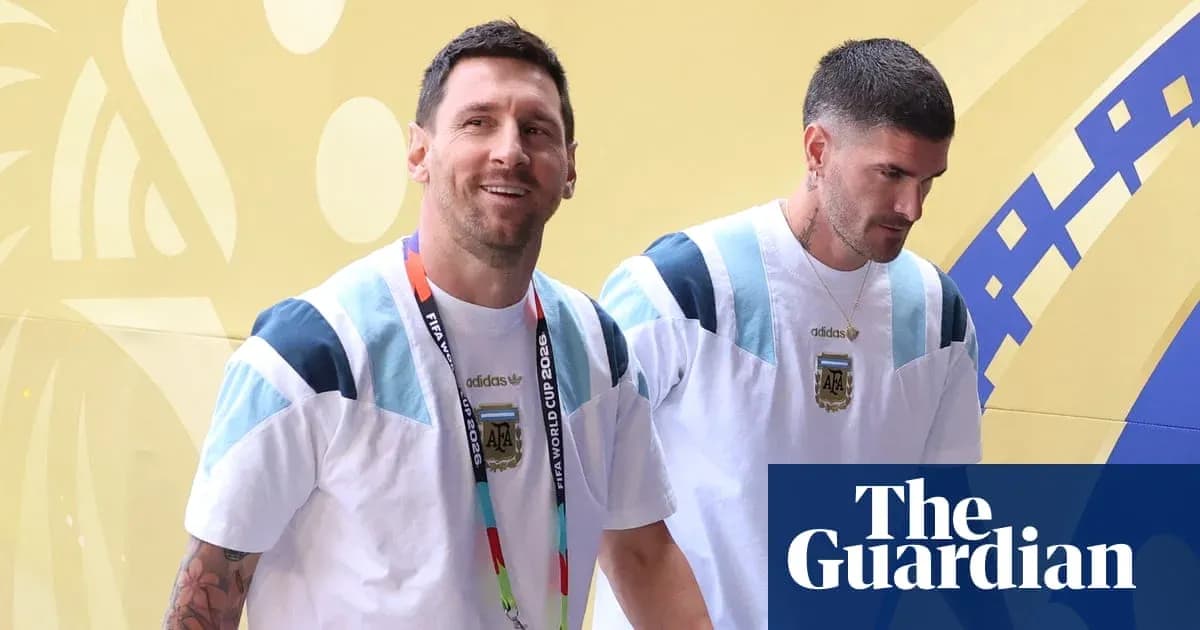
Lionel Messi’s last World Cup? It felt like it. It didn’t look like it. Not until the very end.
Across this tournament, the 39-year-old didn’t so much play as conduct. Eight goals, four assists, the most progressive passes of any player, per Futi. No defensive shackles, no tactical compromise. Just Messi, roaming where he pleased, dragging Argentina with him.
He bent Cape Verde to his will in a 3-2 win. He assisted and then equalised against Egypt when the game seemed to be slipping away. Against England, he created both of Argentina’s late goals, summoning chaos and clarity in the same movement. Every time the cliff edge appeared, it was Messi who pulled his country back.
Then came the final, and the stage that has so often belonged to him simply swallowed him up. Over 139 minutes including stoppage time, he completed 28 of 39 passes, took only one shot and barely laid a glove on the game. No Golden Ball, no Golden Boot, no trophy. Yet his World Cup story stretched further, another chapter in a legacy that almost no one in the sport can touch.
Around him, Argentina’s supporting cast did their work. Rodrigo De Paul, all grit and industry, started all but two games on the run to the final and logged 70 minutes against Spain. The Inter Miami midfielder never threatened to steal the spotlight, but he rarely loses the ball, bites into tackles and knits moves together. He did exactly that again, the kind of performance that doesn’t make highlight reels but wins managers’ trust and takes teams deep into tournaments.
This World Cup wasn’t just about the usual powers, though. It tilted the spotlight into new corners.
New faces, new standards
Stephen Eustáquio became Canada’s metronome and main creator. Cross after cross, pass after pass, he drove their attack, averaging 2.76 chances created and 0.36 expected assists per 90 minutes. Only five players completed more progressive passes than his 46. Then came his moment: last-32, South Africa, dying minutes. He intercepted a clearance, cushioned the ball on his chest and lashed a half-volley into the bottom corner. Canada’s first-ever World Cup knockout win, sealed by a midfielder who had spent the months before the tournament on loan at Los Angeles FC and has since gone back to Porto.
South Africa had their own breakout story. At 20, Mbekezeli Mbokazi arrived as the youngest player in their squad. He played like one of its oldest. The Chicago Fire defender, once of Orlando Pirates, read games with the composure of a veteran and defended as if every duel would define his career. The world noticed: his Transfermarkt valuation more than doubled, from $4m to over $9m, by the time he left.
Paraguay, a team happy to suffer without the ball, found two pillars in midfield. Matías Galarza started every game after the opener, scored the only goal against Turkey and teed up Julio Enciso against Germany in the knockouts. With Paraguay averaging just 29% possession – the lowest of any side at the tournament – his attacking influence was naturally throttled, yet he still found ways to matter. After a loan at Atlanta United, he returned to River Plate with his stock higher.
Alongside him, Andrés Cubas played every minute of Paraguay’s five matches and became their destroyer-in-chief. The Vancouver Whitecaps midfielder anchored a defensive unit that dragged Germany to penalties and held France to a single goal. In the quarter-final, he won seven of 12 duels, made seven tackles and three interceptions, and even found time to tangle with Kylian Mbappé. Paraguay left with pride, and with a midfield identity.
New Zealand’s Finn Surman produced one of the quieter revelations of the group stage. The 22-year-old Portland Timbers centre-back threw himself into last-ditch tackles, cleared danger at the final second and looked like one of the All Whites’ most reliable players. He even chipped in at the other end, scoring their only goal in a 3-1 defeat to Egypt.
American swings: promise, flaws and painful nights
The United States experienced the full emotional range of a World Cup in a few games. Sebastian Berhalter became one of Mauricio Pochettino’s go-to substitutes, appearing in every match. When he finally started, it was as a No 6 – a role that exposed the squad’s lack of natural defensive midfielders more than his own limitations. Even so, the Vancouver Whitecaps man, reportedly on his way to Middlesbrough, still produced a goal and an assist in limited minutes.
In goal, Matt Freese’s tournament will be remembered for one mistake rather than the body of his work. The 27-year-old New York City FC keeper impressed with his distribution and made nine saves in four games. One poor outing, one decisive moment, and that became the story.
For Tim Ream, the fall was harsher. The 38-year-old Charlotte centre-back looked ageless early on, steady and composed, echoing his form from Qatar. Then Belgium ripped that illusion to pieces in a 4-1 round-of-16 hammering. On the opener, Charles De Ketelaere ghosted away from Ream and finished with the American nowhere in sight. Minutes after the US had equalised, De Ketelaere climbed above him at the back post to nod in again. In a flash, a veteran’s campaign turned from reassuring to brutal.
Matt Turner, once the undisputed No 1 and now with New England Revolution, had a single outing against Turkey. It was a rough one. Three goals conceded, not a single save recorded. For Miles Robinson of FC Cincinnati, there was barely a World Cup at all: Pochettino’s lack of trust in his backup defenders meant Robinson’s only appearance came in a dead rubber at the end of the group.
Columbus winger Max Arfsten entered in the 90th minute of that heavy defeat to Belgium and didn’t touch the ball before the whistle. On this stage, some stories barely begin.
Veterans fading, legacies closing
James Rodríguez arrived in the United States 12 years on from his electrifying breakout in Brazil. This time, on loan at Minnesota United, he looked older, slower, less sharp. Two years ago at Copa América he had conjured a run of one goal and six assists in six games, carrying Colombia to a narrow defeat to Argentina in the final. That magic deserted him here. Flashes of quality still appeared, but there was no end product, and Colombia slipped out in the last 16 to Switzerland. His World Cup journey, like his club career, drifted to an empty, drawn-out close.
Son Heung-min endured a similarly bleak tournament. The 34-year-old LAFC forward started twice, failed to score in either game and then watched South Korea’s must-win final group match from the bench. For a player who has spent a career deciding big nights, this one passed him by.
Croatia’s forwards struggled to leave a mark. Petar Musa, of FC Dallas, started twice, played 110 minutes and took just one shot – which he scored. Marco Pasalic, the Orlando City winger, produced an energetic display in Croatia’s third group game but fluffed his one clear chance to score.
Miguel Almirón’s World Cup will be remembered less for his attacking output – four shots, 0.11 expected goals in four starts – than for a moment of controversy. The Atlanta attacker was sent off against Turkey after covering his mouth during an “altercation” between the teams, becoming the first high-profile example of the International Football Association Board’s new mouth-covering ban in action.
Quiet grinders and fleeting cameos
Some players built reputations without fanfare. Steven Moreira, the Columbus defender, didn’t dominate headlines like fellow Cape Verde full-back Sidny Lopes Cabral, but he anchored a backline that pushed Spain, Uruguay and Argentina to the brink.
Australia leaned on Aiden O’Neill, who replicated his New York City FC role as a calm, possession-focused midfielder. He collected the Superior Player of the Match award against Paraguay, then backed it up with another strong display versus Egypt. At the back, 18-year-old Lucas Herrington of Colorado Rapids muscled his way into the XI, starting Australia’s final two matches, while NYC FC defender Kai Trewin came on for the injured Jordan Bos at half-time of the knockout tie against Egypt and helped drag the contest to penalties.
New Zealand’s Michael Boxall, one of the tournament’s elder statesmen, found the pace unforgiving. The Minnesota defender looked half a step off on almost every goal the All Whites conceded.
Canada’s story was one of mixed fortunes. Richie Laryea pushed the ball up the left flank and posted 0.26 expected assists per 90, but his defending wobbled. He lost his man on Bosnia and Herzegovina’s opener from a corner and repeatedly drifted out of position in the loss to Switzerland. Maxime Crépeau, Orlando City’s goalkeeper, left with six goals conceded and just six saves in five matches. Jacob Shaffelburg came off the bench in all five games for LAFC but never quite bent a match to his will. Jayden Nelson’s involvement amounted to an 87th-minute introduction in a 3-0 knockout defeat to Morocco. Mathieu Choinière started once, in a 2-1 loss to Switzerland, and Jonathan Osorio’s two late cameos, both after the 87th minute, flickered without impact.
Panama and Haiti fought mostly uphill. Carlos Harvey started all three of Panama’s group games, threatening occasionally from set-piece headers but otherwise staying on the margins. Aníbal Godoy completed all eight of his passes in just over a minute of action plus stoppage time against Ghana, only to watch his side concede a last-gasp winner seconds later.
For Haiti, Philadelphia’s Danley Jean Jacques partnered Jean-Ricner Bellegarde in a double pivot that had to scrap from first whistle to last, given Haiti’s ranking as the lowest side in the tournament. FC Dallas winger Louicius Deedson played in all three group defeats, logging 112 minutes and completing 13 passes. Toronto’s Derrick Etienne Jr managed nine minutes against Brazil and four completed passes. These are the margins on which entire careers can hinge – or simply move on.
Iraq’s Ahmed Qasem featured in every match, going the full 90 against France. He started the final group game as well, only to be sacrificed early when Rebin Sulaka’s 13th-minute red card forced a tactical reshuffle.
Elsewhere, opportunities were fleeting. Orlando City’s Braian Ojeda had a 21-minute cameo for Paraguay against Germany in the last 32, touching the ball only nine times. LAFC’s Jacob Shaffelburg and Toronto’s Jonathan Osorio chased games that were already slipping away. New England Revolution goalkeeper Matt Turner had a single, harshly judged appearance. Sometimes a World Cup is a career’s defining canvas; sometimes it’s just a brushstroke.
Across all of it, from Messi’s fading final to the raw edges of Mbokazi and Surman, from James Rodríguez’s quiet goodbye to Eustáquio’s rising arc, one question lingers: whose next World Cup will be a farewell, and whose will be the one that finally belongs to them?





