Lionel Messi's Dominance at the World Cup
Lionel Messi bent his ageing body towards one more World Cup and, in the end, bent the entire tournament to his will.
In a competition scattered with outrageous goals, improbable saves and new stars, the defining image was still the 39-year-old in Argentina’s No. 10, deciding games with the same cold clarity he had at 25. This was no farewell tour. It was a hostile takeover.
Moments that stopped the tournament
The deadlock against Cape Verde told the story in a single touch. A difficult pass arrived at Messi at full speed, the angle tight, the space suffocating. He killed it on the move, then, with a second touch that belonged in a museum, guided the ball into the top corner. Not power. Pure, ruthless precision.
Cape Verde refused to play the victim. Deep in extra time, at 2-1 down and running on fumes, Sidny Cabral stepped inside from just inside the area and curled a right-footed shot past Emiliano Martinez and into the top corner. One swing, one arc, one instant classic. Martinez never moved. The stadium did – from tension to disbelief in a heartbeat.
The group stages had already delivered their own showreels. Bosnia-Herzegovina’s Kerim Alajbegovic slalomed through Qatar traffic before lashing a rising right-foot shot high into the net, a solo goal of real authority. Erling Haaland, all brute force and dead-eyed economy, looked almost casual as he swung his right boot to beat Brazil in the last 16. The ball told the truth: venom, accuracy, game over.
Norway kept adding to the scrapbook. Antonio Nusa opened the scoring against Ivory Coast with a feint that left his marker grasping at air, then bent a curling finish into the top corner that looked like it had been drawn with a compass. Argentina’s quarter-final with Switzerland, suffocating and tight, was ripped open by Julian Alvarez. Extra time, legs gone, minds fraying – and Alvarez swerved a long-range right-foot drive into the top corner, a reminder that genius often comes from the man people talk about least.
Goalkeepers who refused to blink
While the forwards filled highlight reels, the keepers quietly built their own legend.
Haiti’s Johny Placide produced a double save against Morocco that belonged in slow motion. First, he blocked with his legs, then sprang left to claw away the follow-up with one hand. At the Azteca, Jordan Pickford’s night against Mexico set the tone for England. Raul Jimenez’s early header looked destined for the corner until Pickford flung himself low to his left, a strong hand preserving not just a clean sheet but England’s nerve.
Norway’s Orjan Nyland needed saving from his own defender. Kristoffer Ajer diverted the ball towards his own goal against Brazil, and Nyland had to sprint backwards, twist in mid-air and turn it on to the post. It was a save built on anticipation and raw agility. Tunisia’s Aymen Dahmen somehow kept out Takehiro Tomiyasu from point-blank range, the ball flirting with the line without ever crossing it.
Patrick Beach kept Australia alive against Turkey with a full-stretch dive to his right, brushing Abdulkerim Bardakci’s 30-yard rocket on to the post. Iran’s Alireza Beiranvand, beaten initially by a Kevin de Bruyne strike, recovered his position in time to block Maxim de Cuyper’s effort from inside the six-yard box. It was as if he’d rewound the move in his head and corrected it in real time.
The kings of the tournament
The official verdict came in gold: Spain’s captain Rodri lifted the Golden Ball as the tournament’s best player. The midfielder, as vital for his country as he is for Manchester City, anchored a side that conceded just one goal all tournament. He was the metronome and the shield, the calm at the centre of the storm.
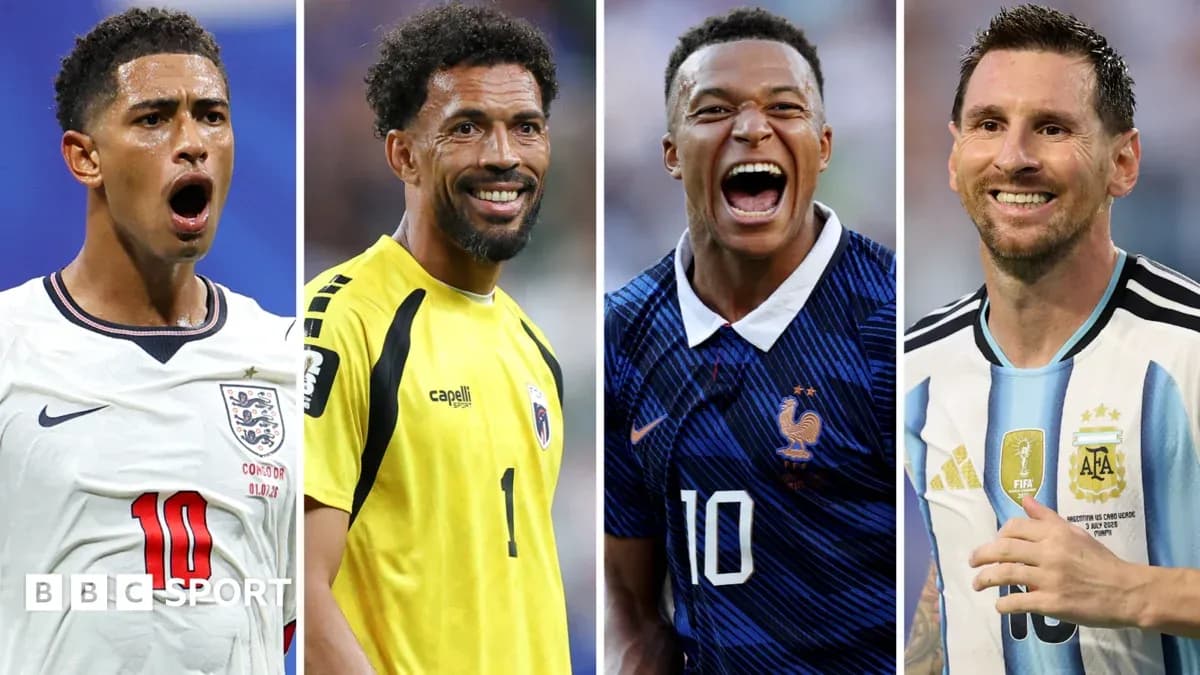
Messi took the Silver Ball. Kylian Mbappe, electric and relentless, claimed the Bronze. Yet for many, the hierarchy felt reversed. Messi’s numbers – eight goals, four assists in eight games – told part of the story. The rest came in moments: the way he controlled Argentina’s dramatic semi-final fightback against England, the way he waited, then struck, with two decisive assists when England thought they had him contained.
Those inside the tournament saw it up close. Reporters talked of a 39-year-old “defying the law of physics”, of a leader whose football intelligence and ability to decide the biggest matches still separated him from the rest. Mbappe, relaxed and razor-sharp from his first news conference, translated his off-field ease into goals, leadership and an astonishing work rate off the ball. Jude Bellingham, dragging England through games by sheer force of will, seemed to grow a new layer of authority with every knockout tie.
Others left their own mark. Michael Olise, with seven assists for France and a scissor-kick against Sweden that thundered off the post, showed why the Premier League is about to pay big money for his peak years. And at the back, Rodri’s influence made Spain look unshakeable.
A new generation walks into the light
The future announced itself loudly.
Pau Cubarsi, 19 years old and unflinching, played every minute of Spain’s campaign and walked away with Fifa’s best young player award. Against France in the semi-final he was magnificent, reading danger like a veteran, defending as if the stage belonged to him.
Morocco’s Ayyoub Bouaddi turned the New York New Jersey Stadium into his personal showroom against Brazil. His movement off the ball – intelligent, constant, almost eerie in its timing – drew comparisons to Patrick Vieira and Luka Modric. Lille and Ligue 1 watchers already knew. The rest of the world learned fast.
Some “breakouts” were more about perception than reality. Erling Haaland did not need an introduction, but his impact in the United States turned him into a household name far beyond Europe. Cape Verde’s 40-year-old goalkeeper Vozinha became a cult hero. Seven saves in a 0-0 draw with Spain in their World Cup debut, eight more as they dragged Argentina to the brink of elimination, and an Instagram following that exploded from around 50,000 to more than 29 million. For once, the numbers felt deserved.
The USA’s Alex Freeman impressed enough at full-back that Mauricio Pochettino publicly tipped him as a potential best-in-the-world in his position. Switzerland’s Johan Manzambi, only 20, played with a smile and swagger, scoring three in four games before injury cut his tournament short. His imminent move to Aston Villa for around £50m underlined how quickly this World Cup changed careers.
Mexico’s 17-year-old Gilberto Mora, promoted into the starting XI, carried himself with the poise of a seasoned playmaker. Observers saw shades of Modric in the way he drifted, demanded the ball, and stitched moves together.
Stadiums, sound and the soul of a World Cup
The Azteca for Mexico v England might have been the beating heart of the entire tournament. For some who have covered seven World Cups, it ranked as the best atmosphere they had ever experienced. The Mexican anthem rolled around the bowl like thunder. Every tackle, every clearance, every English misstep drew a roar.
Elsewhere, the emotion spilled beyond the pitch. Outside the stadium in Boston, Paraguay fans wept with joy after stunning Germany in one of the most dramatic shootouts of the competition. A father and son, wrapped in flags, called it the best day of their lives. You could see what this tournament meant in their faces.
In Miami, Cabral’s 103rd-minute strike against Argentina sent the stadium into chaos. A 2-2 equaliser in extra time for the smallest nation ever to reach the knockout stages, against the defending champions, felt like a dream sequence. Even those in the press box admitted they were still replaying it in their minds hours later.
Across the United States, the World Cup turned into a travelling carnival. Reporters were handed beers and sausages from the back of pickup trucks in Philadelphia, stopped for selfies in city after city, and greeted with the same question over and over: “Is it coming home?”
Giants who stumbled
Not everyone lived up to the billing.
Brazil, under Carlo Ancelotti, moved through the tournament like a side stuck in second gear. Slow. Uninspired. Un-Brazilian. Norway exposed every flaw in the last 16 and sent them home with no complaint from neutrals who had expected so much more.
Senegal arrived with arguably the most talented squad in their history. Off-field problems undermined them. On the pitch, a 2-0 lead over Belgium in the last 32 looked like a lifeline, then disintegrated through tactical errors and poor game management. A gifted generation watched a massive opportunity slip through their fingers.
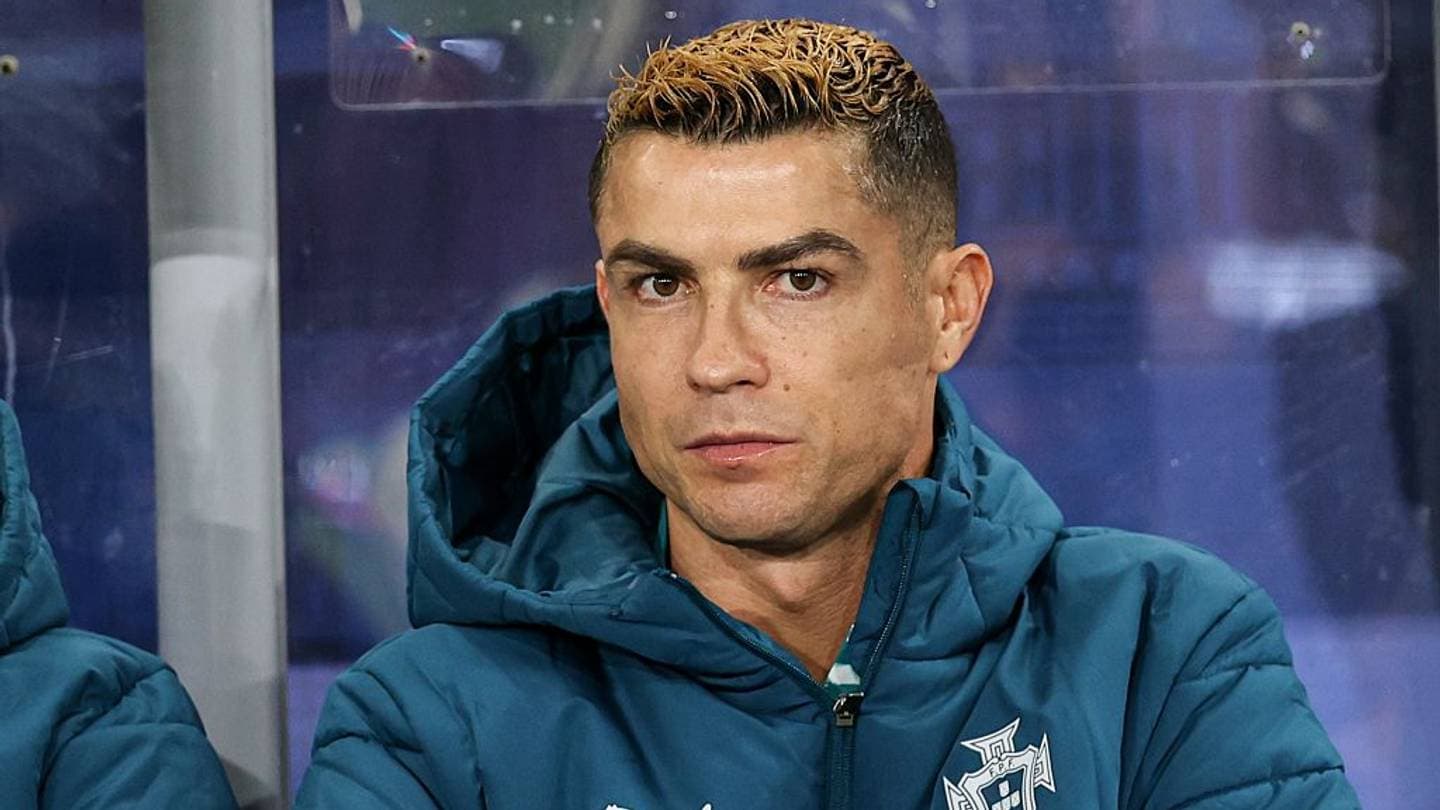
Portugal, one of the pre-tournament favourites, never reached the level their squad promised. Cristiano Ronaldo scored three in five, but a 1-0 defeat to Spain in the last 16 ended their campaign with a familiar sense of frustration.
The USA rode a wave of optimism before controversy around Folarin Balogun and a limp exit to Belgium punctured the mood. Scotland’s failure to sneak through as one of the best third-placed teams hurt, the days of waiting for confirmation only deepening the sting. France, flat and strangely lifeless, went out to Spain in a semi-final where their star-studded frontline simply never turned up.
Even the choice of venue took hits. The final at MetLife Stadium in New Jersey drew criticism: huge, expensive, difficult to reach and leave. A giant bowl in the middle of nowhere. Some argued Philadelphia, with its more accessible sports complex, would have been the smarter call.
The people who coloured the canvas
If the football supplied the drama, the fans painted the backdrop.
Mexico’s support, both in the Azteca and across cities like Los Angeles, gave the tournament its soundtrack. In LA, green shirts filled the streets, fireworks lit the sky after wins, and every Mexico game felt like a national holiday. In Mexico City, when an MC in a restaurant announced that a group of diners were from England, the room broke into spontaneous applause. Passion without hostility. Just football, shared.
Norway’s fans brought the Viking row to the world. Red shirts sat in lines, leaning back and “rowing” in unison, a choreographed celebration that swept through stadiums and social media alike. During the quarter-final with England in Miami, they taunted with “You’re going home, you’re going home, England’s going home” as Norway led 1-0. Seconds later, Bellingham equalised. Football has a sense of humour.
Curacao’s tiny population did not stop their fans turning Philadelphia into a wall of noise. Brazil’s travelling support did what Brazil always do: they didn’t just take over stadiums, they took over cities. For 48 hours, parts of Philadelphia felt like Rio or Sao Paulo.
Colombia’s fans transformed Arrowhead Stadium in Kansas City into a carnival when they faced Ghana. Argentina’s supporters, more than 60,000 strong in Miami and Kansas City, sang constantly, turning every match into a home game in all but name.
And at the heart of it all, in that Azteca cauldron and beyond, Mexico’s own followers reminded the world why this country and this sport remain inseparable.
Where it all leaves the game
When the dust settled, Spain’s discipline, Rodri’s control and Cubarsi’s emergence pointed towards a new European power structure. Messi’s Silver Ball at 39, and his continued ability to decide the sharpest games, stretched the boundaries of what longevity can look like at the top.
Behind them, Mbappe, Bellingham, Haaland and a supporting cast of Mora, Bouaddi, Manzambi and others signalled that the next era is already here.
The question now is simple and impossible all at once: when the next World Cup comes around, will anyone be ready – truly ready – to take the stage from Messi and make it their own?