Leicester City: Russell Martin's Quest for Promotion
Ten years on from the greatest long shot English football has ever seen, Leicester City are staring at a very different reality. The club that once tore up the Premier League script at 5,000-1 now finds itself back in League One, picking through the rubble of back-to-back relegations and a bruised identity.
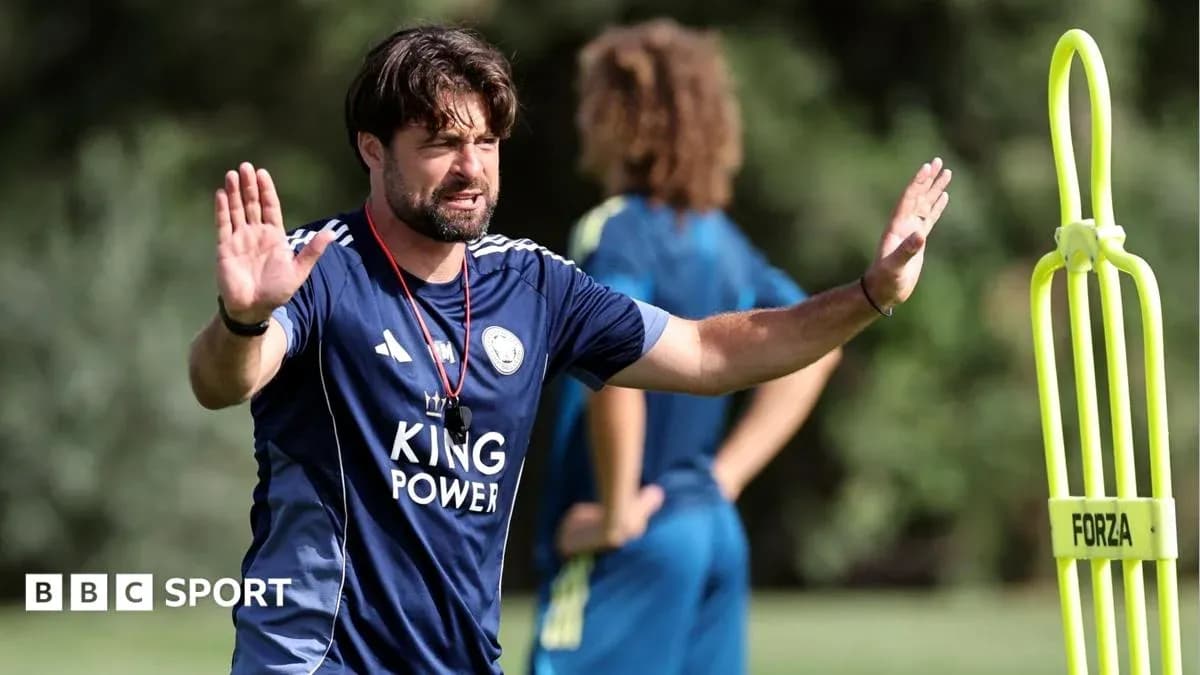
Into that landscape walks Russell Martin, a manager with his own reputation to repair and no interest in being haunted by anyone else’s past.
“We have to find our own way”
Martin has been here before, in his own way. He took Southampton back to the Premier League a little over two years ago, then endured a turbulent 123-day spell at Rangers that ended abruptly and noisily. Now he has dropped into the third tier with Leicester, a club that has fallen just as fast as it once rose.
He does not want the story to be about ghosts.
“I know the club got relegated but, prior to that, that club had amazing success over a sustained period of time – like, huge – and of course maybe you get judged based on that,” he told BBC Radio Leicester.
That success hangs everywhere at King Power Stadium: the 2021 FA Cup win, the title under Claudio Ranieri, the European nights. Yet Martin is clear. He cannot manage a memory.
“We have to find our own way and then be judged on that, because I can't judge people on the last couple of years,” he said. “Hopefully I'll be judged on the job I do here and not on my previous job and all that stuff. It's the same for me.”
It is both a plea and a line in the sand. The club wants a reset. So does the manager.
A new power structure under scrutiny
Martin’s arrival was the first big call under sporting director James McCarron, who stepped into the role last season. McCarron operates beneath chief football officer Jon Rudkin, a long-standing figure at Leicester and, alongside owner and chairman Khun Aiyawatt “Top” Srivaddhanaprabha, a lightning rod for supporter anger as the club slid from Premier League champions to League One in a decade.
The hierarchy has been under the microscope for years. Martin walked straight into that storm.
Asked about his dealings with those above him, he chose his words carefully but pointedly.
“There was real honesty about what's gone on, but now there's real honesty and openness and willingness to move forward,” he said. “I can't judge anything that has gone on before because I've not been here.
“You watch it from the outside, and people will make assumptions, but I've been really open to being surprised since I got here and people have been great.”
No excuses. No public finger-pointing. But a clear message: the past is acknowledged, the future has to be different.
Promotion or bust
The objective could not be more stark. Leicester have spent just one previous season in the third tier in their 142-year history. The club does not intend to hang around.
“It's to get promoted, first and foremost,” Martin said, when asked about his brief.
He wants more than just a scramble out of League One, though.
“[And] to play in a way that everyone understands and believes in, feels connected to and makes the fans proud.”
That line matters. Leicester’s collapse was not only about results. It was about a club losing its sense of self. Martin is trying to bind style, identity and expectation into one clear demand: win, but win with something recognisable.
The problem? Right now, the squad looks like a work in progress, stripped back and still missing key pieces.
Big earners out, gaps everywhere
The summer has been ruthless. Leicester have spent the window cutting away at the wage bill and shifting out the remnants of a squad that went down twice in a row.
- Denmark international Jannik Vestergaard has gone, his contract terminated by mutual consent.
- Harry Winks, once an England midfielder and signed to anchor a different era, has been sold to Cagliari.
- Abdul Fatawu’s permanent move to Ipswich Town has brought in around £20m.
Those deals tell their own story. Leicester are not just rebuilding; they are paying the price for past spending.
The club’s struggles with financial rules, which triggered a points deduction last season for historical breaches, have pushed them into selling not only senior names but emerging stars too. The departure of 17-year-old Jeremy Monga to Manchester City underlines the cost of those missteps. Leicester, once famed for unearthing and developing talent, are now cashing in earlier than they would like simply to stabilise.
An end-of-season clear-out saw 10 out-of-contract players leave. The collateral damage? Not a single senior striker remained on the books once Patson Daka and Jordan Ayew moved on.
For a manager tasked with instant promotion, that is a brutal starting point.
Building a new attack from scratch
So far, the rebuild has been cautious rather than spectacular. Conor Chaplin, the former Ipswich Town forward who top-scored when the Tractor Boys climbed out of League One four seasons ago, is one of only two signings since relegation.
Chaplin brings goals, movement and experience of this level. He is not, on his own, a solution.
Martin knows it.
“Ideally, we'd have two or three strikers,” he said. “We don't just want one of the same, and it's the same with wingers.”
“Whatever we are looking at, whatever profile it is, it has to be right for us. They need to be desperate to come here and play, they need to be desperate to help us to be successful.”
That word – desperate – is telling. Leicester’s recent squads have often been packed with talent, but not always with hunger. Martin wants a front line that reflects the club’s new reality, not its old comfort.
Different types of forwards, different threats, a mix of profiles. He is trying to construct an attack that can break down deep defences, bully tight games, and carry the weight of expectation that comes with being the biggest club in the division.
A giant in League One, but a wounded one
Leicester’s name, budget and stadium will make them a scalp every week. The badge still carries Premier League echoes. Yet the club is operating under financial pressure, with a thinned-out squad, a new sporting structure and a manager who knows this job will define how he is viewed in the years ahead.
Martin is not asking for sympathy. He is asking to be judged on what happens from here.
The fairytale belongs to another Leicester side, another time. This version stands at the bottom of the hill, not the top. The question now is simple: can Russell Martin turn a fallen champion into a relentless, hungry promotion machine before the weight of history drags them down again?