
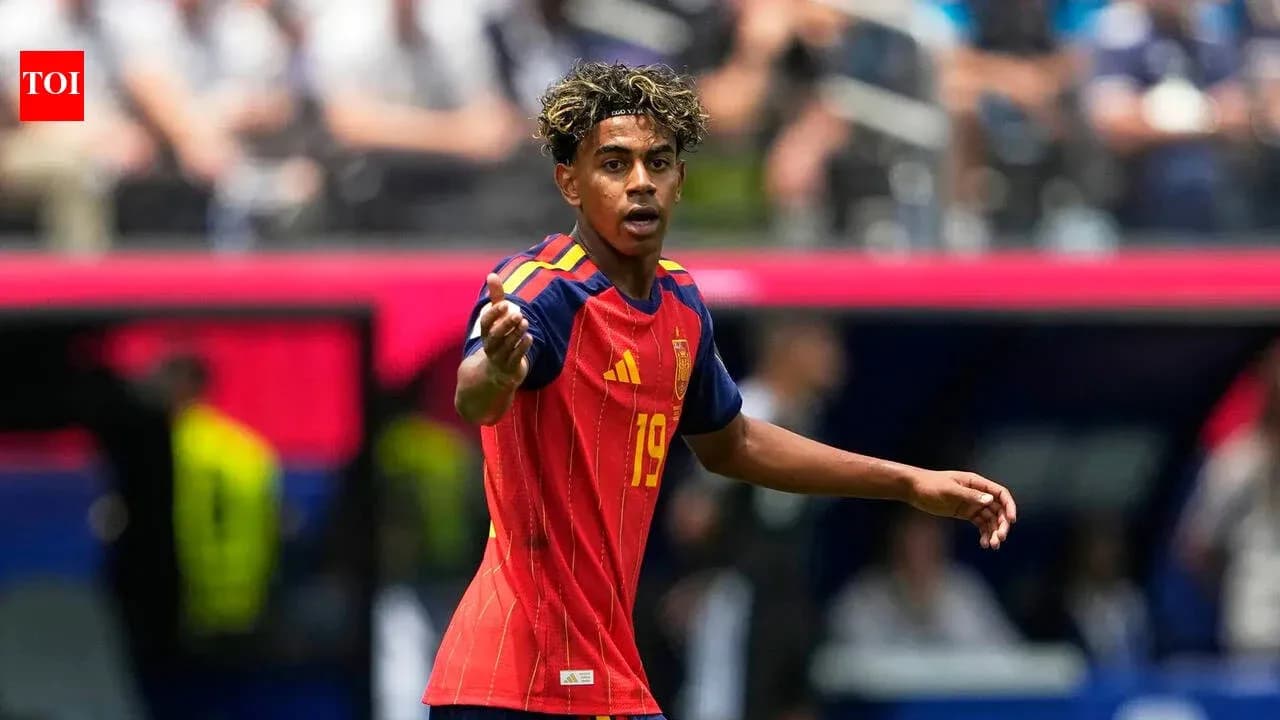
Lamine Yamal Leads Spain to World Cup Final
Lamine Yamal didn’t wait for the confetti to settle.
Minutes after Spain had swept past France 2-0 at AT&T Stadium to book their place in the 2026 World Cup final, the teenager was already staring down the next stage. Phone in hand, adrenaline still humming, he fired off a message that captured the mood of a team that looks nowhere near finished: “nuevayol vamos por ti” — “New York, we’re coming for you.”
It was not a boast. It sounded like a promise.
A teenager at the heart of a heavyweight win
Spain are back in a World Cup final for the first time since 2010, and a 19-year-old is driving the narrative.
Lamine Yamal, one of two teenage starters alongside Pau Cubarsi, walked into history in Arlington. Never before had a World Cup semifinal featured a team beginning with two teenagers. Spain did it against France, one of the most seasoned tournament machines of the modern era, and made them look ordinary for long spells.
The key moment arrived early. In the 22nd minute, Yamal snapped into action on the left, reading Lucas Digne’s hesitation, nicking the ball, and surging into the box. Digne clipped him, Yamal went down, and Spain had the opening they had been probing for.
Mikel Oyarzabal, ice-cold from the spot, rolled the penalty home. One-nil, and suddenly France were chasing shadows.
Luis de la Fuente’s side then did what Spain, at their best, always do: they took the ball and refused to give it back. The midfield set the rhythm, the back line squeezed up, and Kylian Mbappé and Aurélien Tchouameni were left feeding off scraps. France tried to break the press; Spain simply reset the trap.
The pressure told again after the interval. Pedro Porro stepped up from the right, exchanged passes with Dani Olmo, and drove a low finish into the far corner. A clean, composed strike. Two goals, and a semifinal that had looked like a heavyweight duel tipped decisively in red.
Yamal then thought he had his own moment on the scoresheet, sweeping in what would have been a crowning third. The flag went up. A marginal offside, a small line on a screen, the only thing denying him a goal to go with his influence.
France finally threw bodies forward, Mbappé darting into pockets, Tchouameni trying to force the issue from deep. It barely rattled Spain. The back four held, the midfield tracked runners, and the clock became La Roja’s ally. Another clean sheet — their sixth in seven matches at this tournament — underlined a transformation from free-flowing entertainers into a fully rounded, ruthless unit.
Dancing in the dressing room, eyes on New York
Inside the dressing room, the release was total.
Spain’s official account pushed out footage from behind the door: players shouting, singing, dancing in a tight circle, the kind of unfiltered joy that only comes with reaching football’s biggest stage. “Shouts rang out, dances took place, celebrations happened... Come to the Spanish National Team's locker room and unleash the forbidden moves!” the caption read.
The noise was deserved. The message behind it was louder.
This semifinal did more than send Spain to New York-New Jersey Stadium for Sunday’s showpiece. It confirmed the sense that this is no longer just a bright attacking side living off sparks from its young stars. De la Fuente has shaped a team that marries the old Spanish virtues of possession and control with a harder edge: defensive discipline, clinical finishing, and a willingness to suffer without the ball.
Oyarzabal’s numbers tell part of that story. His penalty was his 18th goal in his last 20 appearances for Spain, a run of form that has elevated him into the company of the nation’s most prolific forwards. He has now joined the select group to reach 30 international goals in Spanish colours, a benchmark that underlines how quietly, steadily, he has become a reference point in this side.
Yet this campaign still orbits around the new generation. Around a teenager who can turn a World Cup semifinal with a single burst of acceleration and then, moments later, talk to the world through a phone screen as if this is all completely normal.
Spain now head to New York with history within reach. Their only previous World Cup final ended with Andrés Iniesta’s strike against the Netherlands in 2010, a goal that defined an era.
Sixteen years on, with Lamine Yamal at the heart of a new wave, they stand one win away from adding a second star — against either defending champions Argentina or a resurgent England.
New York is waiting. So is the answer to the question Spain have posed all tournament: is this just the rise of a new generation, or the start of another dynasty?





