
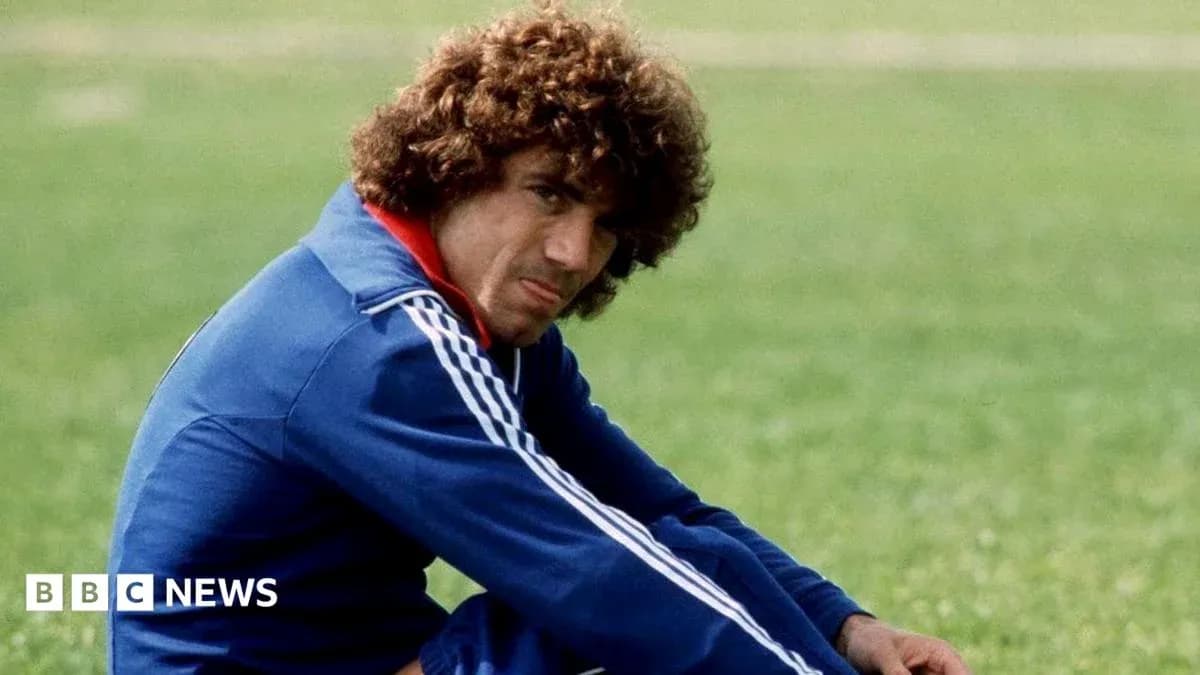
Kevin Keegan: The Man Who Connected Liverpool and Hamburg
Kevin Keegan did not just change clubs in 1977. He changed the conversation between two football cities that see the game as a birthright, not a pastime.
In Liverpool, they knew him as the electric forward who helped drag Liverpool FC into the modern European elite. In Hamburg, he arrived as the English superstar willing to test himself in a foreign league when such moves were still viewed with suspicion. Between those two ports, as Liverpool City Region Mayor Steve Rotheram put it this week, Keegan “built a bridge between two great cities”.
Rotheram’s words came in a letter to the mayor of Hamburg, written in the days after Keegan’s death on Monday at the age of 75. The letter was meant to precede a shared visit: Keegan had been due to travel with Rotheram to Hamburg’s annual Harbour festival, a celebration perfectly suited to a man who once made the North Sea feel like a narrow canal.
He never made that final trip. A cancer diagnosis, Rotheram revealed, meant the former England striker was unable to travel.
By then, of course, the work was already done.
One of the most decorated English players of all time, Keegan twice won the Ballon d’Or and collected seven major honours with Liverpool. The last of those, the club’s first European Cup, came on his final appearance. He lifted the trophy in red, then turned towards a new challenge in Germany. It was a farewell and a handover in one: Liverpool stepping onto the European stage, Keegan stepping off towards Hamburg.
For many in Liverpool, his departure was seismic. For Hamburg, it was transformative. Rotheram captured that duality with a line that will resonate on both banks of the River Mersey.
“For one half of our football-mad city, Kevin was a footballing hero,” he wrote, “for the other, a well-respected irritant on derby day.”
That is how you know a player has cut through tribal lines. Blue or red, they felt him.
Rotheram went further. “He was not just a Liverpool FC legend and one of the most beloved figures our city has ever known,” he wrote, before underlining what that 1977 move really meant. “When Kevin left our shores for Germany in 1977, he did more than make a then-record transfer between two football clubs. He built a bridge between two great cities.”
This was not hollow rhetoric. Keegan’s success in Germany, his status at Hamburg SV, belongs to both ports. He was the English export who did not shrink abroad, the European star who carried the noise of Anfield into a different football culture and fed it back with interest.
Rotheram described Keegan’s achievements as belonging “equally to Liverpool and Hamburg”, a rare shared claim in a sport that usually hoards its heroes. In both cities he was “admired and loved” – not just for the goals, but for the way he played: relentless, direct, unapologetically committed.
“To me,” the mayor added, “he embodied better than anyone else that famous maxim: football is the people’s game.”
In Liverpool and Hamburg, two working ports that understand sweat and graft better than most, they did not need that maxim explained. They just needed someone to wear it on his sleeve.
For a crucial decade of European football, that someone was Kevin Keegan.





