Kevin Keegan: Bridge Between Liverpool and Hamburg
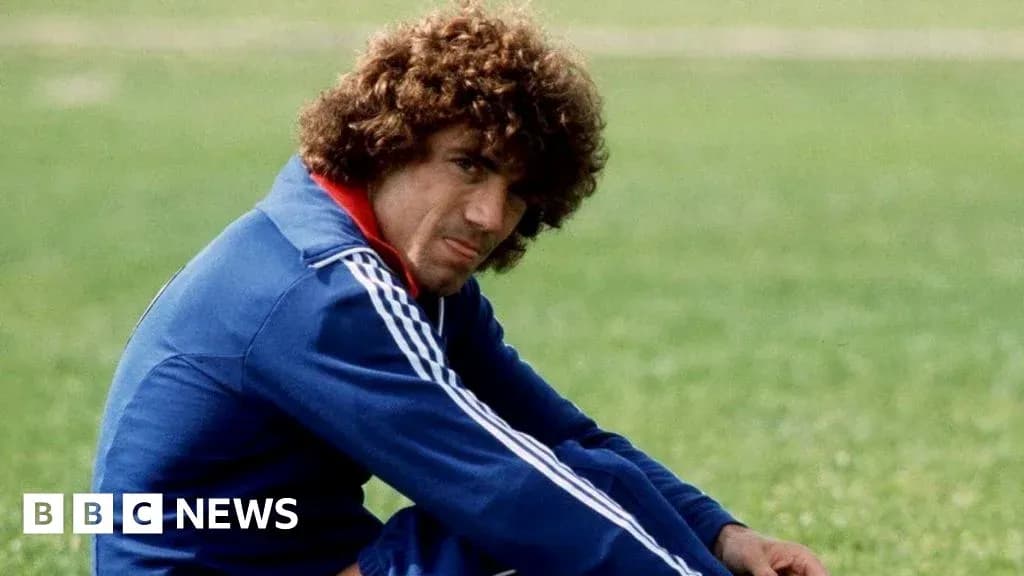
Kevin Keegan spent a lifetime breaking through defences. In death, he is being remembered for breaking down borders.
Liverpool City Region Mayor Steve Rotheram has hailed the former Liverpool and Hamburg forward as a “bridge between two great cities” in a poignant letter to the Mayor of Hamburg, Dr Peter Tschentscher, following Keegan’s death on Monday at the age of 75.
Keegan, one of English football’s most decorated players, was due to return to Hamburg alongside Rotheram for the city’s annual Harbour festival. Cancer stopped him travelling. It did not stop the connection he helped forge.
From Anfield hero to Hamburg icon
Keegan left Liverpool FC in 1977, days after lifting the club’s first European Cup in his final appearance, to join Hamburg SV in what was then a record transfer. He arrived on the continent as a European champion and twice went on to win the Ballon d’Or, cementing his status as a superstar in both countries.
Rotheram’s letter, seen by the Local Democracy Reporting Service, captures how deeply Keegan’s story is woven into Liverpool’s identity.
“For one half of our football-mad city, Kevin was a footballing hero,” he wrote. “For the other, a well-respected irritant on derby day.”
It is a line that rings true on Merseyside. Red idol. Blue tormentor. Always respected.
But Rotheram pushed beyond the usual football clichés.
“He was not just a Liverpool FC legend and one of the most beloved figures our city has ever known,” he said. “When Kevin left our shores for Germany in 1977, he did more than make a then-record transfer between two football clubs. He built a bridge between two great cities.”
A legacy shared by Liverpool and Hamburg
Keegan’s years in Germany did more than add medals to his collection. They created a shared sense of ownership. Rotheram stressed that Keegan’s success “belonged equally to Liverpool and Hamburg”, describing how he was both “admired and loved” in each city.
“To me,” the mayor added, “he embodied better than anyone else that famous maxim: football is the people’s game.”
That idea has been carried into civic life. Keegan’s career and cross-city influence feature in a special exhibition celebrating the links between Liverpool and Hamburg, a relationship he helped to shape and, in Rotheram’s words, one that “remains strong to this day”.
The mayor recalled how Keegan had written a message for him to deliver at the Liverpool City Region pavilion in May.
Despite, as Rotheram put it, his “pidgin German and broad Scouse accent”, the words landed. The crowd responded warmly. The sentiment was clear: Keegan might have left both cities decades ago, but he had never really left their hearts.
The trip he never made
Keegan had planned to join Rotheram at Hamburg’s port anniversary celebrations, the Hafengeburtstag. His cancer diagnosis forced him to abandon the visit, a decision that “devastated” him, the mayor revealed.
Even then, Keegan made sure his voice would be heard on the banks of the Elbe. He sent a personal note for Rotheram to read on the Liverpool stage.
Rotheram has now shared that message again with Hamburg’s mayor. It was simple, and pure Keegan.
“In Kevin’s words, once again: Forgive my Plattdeutsch, but I love Hamburg.”
The letter closes with a final gesture of solidarity from one football city to another.
“On behalf of the people of Liverpool, we send our deepest condolences to Kevin’s friends, the HSV family and the people of Hamburg. Thank you for loving him as we did. You’ll Never Walk Alone.”
Keegan wore different colours, sang different anthems and learned different dialects. In the end, he left two cities feeling the same thing: that he was one of theirs.