Jude Bellingham and Erling Haaland: A Friendship Beyond Football
The cameras always seem to find them.
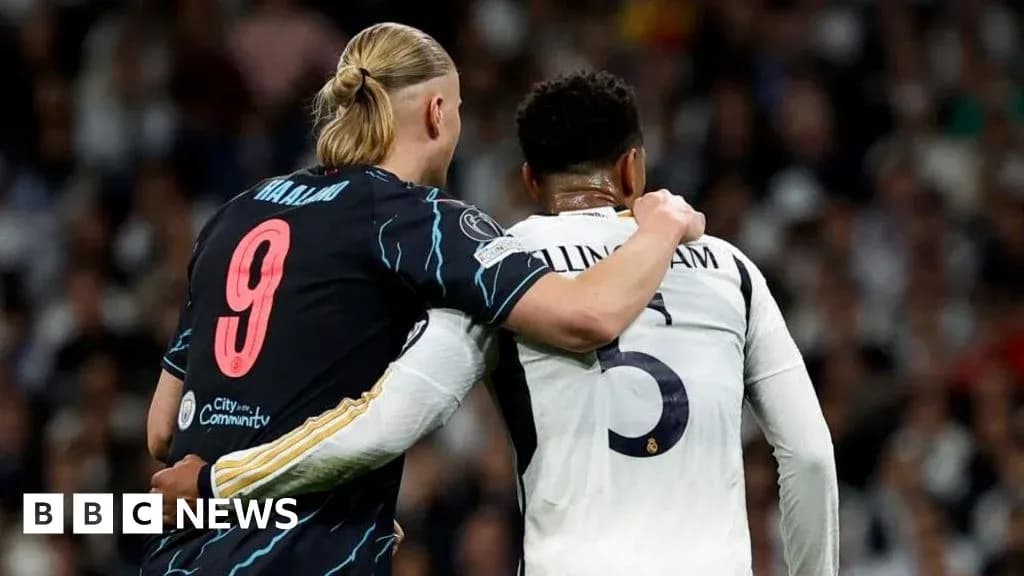
Jude Bellingham and Erling Haaland can’t share a pitch at this tournament, yet their friendship keeps cutting through the noise of modern football like a welcome interruption. Old clips from their Borussia Dortmund days are suddenly everywhere again – smiling, teasing, laughing – a softer archive of two of the game’s most ruthless competitors.
It’s a long way from the old playbook of the 90s and 00s, when players and brands often collided in a blur of scandals and sulks. PR expert Mark Borkowski told the BBC that this generation is “a different breed”, shaped by social media rather than tabloid front pages. The game hasn’t become gentler. The image around it has.
Haaland, he points out, comes from a “pretty wholesome family”. Both he and Bellingham have grown up in the glare of European club football, exposed early to different cultures, different expectations, different ways of being a superstar. It shows.
Their bond first really caught the public eye at Dortmund. The club leaned into it, releasing a Valentine’s Day video on YouTube that has aged into internet folklore. The two sat side by side, trading deliberately awful pick‑up lines. At one point, Haaland deadpanned: “I’d like to take you to the movies but they don’t let you bring in your own snacks.” Bellingham cracked. So did everyone watching.
From there, the internet did what it does best. Fans of the duo began drawing playful parallels with the gay ice hockey romance novel Heated Rivalry, dubbing the imagined football equivalent “Cleated Rivalry”. The joke lives in a strange, affectionate space: both players are reportedly in relationships with women, yet supporters see enough personal charm and on‑screen chemistry to build a whole fan-fiction universe around them.
To many, that’s the point. One cultural commentator told the BBC this dynamic acts as a kind of antidote to the usual churn of football social media. Instead of the endless outrage, tribal point‑scoring and the tired habit of turning every player into either a saint or a villain, these clips drag Bellingham and Haaland back into the realm of the human. Not assets. Not algorithms. Just two young men who happen to be extraordinary at what they do.
On the pitch, they are among the most cold‑eyed competitors in world football. Off it, the footage shows them as funny, openly affectionate and completely at ease with each other. The contrast is striking. They can “desperately still want to beat each other,” as the expert puts it, and yet show no interest in performing hostility for the cameras.
That in itself feels radical. Two elite male athletes, comfortable enough to display warmth and a notionally open friendship, without needing to lace every interaction with macho needle. No snarling, no forced distance. Just respect, and a visible fondness.
They are, crucially, a perfect character pairing. Bellingham comes across as polished, articulate, emotionally open. He speaks with clarity, carries himself like a leader, and rarely looks flustered in front of a microphone. Haaland, by contrast, leans into a more eccentric, deadpan persona – a natural meme factory whose smallest reaction can launch a thousand clips. Together, they draw out sides of each other the public rarely sees when they’re locked into the role of “elite athlete”.
Behind that public image, there are quieter foundations. Bellingham is widely reported to be in a relationship with US model Ashlyn Castro, though he has never spoken about it. What he does talk about, often and with obvious sincerity, is his family.
“Looking back, I think if I had a dad that didn’t play football, I probably would never have got into football really, because there was nothing there for me that motivated me to play at the start,” he told the England Football website. His father’s career and guidance lit the path.
His mother, he says, shaped the rest. She taught him about life outside football – lessons that have slipped seamlessly into his game. Staying calm. Staying cool. Being a good example. Leading. “I think a lot of that comes from my mum because she’s a very good leader,” he explained. Those values now pulse through his performances and his presence in the dressing room.
Haaland, for his part, has pulled back the curtain just enough to hint at a similar domestic normality. “I cook dinner…” he said in one interview, before pausing to reveal, with a smile, that his partner likes video games – a detail he admitted would probably embarrass her. It’s a small moment, but it punctures the myth of the unstoppable, robotic goal machine. Behind the numbers, there’s a kitchen, a console, a life.
Put all of this together and you get the real reason their friendship resonates so strongly. It’s not just the jokes or the viral edits. It’s the sense that, in an era when every touch, every expression, every word can be clipped, dissected and weaponised, two of football’s biggest names are still prepared to be openly kind with each other in public.
In a sport that often demands armour, Bellingham and Haaland have shown that a little visible humanity doesn’t weaken the brand. It strengthens it – and maybe, just maybe, nudges the next generation of stars to drop the act and let the world see who they really are.