Jude Bellingham and England's World Cup Heartbreak: A Chaotic Semi-Final
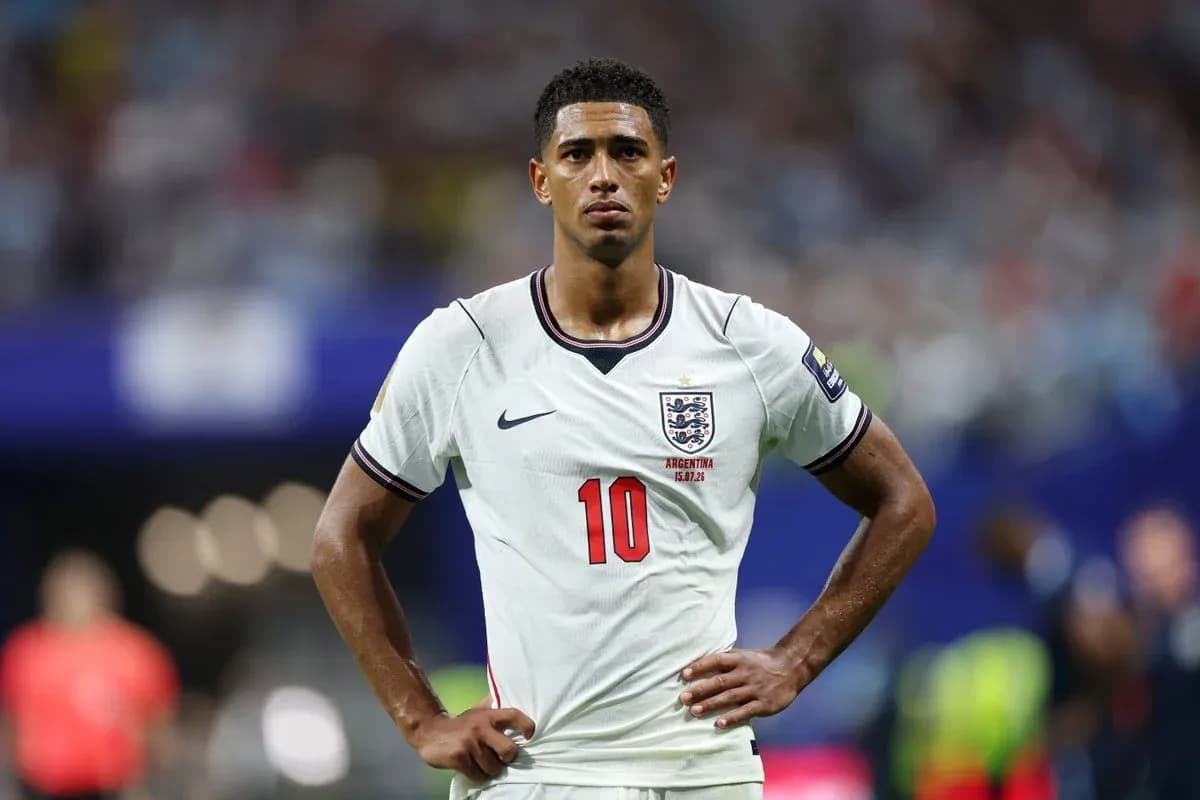
Jude Bellingham stood alone in the centre of the pitch, England’s World Cup dream already gone, when the night in Atlanta turned from bitter to ugly.
Argentina had just torn up the script with a ruthless late comeback, Enzo Fernandez and Lautaro Martinez overturning Anthony Gordon’s 55th-minute opener to seal a 2-1 semi-final win and send England out. The game had simmered for long spells. At the final whistle, it boiled.
What followed was not the image FIFA will want replayed from this tournament.
Flashpoint after the whistle
Television cameras picked up Bellingham lingering on the turf as Argentina’s players sprinted off in all directions to celebrate. He began making his way through the chaos, offering handshakes, trying to carry himself as one of England’s senior figures on a brutal night.
Then came the flashpoint.
Valentin Barco, an Argentina substitute who had not played a minute, was nearby, celebrating with teammates. As Barco moved past, Bellingham stepped towards him and slapped him on the back of the head. Barco reacted instantly, shoving the England midfielder, and the confrontation escalated.
Nico Paz rushed in first, attempting to pull the pair apart. More players quickly arrived, blue and white shirts clashing with white, as what started as a petty exchange turned into a sprawling, bad-tempered scrap.
Stewards and staff eventually broke it up, but the damage to the evening’s tone was complete. This was a semi-final that ended not with handshakes and swapped shirts, but with hostility.
Barco’s earlier celebration fuels anger
Bellingham’s anger did not come from nowhere.
Earlier footage from the game shows Barco sprinting towards the England dugout after Fernandez’s equaliser, veering across to celebrate in front of Thomas Tuchel, his staff and the England bench. The Argentina substitute, who is reportedly set to join Chelsea, appeared to make a point of his celebration in that direction, drawing glares from the technical area.
It did not erupt immediately. England, still leading at that stage, had other problems to deal with. But in the emotional wreckage of defeat, that moment clearly lingered.
Bellingham, who had earlier laughed off a bout of pushing and verbals from Leandro Paredes as Argentina tried to needle their way back into the contest, finally snapped. England had taken their share of rough treatment across the 90 minutes. The scoreboard, and the celebrations in their faces, made it sting even more.
A match played on the edge
The tone of the night had been set long before stoppage time.
Nineteen fouls, no shots on target in a suffocating first half, and a referee constantly dragged into the spotlight created a stop-start contest heavy on tension and light on rhythm. Every challenge felt loaded, every coming together a potential trigger.
Argentina leaned into the chaos, disrupting England’s flow and chipping away at their composure. England, for all their early discipline, could not keep their heads once the game swung away from them.
When the final whistle went, the release of pressure was always likely to be volatile. Argentina’s players celebrated wildly in front of their fans. England’s players sank to the turf. In that emotional split-screen, confrontations were almost inevitable.
Old rivalry, old wounds
The hostility did not exist in a vacuum.
The football rivalry between England and Argentina has long carried an extra edge, sharpened by history and politics as much as sport. In Atlanta, that backdrop was impossible to ignore.
At full-time, Argentina’s players unfurled a supporters’ banner reading “Las Malvinas are Argentine”, a pointed reference to the Falkland Islands, a British overseas territory and a recurring theme in Argentinian football culture and chants.
The slogan reaches far beyond football. In 1982, the two countries went to war after Argentina’s then far-right military dictatorship invaded the Islands. The conflict killed 907 people before Britain reasserted control. The Islands have remained a source of tension ever since, their status frequently invoked around Argentina’s national team.
Given that history, extra security had already been deployed in and around the stadium in Atlanta, with authorities acutely aware that this was no ordinary World Cup tie. They were right to be cautious. The game frayed nerves on both sides, on and off the pitch.
England out, scars remain
For England, the night ends with more than just another painful semi-final exit. The manner of the defeat, the late collapse, and the chaotic scenes after the whistle will leave scars that outlast the flight home.
Bellingham, so often the heartbeat and emotional barometer of this side, found himself dragged into the storm rather than standing above it. Argentina march on, fuelled by comeback belief and a rivalry that still burns hot.
England are left with a question they know too well: where do they go from here, after coming so close and losing themselves in the heat of the moment?