
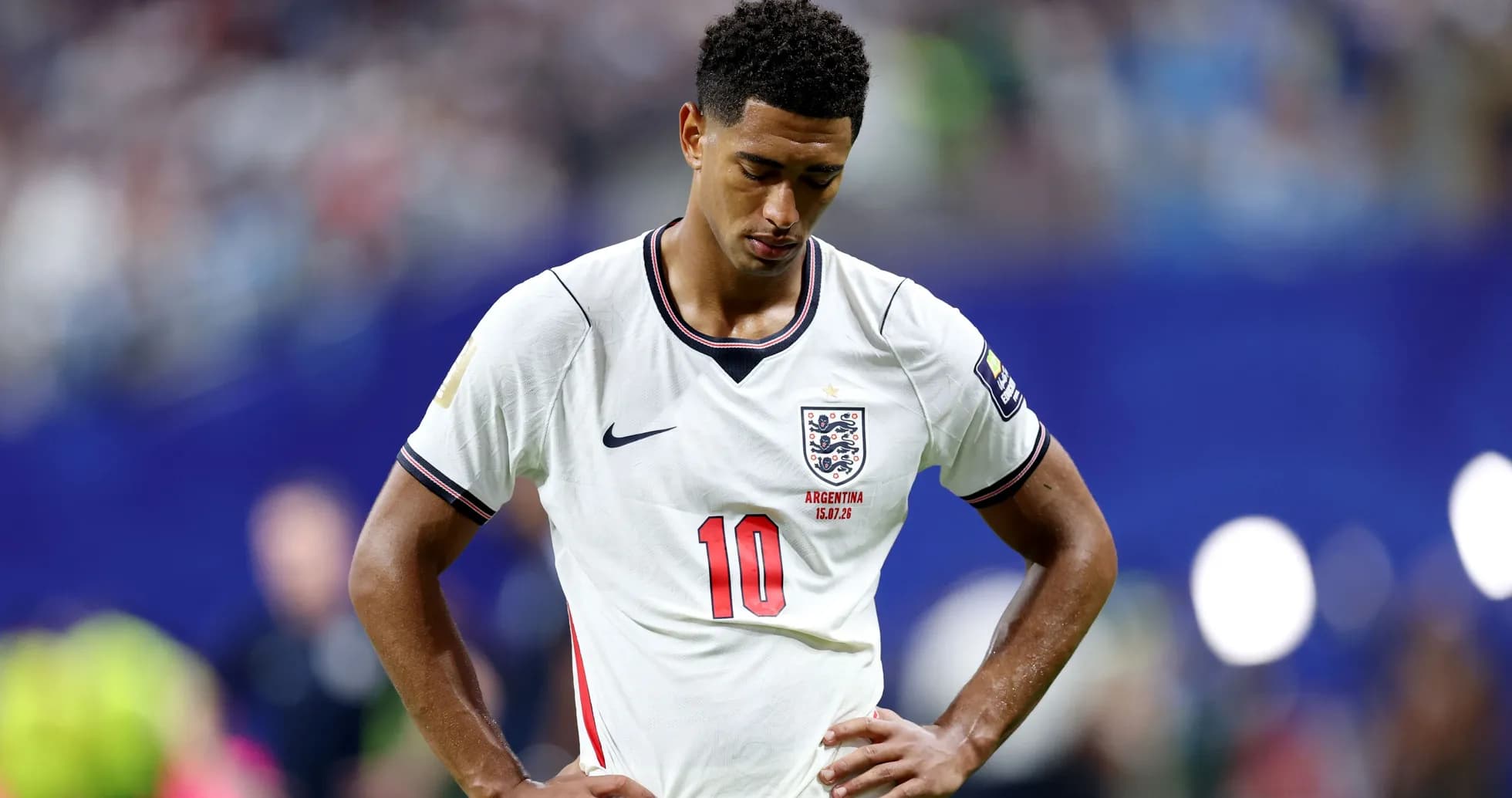
Jude Bellingham Reflects on England's Heartbreaking World Cup Loss
Jude Bellingham stood in front of the cameras with red eyes and a broken voice, trying to explain the kind of defeat that leaves scars. England were seconds from a first World Cup final since 1966. Argentina turned it around. A 2-1 loss in the dying moments, and another chapter added to the country’s catalogue of football trauma.
For Bellingham, this one cut deep.
The 23-year-old had dragged England through this tournament, finishing with seven goal contributions and a blistering brace against Norway in the quarter-final. He arrived in this World Cup off the back of a draining club season with Real Madrid and the raw wound of losing the Euro 2024 final. This semi-final felt like the moment everything was supposed to come together.
Instead, it felt like something snapped.
“I think we can take a lot of experience from this, but it is so gutting,” he said, speaking almost immediately after the final whistle, emotion spilling through every word. “I wanted to be a part of an England squad that finally done it and got it over the line. To be here, telling the fans the same things they've heard for years, it's really gutting.”
No clichés. No distance. Just a young star carrying the weight of a nation and looking crushed by it.
The frustration was written across his face as he searched for a way to apologise to supporters who had dared to believe again. “I wish I could give one more win or two more wins,” he added. “But at the moment, my head is a bit fuzzy with disappointment, so I'm sorry.”
On the pitch, the story had turned on a decision in the dugout.
England led through Anthony Gordon, a goal that seemed to steady the nerves and tilt the night their way. They had control, or something close to it. Then came the switch. Thomas Tuchel moved his side into a back five, trying to close the gaps as Argentina pushed bodies forward and chased the game with growing desperation.
The change backfired.
“We decided to go to a back five because the gaps were far too open,” Tuchel explained afterwards. “Argentina played with more risk, played with more rhythm and played with the feeling maybe that they had nothing to lose any more, which freed them up and pulled us back.”
England retreated. Argentina surged. The energy of the game flipped in an instant.
“Because we obviously played suddenly with a feeling that we had a lot to lose,” Tuchel admitted. “Of course the responsibility is on the coach and if it doesn’t go well it’s easy to say it was wrong.”
He didn’t try to dodge it. He knew exactly where the spotlight would land.
The tactical shift turned a measured performance into a passive one. Argentina, sensing fear, attacked with a freedom England could no longer match. By the time the final whistle went, the back five symbolised something more than a formation tweak; it looked like the moment belief drained out of an England side that had been on the brink of history.
Outside the dressing room, the inquest started immediately. Substitutions, game management, mentality – all of it under the microscope. Yet behind the noise, one thing seems settled: Tuchel is not going anywhere.
FA chief executive Mark Bullingham has given his backing to the former Chelsea and Bayern Munich manager, and all indications are that Tuchel will lead England into the home European Championships in 2028. The German was clear about his own stance.
“We keep on going with the contract until the home Euros,” he said, shutting down any talk of walking away.
So England move on, at least officially. Emotionally, it will take far longer.
Next comes the most hollow fixture in international football: a third-place play-off against France on Saturday. A bronze medal would technically mark England’s best World Cup finish in 60 years. On paper, it would be historic. In reality, it will feel like a consolation prize nobody in that dressing room truly wants.
For Bellingham and his teammates, the real challenge starts after that final whistle against France. They must carry this pain, this sense of another chance lost, into a two-year build-up to a tournament on home soil.
The wait goes on. The question now is whether this heartbreak hardens England for 2028 – or becomes just another ghost they have to play against.





