
Jose Mourinho's Emotional Departure from Chelsea: A Wake in the Dressing Room
The day Jose Mourinho walked into the Chelsea dressing room to say goodbye did not feel like football. It felt like a wake.
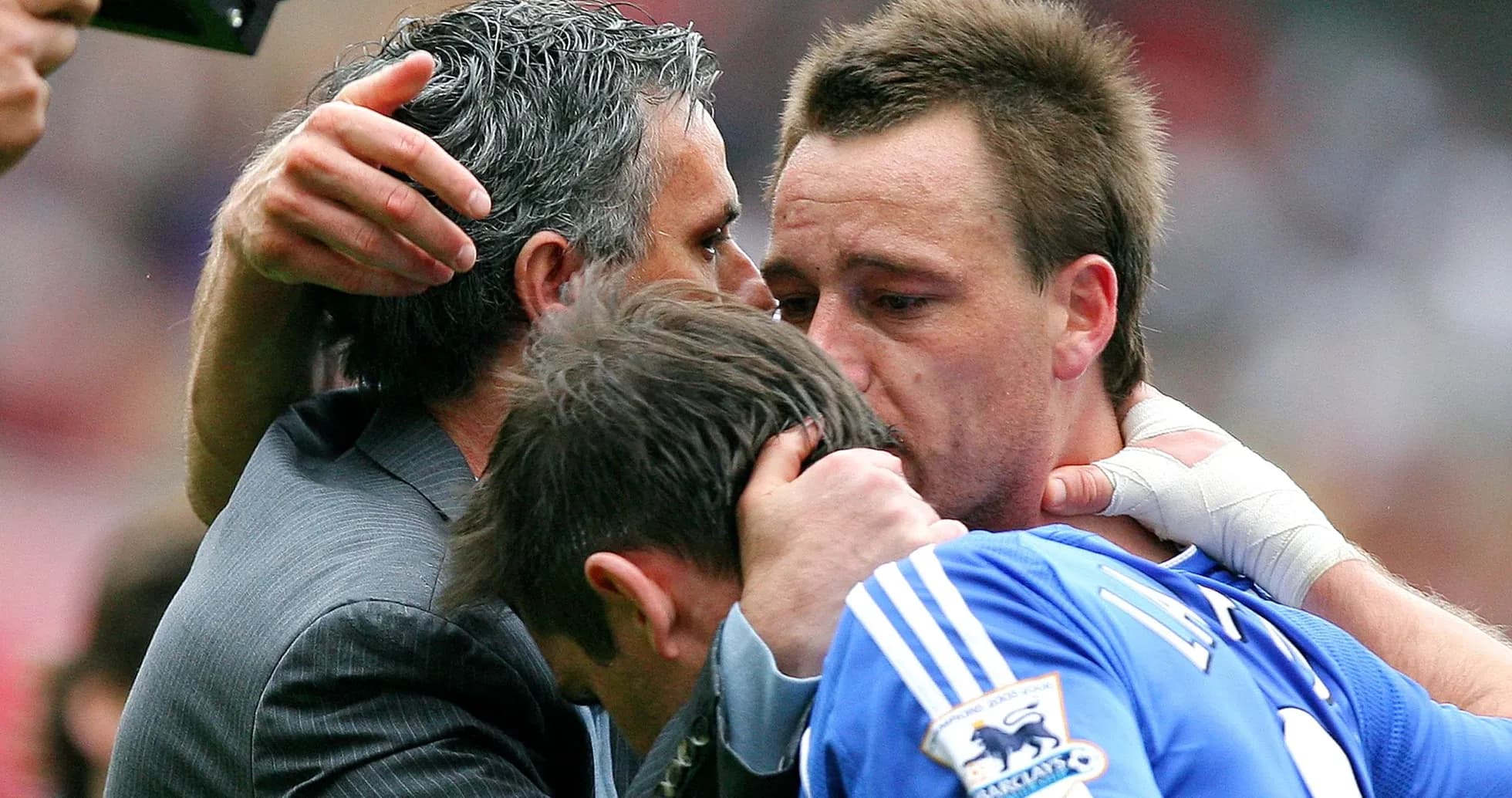
Frank Lampard can still see it. The door opened, and the man who had transformed his career stood in front of a room full of hardened professionals and told them, simply, that he had been sacked.
"I remember him coming into the dressing room and he said to me that he’d been sacked," Lampard recalled. In that instant, medals, tactics and headlines faded. What remained was the bond between a manager and the players who would have followed him anywhere. "I couldn’t think about how much this man had helped my career, how much I loved working with him. There were tears, which is not normal in the dressing room when a manager leaves."
Tears. In a Premier League dressing room. That was the scale of Mourinho’s impact at Stamford Bridge.
John Terry felt it just as sharply, and nearly two decades on, the former captain still carries the weight of that night against Rosenborg. The 1-1 Champions League draw is remembered on paper as a blip in a group stage. In Terry’s mind, it became a sliding-doors moment that cost Mourinho his job.
"I would leave that pitch in a coffin for him," Terry said, his admiration for Mourinho undimmed. "You’ve got grown men, tears running down their face, not really understanding why. And even still today I’m like, that’s my fault."
The words spill out like a confession. One goal, one lapse, replayed endlessly.
"When we drew the Champions League game, my man scored. If I didn’t let that person score, would he have lasted another couple of years? Who knows? I still feel kind of responsible for that, if that makes sense. It’s just disappointing how it all ended, if I’m honest. I absolutely loved him and adored him and was more upset than anyone, to be honest."
Terry’s anguish underlines what Mourinho built: a dressing room that believed in him with a rare, almost personal intensity. Yet his departure, as he tells it, was about more than a single result or a rogue header in the box.
From Mourinho’s perspective, the fracture began higher up, in the corridors of power where Chelsea’s early Roman Abramovich era had once been defined by a tight, clear chain of command.
"In my work, the triangle: Jose, Peter Kenyon, Roman was invaded by strangers," Mourinho revealed. At the start, the structure was simple and strong. Manager, chief executive, owner – aligned, decisive, untouchable. The owner’s box at Stamford Bridge reflected that clarity.
"In the beginning, you play at Stamford Bridge, you look to the box, Roman, his wife, with one or two persons of his confidence," Mourinho said. Then the faces changed. The circle widened. So did the noise. "A few seasons later: former players, agents. These kinds of people, they know where the money is."
The implication was obvious. Where once decisions were made by a tight inner circle, new voices arrived with opinions, agendas and access. The triangle bent under the strain.
Mourinho also lifted the lid on a moment that crystallised how his relationship with Abramovich had shifted – a request that, to him, cut across the seriousness with which he approached his work.
"I think Roman changed," Mourinho said, before recalling a surreal episode that left Peter Kenyon squirming. "For example, one day Peter came to me quite embarrassed and he told me, 'Jose, I have to tell you something. The boss is in Sardinia with these boats, and the people that work in these boats they play football against guys from the hotel, and they are losing. Can you go there to win a game for him?'"
The answer was instant. Mourinho had a team to prepare, a session to run, a match to plan for. The idea of dropping everything to fly out and rescue a kickabout on a billionaire’s yacht cut against everything he believed his job should be.
"'No, Peter, I have training today. I have to prepare for tomorrow; I cannot go'," Mourinho replied. "And he was not happy with that."
That refusal did not end the relationship on its own, but it spoke volumes. On one side, a coach obsessed with preparation, detail and professional standards. On the other, an owner whose priorities and expectations had begun to drift into a different realm.
Between those two worlds stood players like Lampard and Terry, watching the man who had defined their Chelsea careers walk into a dressing room and tell them it was over. They cried, they questioned, they blamed themselves. Mourinho, as ever, read the room, took the hit and walked away.
The trophies remain in the cabinet. The stories, clearly, still live much closer to the surface.





