
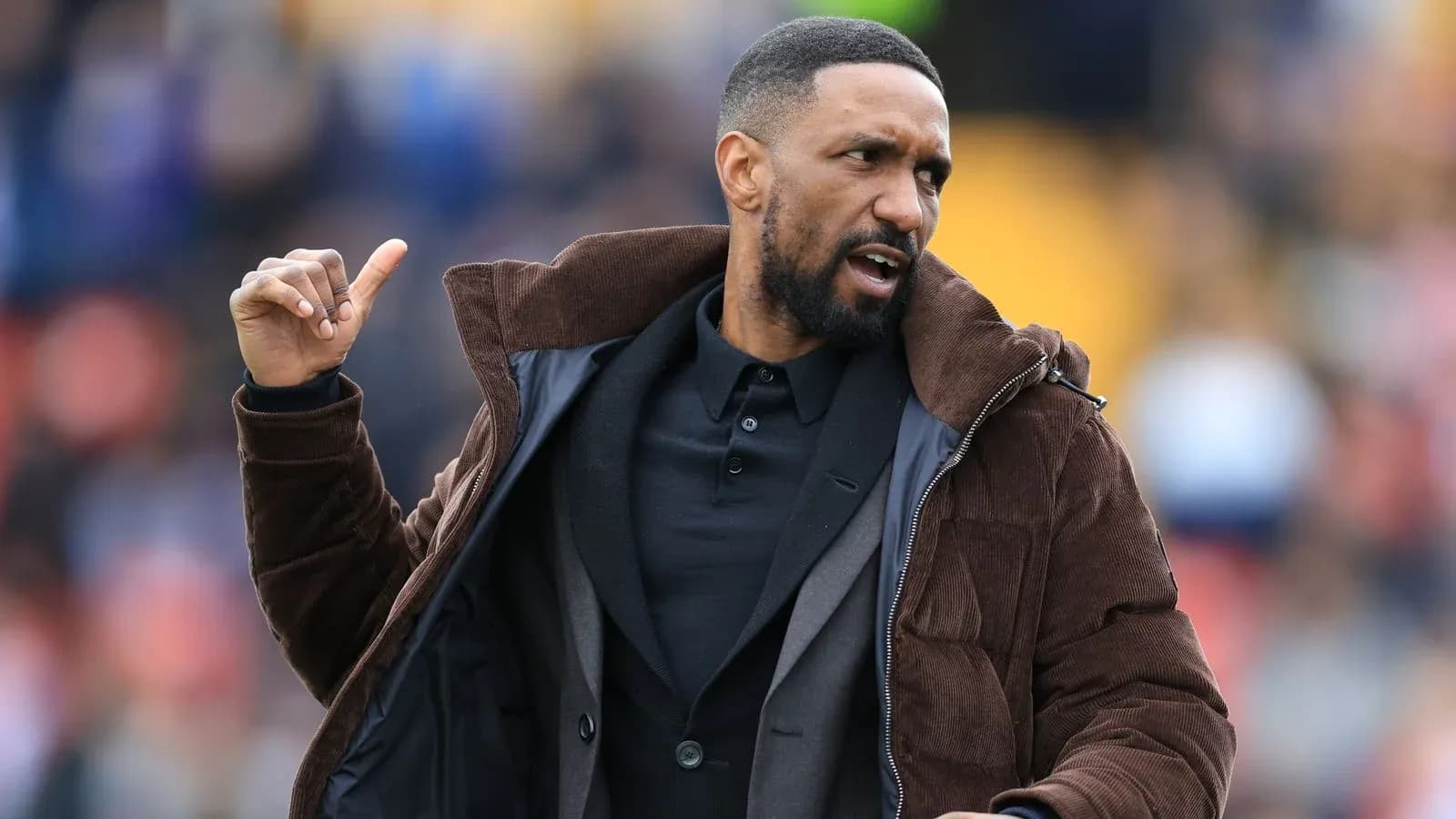
Jermain Defoe's Management Tenure at Woking Ends in Controversy
Jermain Defoe’s short, sharp plunge into management at Woking has ended in acrimony, with the club’s director of football Jody Brown accusing the former England striker of failing to attend a key meeting and a training session before his sudden exit.
Defoe’s contract was mutually terminated on Thursday, just four months after he took his first senior managerial job in March. His record: six games, two wins, one defeat, and a growing sense that something behind the scenes was fraying.
On Friday night, Defoe framed his departure as a matter of circumstance. In a post on Instagram, he said it had become “impossible for me to continue” and called his spell at Woking an “eye-opening” experience. He spoke of pride in the work done, of “building something special”, and of disappointment that the journey had ended so quickly.
Brown: “People do not just fail to turn up”
In an unflinching statement, Brown laid bare the club’s concerns and, in the process, challenged the notion that Defoe had been pushed out by forces beyond his control.
“The recommendation to appoint Jermain as manager was mine, and I take full responsibility for it,” Brown said. He described how, after several meetings, he had been convinced Defoe was the right man to lead Woking into “an exciting new era”.
That belief did not last long.
“As we have seen many times before, success as a player does not always translate into management and leadership,” he added, a pointed line given Defoe’s stellar playing career with Tottenham and England. Brown insisted he still hopes Defoe succeeds “in whichever direction he follows”, but the rest of the statement left little doubt about the club’s frustration.
Brown revealed that, despite Defoe’s consistently upbeat “feedback” and regular expressions of enthusiasm about the season ahead, concerns had been bubbling across the club in recent weeks. Players, staff and other departments had all raised issues.
To get a grip on the situation, Brown asked Defoe and his assistant Paul Bracewell for a short report. The brief was simple enough: outline the squad’s depth, recruitment targets and any operational challenges so the club could “provide the support required and accelerate preparations for the season”.
That report never came.
It was requested more than once. Still nothing.
So a meeting was set up. Directors, the manager, the assistant manager and the head of operations were all due to sit down and go through the plans for the new campaign.
According to Brown, Defoe and Bracewell did not show up. Nor did they attend that day’s training session.
“Throughout his tenure, Jermain had never communicated any serious concerns directly to me, so I am not going to speculate on his reasons,” Brown said. Then came the line that cut through the usual boardroom politeness.
“Every football club faces challenges. Players want more game time, improved contracts or transfers. The media team might want better equipment, the medical department more interns, the strength and conditioning staff larger gym space, and the car park attendants may want more coffee. But people do not just fail to turn up.”
Sky Sports News has contacted Defoe for comment.
Two visions, one abrupt end
The contrast between Defoe’s public optimism and the club’s internal alarm is stark.
On the pitch, his start had been mixed but intriguing. Sky Sports cameras followed his first steps in the dugout, including a wild six-goal opener against Eastleigh and a goalless draw with Braintree Town that showcased a more controlled, disciplined side.
After that 0-0, Defoe spoke like a man relishing the grind. He talked openly about doing “something special” at Woking and even floated the idea of promotion to the EFL, brushing aside suggestions that such ambition was unrealistic.
“People talk about it being impossible. That means nothing. I truly believe that we can do something special,” he said then. “When you become a manager and a coach, you want that sort of challenge. You want to get up in the morning and have a goal to strive to.”
Behind the scenes, Brown insists the club matched that ambition. He says Woking were “fully committed” to backing Defoe and that recruitment, staffing and football decisions were “heavily influenced” by the 43-year-old. This was not, in Brown’s telling, a manager left isolated or ignored.
Instead, the relationship appears to have unravelled over communication, planning and presence. A missing report. A missed meeting. A missed training session. For a club trying to sharpen its pre-season preparations, those are not small details.
Defoe, in his farewell message, thanked chairman Todd Johnson for the opportunity and reserved special praise for the players, saying he was “genuinely gutted” for a “fantastic” group he believed was on the cusp of something. He highlighted the work done alongside Bracewell and Karl Halabi and stressed that the experience would make him “stronger for the next challenge” in his career.
Woking, meanwhile, are left to pick up the pieces of a bold appointment that flared briefly and burned out fast. The director who championed Defoe has now publicly owned the mistake and drawn a hard line on standards.
For Defoe, the first taste of management has been brutal and brief. The question now is not what went wrong at Woking, but who will trust him with the next dugout and how quickly he can prove that this rocky start was a lesson, not a verdict.





