
Jay-Z’s Roc Nation Sports: Reshaping Football's Transfer Landscape
Jay-Z used to dominate the charts. Now he’s dominating the market.
Barely a day after his voice resurfaced on Beyoncé’s extended remix pack of Morning Dew (Donk), the latest and loudest statement of his power arrived not from a studio, but from the summer transfer window. Roc Nation Sports, the sporting arm of his entertainment empire, has moved from curiosity to kingmaker.
This is no side hustle. It’s a takeover.
From Brooklyn beats to Bernabéu deals
Jay-Z’s portfolio already stretches from Tidal to streetwear, champagne to cognac. Yet it is Roc Nation Sports – launched in 2013 with Creative Artists Agency and initially rooted in the NBA, NFL and MLB – that is now reshaping football’s transfer landscape.
The first football breakthrough came in 2015 with Jérôme Boateng at Bayern Munich. Four years later, Roc Nation Sports International (RNSI) set up in London and went all in on European football’s elite. The client list has ballooned to more than 100 players. The jewel in that crown is Vinícius Júnior.
This week, the Brazil forward signed a lucrative new deal with Real Madrid, believed to be worth around €25m a year, after months of tension and speculation. Arsenal had circled, sensing a once-in-a-generation opportunity, but Real blinked first.
RNSI had pushed hard. For two years, its negotiators tried to drag Vinícius’s salary up to €30m annually to match Kylian Mbappé, allowing the contract to run into its final 12 months to test Real’s nerve and stir up outside interest. Arsenal, now turning to other attacking options such as Everton’s Iliman Ndiaye, were prepared to pay a huge fee, yet internally believed a free transfer next summer might be their best shot.
That scenario never materialised. Real raised their offer; Vinícius stayed. Arsenal walked away. And that decision may ripple far beyond north London.
By committing such a vast package to Vinícius, Real look set to miss out on Rodri, with Barcelona stealing a march in the race for Manchester City’s midfield metronome. One contract, one agency, shifting the axis of a rivalry that has defined European football for decades.
The £115m statement
If Vinícius’s renewal showed RNSI’s leverage, Yan Diomande’s transfer underlined its reach.
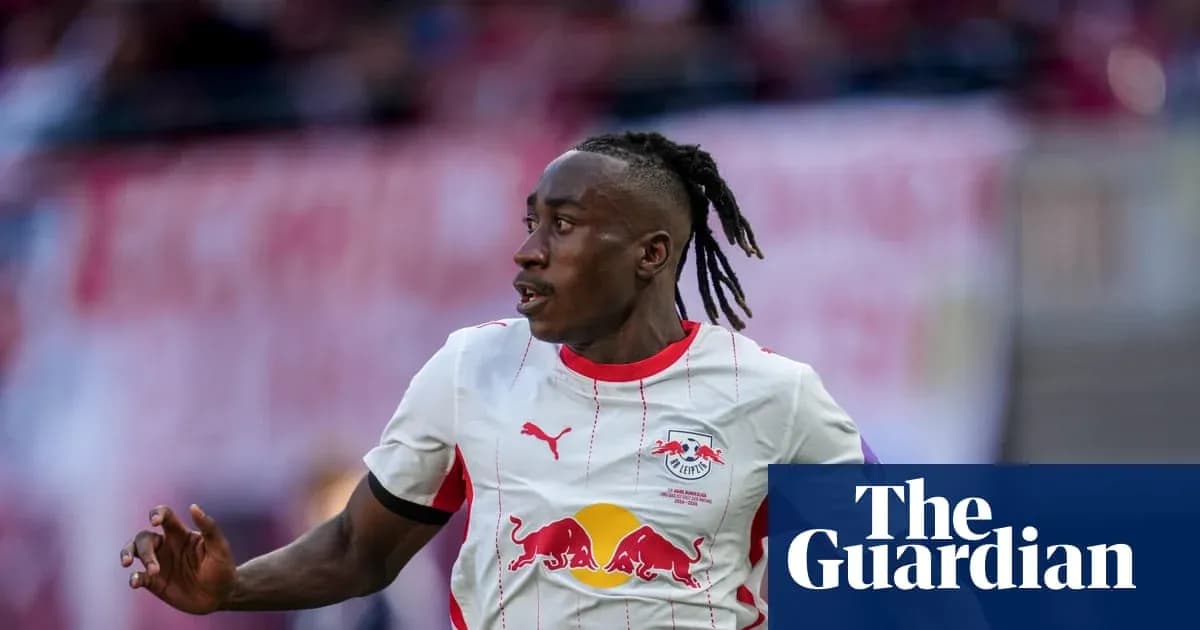
On the same day Real unveiled their new six-year pact with Vinícius, a private jet touched down in Madrid. Off stepped Diomande, 19 years old, 46 senior appearances for RB Leipzig and Leganés, and now the most expensive African player in history after a record £115m move.
He posed for photos on the plane alongside his agents, Nathan Campbell and Kareem Gbaja. Behind the smiles sat staggering numbers. RNSI is reported to have earned up to £17m in commission and fees from the deal.
The saga had dragged on for months. Liverpool saw a £70m bid rejected in June. Leipzig held their line. Paris Saint-Germain entered the race, only to recoil when informed the price would soar beyond £100m. By the end of July, PSG had withdrawn altogether, releasing a pointed statement accusing unnamed agents of “inflationary and manipulative games”.
Real kept going. RNSI kept pushing. Diomande eventually signed a seven-year contract at the Bernabéu on Thursday, a modern mega-deal that laid bare the new power structure of the market: clubs, players, and agents in a constant, public tug of war.
Courtrooms and complaints
The money and the spotlight bring friction. RNSI has already had to navigate two legal challenges linked to Diomande’s rise.
Max Gradel, the former Bournemouth winger, claims his agency, Maxidel Management, had an existing agreement with the player. He has lodged a complaint with Fifa, though world football’s governing body did not move to block the transfer. Dez Bamba, president of Diomande’s first club, AFI Sud Comoé in Côte d’Ivoire, has said the winger joined RNSI after receiving a call from Vinícius himself. RNSI has declined to comment.
At the same time, Rainbow World Group has launched proceedings in the high court in London and in the British Virgin Islands, seeking to enforce what it says are binding image rights and intellectual property agreements tied to Diomande’s early development. Rainbow argues it invested heavily in the youngster, taking him on trials at Chelsea, Bournemouth, Crystal Palace and Newcastle before Leganés eventually signed him. Again, RNSI has offered no public response.
These disputes sit in the background, but they speak to a wider truth: wherever the next superstar emerges, the battle to control his future now starts long before the first big contract.
Africa: the new battleground
Diomande’s explosion onto the European stage has only accelerated a trend that was already under way. Clubs and agencies are racing to plant flags in Africa.
Jeff Luhnow, the former Houston Astros and St Louis Cardinals general manager who owns Leganés through his Blue Crow network, saw this coming. He told the Guardian last year that Diomande would be the first of many talents to emerge from their recruitment and development programmes across several African countries, including Ghana and Zambia. “We’ve got more players like that in our pipeline,” Luhnow said.
RNSI has moved quickly to secure its own foothold. In July 2023 it acquired Brazilian agency TFM – which already represented Vinícius, Gabriel Martinelli and Endrick – and rebranded it Roc Nation Sports Brazil, strengthening its grip on the Brazilian-African talent corridor.
By November, the group announced it had signed eight young African prospects, among them Ghana Under-17 midfielder Joseph Narbi and Francis Gomez, a Gambian winger at AC Horsens in Denmark. Campbell framed it as a deliberate step in a broader strategy, describing Africa as a “hotbed of untapped footballing potential” and calling the move a natural extension of Roc Nation’s global vision.
The message was clear: the next wave of stars will not slip through their fingers.
Jay-Z’s new power play
Football’s agency world has never been gentle. It is a dog-eat-dog industry built on leverage, timing and relationships. Jay-Z’s operation has arrived not as a boutique alternative but as a heavyweight, armed with cultural clout, financial muscle and a rapidly expanding network from Madrid to Accra.
Vinícius’s contract, Diomande’s record-breaking move, the push into Brazil and Africa – they are not isolated stories. They are chapters in the same playbook.
The music mogul who once rapped about changing the game now finds himself doing it, one blockbuster deal at a time. The question for Europe’s biggest clubs is simple: in the next arms race for talent, are they negotiating with players, or with Roc Nation?





