Ismaël Koné's World Cup Heartbreak After Leg Surgery
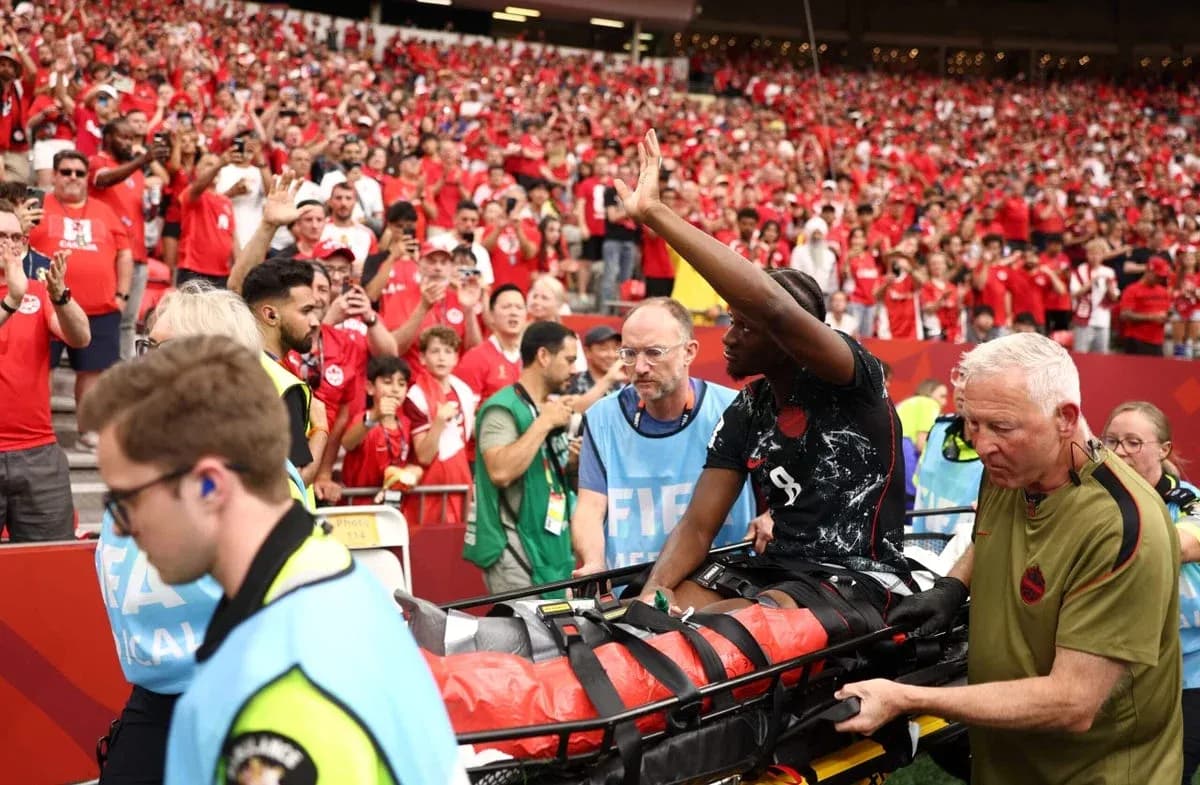
Canada’s 6-0 demolition of Qatar was supposed to be remembered as a statement win, a marker laid down at a home World Cup. Instead, the image that lingers is Ismaël Koné on the turf at BC Place, clutching his left leg as teammates and opponents called frantically for help.
By Friday, the diagnosis was confirmed and the damage laid bare. Koné, 24, has undergone successful surgery to repair a fracture in his left leg and will miss the rest of the 2026 World Cup, Canada Soccer announced.
“He is expected to make a full recovery but will miss the remainder of FIFA World Cup 2026,” read the federation’s statement. The operation took place in Vancouver on Thursday night, only hours after Canada’s historic victory.
A brutal moment in a landmark win
The incident came in the 51st minute with Canada already cruising at 3-0 against a Qatar side reduced to 10 men. Koné, who had started both of Canada’s group matches, took a pass near the touchline and began to turn away from pressure. Qatar midfielder Assim Madibo arrived late and from behind, catching Koné’s lower left leg just a few feet from the Canada bench.
The sound told its own story.
“You could hear the bone snap,” head coach Jesse Marsch said after the match. “Your heart goes out to him. Everybody’s shaken for him.”
Koné went down immediately, grabbing his leg as medical staff sprinted onto the pitch. The Canada bench reacted in fury; full-back Richie Laryea confronted Madibo as tempers flared and players from both sides squared up.
Madibo was initially shown a yellow card, but after a video assistant referee review, the referee upgraded it to a red. Qatar, already down a man after Homam Al-Amin’s 33rd-minute dismissal for denying Tajon Buchanan an obvious goalscoring opportunity, were reduced to nine.
Marsch, though, refused to turn the moment into a personal attack on Madibo.
“I don’t think he meant such a gruesome situation,” he said. “I don’t fault him for that.”
Three surgeons, one urgent operation
Once Koné left the field, the focus shifted from tactics to trauma care. He was taken straight to hospital in Vancouver, where a team of specialists was already assembling.
“Last night, Ismaël Koné underwent successful surgery to repair a lower limb fracture,” Canada Soccer confirmed. Marsch later filled in the details of a frantic few hours.
“By the time we got to him, he’d already had some drugs to help sedate him a little bit,” the Canada coach said at a news conference on Friday. “He was being prepared to go into the operation room. But he was in really good spirits and he was adamant that he’s going to be fine.
“(The surgery) took about an hour and a half and they had three surgeons. I think what happened is the surgeons watched it on TV and they saw what happened and they knew right away. And so they brought their top three surgeons to the hospital immediately to take care of him.
“So by the time he got there, the surgeons were there and they were ready. And then we just had to communicate with our medical team and make sure that the surgery was the best option that we thought. But I could see by meeting them and hearing what they had to say about the situation that he was in really good hands. So the surgery they said went really well.”
His club, Sassuolo, echoed that assessment on Friday.
“The operation to repair the fracture in his left leg was a complete success. The player will begin his rehabilitation programme in the coming days,” the Italian side said. “The whole club sends Ismaël their best wishes for a speedy recovery.”
No replacement, no like-for-like
For Canada, the medical bulletin comes with a harsh competitive reality. World Cup regulations do not allow Marsch to call up another outfield player at this stage of the tournament; any replacement had to be registered 24 hours before Canada’s opening match.
Koné, a central pillar in Marsch’s midfield, is gone for the rest of the campaign. The hole he leaves is not just numerical.
Marsch has been clear: there is no true replica in this squad.
Koné, he said, “can do things that no other player can do.”
The immediate response on the night came from Nathan Saliba. The 22-year-old, a close friend of Koné’s, replaced him in midfield and, around 10 minutes later, drove in Canada’s fourth goal. His celebration said everything about the bond inside this group: Saliba lifted Koné’s No 8 shirt high above his head, holding it to the Vancouver sky.
Saliba is expected to be the direct replacement in the starting XI. He offers some of the same vertical running and incisive passing that Koné brings, and he does it with an edge that fits Marsch’s aggressive style.
But the reshaping will not stop there. Niko Sigur, often deployed at full-back for Canada, is likely to step into central midfield to add creativity and control in the middle of the pitch. His ability to drift inside from wide roles could help Canada maintain their fluid rotations, even without their most unique midfielder.
A soaring campaign jolted by reality
The Qatar match had been bordering on exhibition territory before the injury. Canada were three goals up, a man up, and in complete command. The red card to Madibo, the long delay, and the sight of Koné leaving the field shifted the atmosphere instantly.
The scoreline only grew more emphatic, but the dressing room mood afterwards was mixed: joy at a 6-0 win, concern for a teammate whose World Cup had ended in a single, sickening moment.
Canada now turn toward Wednesday’s meeting with Switzerland knowing that a draw will be enough to secure top spot in Group B. The objective is clear; the path to it just became more complicated.
Marsch must now find a way to preserve Canada’s momentum without the player who knits so much of their midfield together. The team has announced that Koné is expected to make a full recovery. The World Cup will move on without him.
The question is whether Canada can do the same and still look like a team built to go deep into their own tournament.