Iraq's Historic Journey to the World Cup: Overcoming Odds and Exhaustion
The buses left in darkness.
Players and staff slipped out of scattered cities, heading for Baghdad on potholed roads, past checkpoints and reminders of a conflict that has shaped most of their lives. Eight hours for some, longer for others. No luxury, no shortcuts. Just cars and buses, and a shared belief that the destination was worth every mile.
From Baghdad, the journey turned brutal. Around 15 hours on rough, unforgiving roads to Amman, one more test in a qualifying campaign already stretched across 20 games and four decades of waiting. Airspace was closed as the Middle East war dragged Iraq back into turmoil, so the route bent and twisted where it could. The Asian-based players found their own way to Jordan, converging in Amman so they could at least fly together.
Fifa provided a charter. It did not provide mercy. A nine-hour delay, then an eight-hour flight to Lisbon, a two-hour stopover, and finally a 12‑hour haul to Mexico. By the time they reached Monterrey, Iraq’s players had crossed continents, time zones and thresholds of exhaustion.
And yet this was the easy part. The real pressure sat on one 90-minute playoff, the last ticket to the World Cup.
“The most important game in their lives,” is how René Meulensteen, assistant to head coach Graham Arnold, describes it. He has worked at the sharp end of elite football with Manchester United under Sir Alex Ferguson. He knows what big games look like. This felt different.
The toll of the journey might have broken lesser squads. Iraq used it as fuel. After some precious recovery time in Mexico, they stepped into a stadium filled with noise and colour and beat Bolivia 2-1 to claim their first World Cup place in 40 years.
The support that night did not come only from home.
All remaining tickets had gone to local Mexicans, who turned out in force, their numbers swelled by a large Iraqi diaspora from the United States. It gave the match an unexpected texture: a team from a war-scarred nation chasing history in a country that had hosted their only previous World Cup appearance, back in 1986.
Meulensteen and Arnold leaned into that symbolism. This, they told the players, was no coincidence. Same country. Same dream. A chance to close a circle and open a new one.
Back in Baghdad, the response exploded. It was early morning, but the city did not care. Streets filled, fireworks crackled, car horns blared. Meulensteen watched the scenes on video later: a capital that has lived through invasion, sanctions and sectarian violence suddenly united by a football match in Monterrey.
“The whole nation has been craving something to celebrate,” he says. This qualification, like the Asian Cup win in 2007 and the run to fourth place at the 2004 Olympics, offered exactly that – a jolt of joy and a brief sense of shared purpose. Iraq’s footballing high points keep arriving against the backdrop of conflict. The 1986 World Cup, the Olympic surge in Athens, that emotional Asian Cup triumph in Jakarta. Now this.
On the ground, the country still bears the scars of the second Gulf war. Meulensteen talks of cities visibly in recovery, infrastructure lagging far behind the gleaming skylines of Dubai or the new football hubs in Saudi Arabia. Yet inside this environment, a national team has emerged that sings on the bus, blasts music on the way to training and clings fiercely to the idea that football can still carry hope.
“You should hear them on the bus,” he says. “It’s absolutely brilliant.” That noise, that energy, is part of the armour they will need this summer.
Because the reward for all this effort is a group that looks merciless on paper: France, Senegal and Norway. Heavyweights, champions, established powers. Iraq are the outsiders by any metric.
Meulensteen reaches for an English analogy. “It’s like Manchester United against Grimsby,” he says. A mismatch. On paper. Except Grimsby won that tie in the League Cup last August, and Meulensteen has long since stopped treating football’s script as fixed.
With Arnold, he lived the underdog story with Australia at the last World Cup, tossed into a group with France, Denmark and Tunisia and dismissed as cannon fodder. Australia beat Denmark, beat Tunisia and pushed Argentina hard in the last 16. The element of surprise, Meulensteen insists, remains their greatest strength.
Iraq’s squad mirrors the country’s diaspora: players born in Iraq blended with others who carry Iraqi heritage from elsewhere. Some do not speak Arabic. Meulensteen does, at least to an intermediate level, a skill rooted in his first big leap into the Gulf in 1993, when he moved to Qatar. To make that move, he had to marry his girlfriend; cohabiting unmarried was not permitted.
That decision opened the door to a coaching journey that would eventually intersect with one of football’s most dominant dynasties. Eight years after Qatar, via academy director Lee Kershaw and a recommendation from Dave Mackay – who had met him while managing Qatar’s under‑17s – Meulensteen arrived at Manchester United.
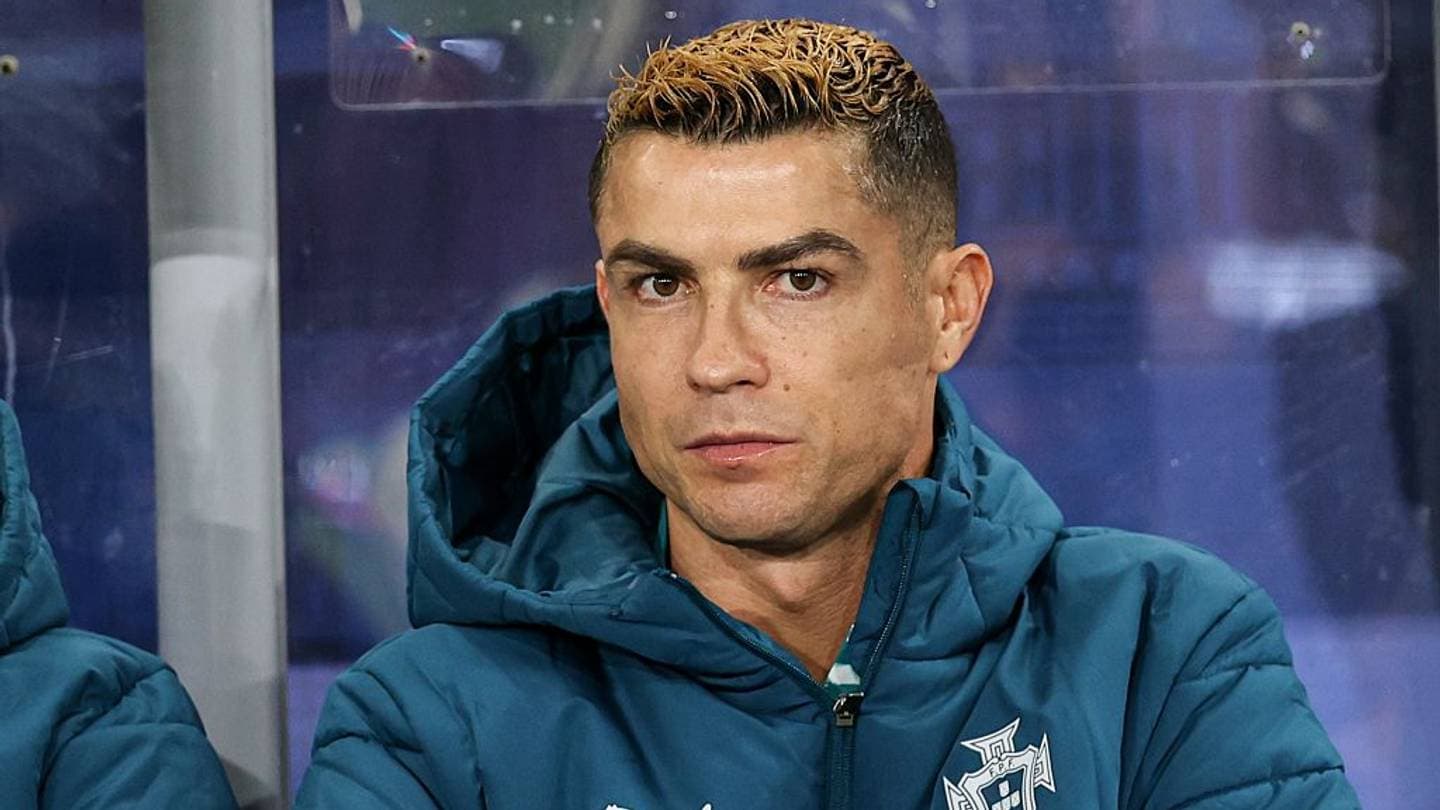
He started in the academy, then gradually shifted into a role that would shape careers at the very top. Individual work with first‑team players, sharpening details, honing edges. After a short spell as Brøndby head coach, he returned to Old Trafford in 2007 and began working intensively with Cristiano Ronaldo at the precise moment the winger was transforming into a phenomenon.
Their sessions were not about circus tricks. Meulensteen used video, repetition and clear principles. He divided the penalty area into zones, drilled Ronaldo on his positioning, the types of crosses he would face and the most efficient finish in each situation. He pushed him away from pure showmanship towards ruthless productivity.
“It’s all about being as unpredictable as possible, varying your game,” he told him. Over time, Ronaldo absorbed it all.
What struck Meulensteen most was not just the talent, but the obsession. Training would end at Carrington; Ronaldo would head to the fenced cage with rebound boards and stay there another 10 or 15 minutes, working the ball off the walls, inventing new ways to receive, control, strike. Meulensteen fed that hunger with more exercises, more ideas.
At the end of that season’s work, he compiled everything – sessions, clips, concepts – into a DVD, essentially a PowerPoint presentation stitched with video. It included not just technical detail but the psychology of targets: how people with clear goals tend to achieve more than those without.
So at the start of 2007‑08, with Ronaldo coming off a 23‑goal season, Meulensteen asked for a number. The answer was 30. Meulensteen pushed back: why not 40? Ronaldo agreed. By the end of the campaign, he had 42, and United had both the Premier League and the Champions League.
The following summer, Meulensteen stepped up again, promoted to first‑team coach and entrusted with designing and leading training. Ferguson handed him the blueprint in three flipchart sheets.
On them: how Manchester United should play, in and out of possession. The last page carried the core attacking mantra. When United attacked, Ferguson wanted pace, power, penetration and unpredictability. Those four words became the compass for every training session Meulensteen built. Watch United at their peak under Ferguson and those qualities leap off the screen.
After leaving Old Trafford in 2013, Meulensteen’s path twisted through Fulham, the United States, Israel, India and, eventually, back into the international spotlight with Australia and now Iraq. Across those years he has refined not only how he coaches technique, but how he speaks to players who wrestle with doubt.
He asks them to give fear a shape. What exactly are they afraid of? The consequences of losing? The weight of expectation? He tells them they cannot fully control what flashes through their minds – the noise, the criticism, the what‑ifs – but they can choose where to fix their attention: on playing well, on scoring, on reaching a World Cup.
His language is about “adding” to their game rather than ripping anything out. Small gains, layered on top of what they already do well. It echoes Ferguson’s own belief in the power of words. “Well done,” the Scot used to say, over and over, two simple words he considered the most important in coaching. Near the end of sessions, he would stroll past, tap Meulensteen on the shoulder and offer exactly that.
The bond between the two men runs deeper than tactics. Meulensteen talks about Ferguson the storyteller, the voracious reader, the man who could pivot from the American civil war to film trivia without missing a beat. On away trips with United, they would sit on buses or trains playing Who Wants to Be a Millionaire? on Meulensteen’s iPad, regularly reaching the final question thanks to Ferguson’s breadth of knowledge.
They still meet occasionally for tea. Ninety minutes, two hours, gone in a flash. For Meulensteen, United remains a “beautiful period” of his life, a reference point he carries into every new challenge.
Now the challenge is Iraq, a nation still rebuilding, a team still discovering itself, stepping into the global spotlight with France, Senegal and Norway looming on the schedule. The journey to get here has already demanded more than most squads will ever be asked to give.
The question is no longer whether they belong. It is how far that element of surprise, and a country’s restless hope, can carry them this summer.