Iran's World Cup Journey Amid War and Visa Challenges
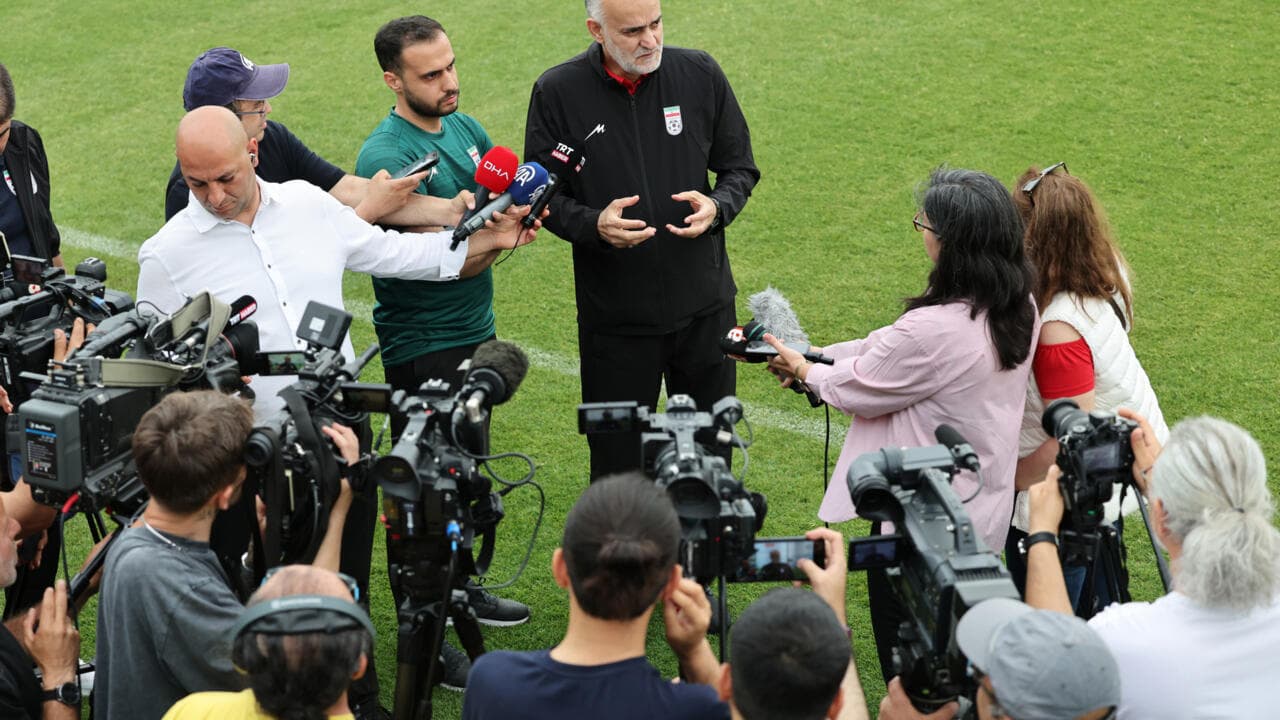
Iran’s national team slipped quietly into Turkey on Monday, but nothing about their road to the World Cup feels routine.
This is no standard pre-tournament camp. The players will spend several weeks in Turkey fine-tuning tactics and fitness before flying to a World Cup co-hosted by the United States, a country that, alongside Israel, began bombing Iran on February 28, igniting a wider war across the Middle East.
Football preparation on one side. Air strikes and geopolitics on the other. The contrast could hardly be starker.
Camp in Turkey, questions in the air
For now, the squad’s focus is on training. The camp in Turkey is designed to give Iran a stable base away from the conflict and a controlled environment to prepare for Group G, where they will face New Zealand, Belgium and Egypt.
Behind the scenes, though, logistics dominate. The team and staff still do not have US visas. Iranian officials have already admitted that applications are pending, and the plan is to submit them via the Canadian embassy in Turkey.
“We're not certain yet that all the players and staff will receive US visas,” national team director and federation vice-president Mehdi Mohammad Nabi said, laying bare the lingering doubt that shadows their preparations.
Trust in FIFA protocols
Publicly, Mohammad Nabi projects calm. He insists the framework around the tournament is robust, even in the midst of war.
“Everything will proceed properly according to the protocols and what FIFA has stipulated,” he said. He pointed to the structures in place inside the United States, including a security committee working with FIFA and charged with overseeing safety and operations.
This is not new ground for Iran, he stressed. “In past years we've experienced all of this and we're fully informed about how these security committees operate at every World Cup we've participated in. In this regard, we're very confident and we have a clear plan.”
The message is clear: Iran want to be seen as a normal World Cup participant, governed by the same rules and protections as everyone else, even as their country is under bombardment by a co-host.
Visas at the heart of the standoff
The sticking point remains entry to the host nation.
“One of the rules that applies to the host country is that they must provide guarantees, according to FIFA's statutes and the regulations of the competition,” Mohammad Nabi reminded. “One of their commitments is the visas: they have to grant the necessary visa facilities to all the teams that have qualified for the World Cup.”
He underlined that FIFA has already “made arrangements so that the host country will provide the necessary cooperation to teams like Iran in this area.”
That phrase — “teams like Iran” — carries weight. It hints at the political sensitivities and the reliance on FIFA’s authority to ensure sporting integrity holds firm against diplomatic tension.
A demanding Group G and an American base
On the pitch, the challenge is clear enough. Iran open their Group G campaign against New Zealand in Los Angeles on June 15. They stay in the same city to take on Belgium, then head north to Seattle to face Egypt.
Their World Cup base will be in Tucson, Arizona, far from the coastal glare but deep inside the country that is currently leading military action against their homeland.
It is an extraordinary backdrop for a football campaign. Training drills in the desert heat, matchdays under the California and Washington lights, all while questions hang over visas, security and the simple act of crossing the border.
Iran insist they are ready. The plans are drawn, the camp is underway, the fixtures are set.
Now the World Cup hosts — and FIFA’s promises — will decide whether those plans reach the pitch.