
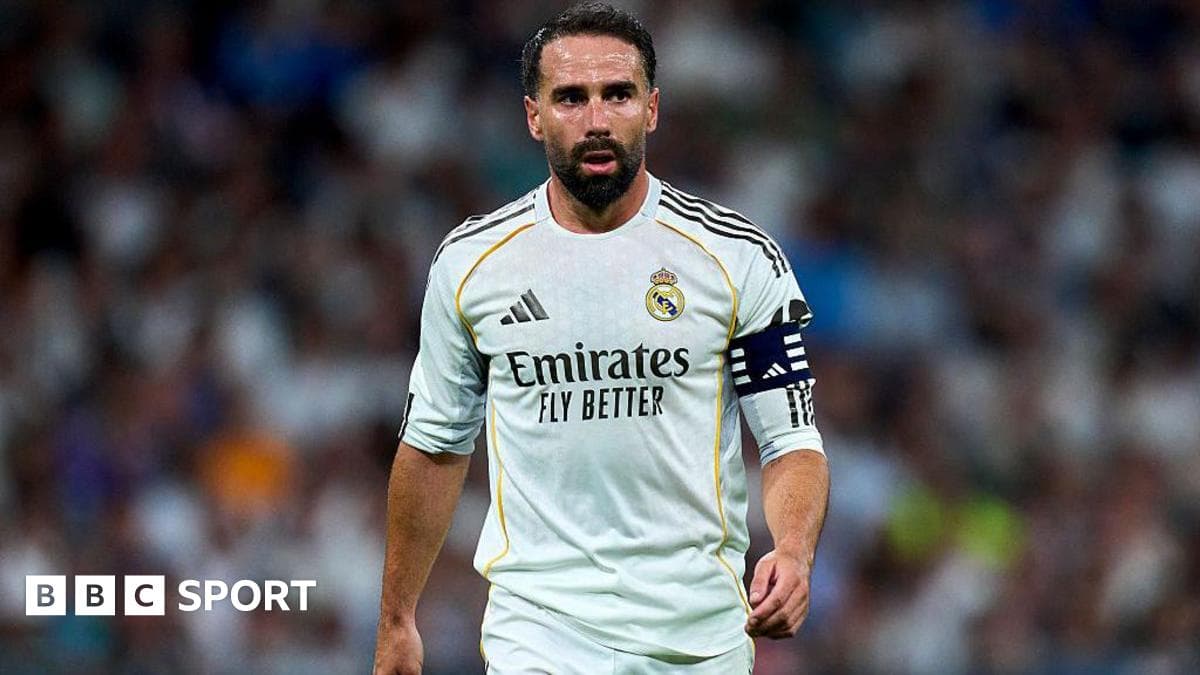
Dani Carvajal: A Legendary Farewell to Real Madrid
The first time Dani Carvajal pulled on a Real Madrid shirt in competitive football, he was a boy in the academy. The last time will come this Saturday night, under the Bernabeu lights, as captain, legend and the embodiment of a generation that turned winning into routine.
After 23 years across two spells at the club, the 34-year-old will leave Real Madrid when his contract expires at the end of June. No extension, no last-minute twist. Just a clean, emotional break between a player and the institution that shaped him.
From Valdebebas to the world
Carvajal joined Madrid’s academy in 2002, a local kid from Leganés walking into Valdebebas with a dream and very little guarantee it would last. The path to the first team was not straight. He had to leave first.
In 2012, he moved to Bayer Leverkusen for a single season that changed everything. His rise in the Bundesliga forced Madrid’s hand; they triggered a buy-back clause and brought him home in 2013. From that point on, the right flank at the Bernabeu was his.
He made 450 appearances for the club and scored 14 goals, but those numbers barely scratch the surface. The real story is written in medals.
Twenty-seven titles. Six Champions Leagues. Four La Liga crowns. Two Copa del Rey trophies. Six Club World Cups, five UEFA Super Cups and four Spanish Super Cups. He is one of only five players to lift the European Cup six times, and the only one to start in all six finals he won.
That is not a career. That is an era.
The right-back who defined a side
At his peak, Carvajal was the modern full-back distilled: aggressive, relentless, and intelligent in both directions. Under Carlo Ancelotti and Zinedine Zidane, he became a structural pillar of Madrid’s game.
He stretched the pitch, gave the midfield a passing outlet, and stitched together defence and attack with the kind of timing that never makes a highlight reel but wins you finals. He overlapped when the winger drifted inside, tucked in when the centre-backs needed help, and pressed with a fury that set the tone.
He rarely owned the spotlight. Cristiano Ronaldo, Karim Benzema, Gareth Bale, Luka Modric and Toni Kroos drew the cameras and the awards. Yet inside the dressing room and on the training pitches, there was no doubt: Madrid were different when Carvajal played.
They were also different when he didn’t. His absences over the years exposed just how hard he was to replace.
Champions League nights and defining moments
Carvajal’s relationship with the Champions League borders on mythical. Six titles, countless knockout ties, and an enduring sense that he would always rise when the stakes were highest.
The 2024 final against Borussia Dortmund crystallised that. On a night loaded with pressure, he scored the opening goal and walked away as man of the match. For a right-back, on that stage, in that moment, it felt like the purest reward for a decade of work often done in the shadows.
Recognition followed. He earned a place in the FIFPro 2024 World XI and The Best FIFA Men’s World XI. Those accolades arrived late in his career, but they confirmed what Madrid and Spain had long known: he had spent years operating at the very top of his position.
Leader of a changing dressing room
Carvajal’s influence went far beyond tactics and trophies. As the great pillars of the previous era – Sergio Ramos, Benzema, Kroos, Modric – began to move on, a vacuum opened in the dressing room. Carvajal stepped into it.
He became one of the emotional leaders, then captain, a bridge between the veterans and the new generation, and a voice that carried weight when the club entered choppier waters.
The last two seasons have tested that leadership. Real Madrid will finish this campaign without a trophy for the second year running, a drought by their standards and a period marked by managerial instability. Through it, Carvajal’s mentality, his refusal to let standards drop, became a reference point internally even as his body started to betray him.
Injuries, transition and the arrival of a rival
The last chapters of his Madrid story have been written in pain and resilience. A cruciate ligament tear in October 2024, followed by another serious knee injury a year later, forced him into long, lonely battles away from the pitch.
His minutes tell the story of decline and transition. This season, he has played just 892 minutes in La Liga. For a man who once owned the right flank, that number is stark.
The club did not wait for time to make the decision. Last summer, Madrid moved for Trent Alexander-Arnold, prising the England international from Liverpool. It was a statement and a roadmap. Under Álvaro Arbeloa, Alexander-Arnold has grown into the preferred option at right-back, signalling the changing of the guard.
Carvajal stayed, fought, and accepted a different role. Not the first name on the team sheet anymore, but still the one the crowd roared for when he stepped onto the pitch.
A legend in white
His impact has not been limited to club football. Since his Spain debut in 2014, Carvajal has collected 51 caps and helped his country win the Nations League in 2023 and the European Championship in 2024. For a long stretch, he was the default answer at right-back for both club and country.
Madrid know exactly what they are losing. Club president Florentino Pérez did not dress it up.
“Dani Carvajal is a legend and a symbol of Real Madrid and its academy,” he said. “Carvajal has always exemplified the values of Real Madrid. This is and will always be his home.”
On Saturday, against Athletic Club at the Santiago Bernabeu, the club will give him the send-off he has earned. No trophies will be lifted – this is a rare season in which Madrid finish empty-handed – but the focus will be on something more enduring than silverware: legacy.
The fans understand. Every ovation he receives now carries a hint of farewell, a recognition that one of the greatest right-backs in the club’s history is reaching the end of his Bernabeu story.
He leaves as a symbol of one of Real Madrid’s most successful eras, a player who turned the right flank into a guarantee and the biggest nights into his natural habitat. The question now is not what he has been, but how Madrid will replace a presence that, for more than a decade, felt irreplaceable.





