Ipswich Town's Bold Transformation: From Championship to Premier League Gamble
Ipswich Town are back in the Premier League and spending like they mean to stay there. Quietly, almost stealthily, the newly promoted club have become the division’s fourth-biggest net spenders this summer, behind only Chelsea, Tottenham and Arsenal.
Ten players in. £106.6m out. And, crucially, a complete change of mindset.
From local comfort zone to global reach
Under Kieran McKenna, Ipswich built a revival on familiarity. Familiar leagues, familiar accents, familiar habits. Of the 39 permanent first-team signings made during his four-and-a-half-year reign, 32 were either born or raised in Britain or Ireland. Only two arrived directly from European clubs.
It worked spectacularly in the lower leagues. A tight, largely domestic core carried Ipswich out of League One in 2023 and then straight through the Championship in 2023-24, becoming the first side in 12 years to win back-to-back promotions to the Premier League. The squad was close-knit, the dressing room stable, the football bold.
McKenna even admitted the club had made a “conscious decision” to avoid overseas players in League One because of the division’s relentless, chaotic tempo. Ipswich doubled down on that logic after reaching the Premier League in 2024. Ten of their 12 summer signings that year were British or Irish, almost all from other English sides.
They tried to bridge the gulf with Championship standouts and homegrown potential. Omari Hutchinson, Jack Clarke, Liam Delap, Dara O’Shea, Jacob Greaves – a £100m bet on players who had shone in the second tier and were seen as capable of growing into top-flight regulars.
It was a coherent plan. It just wasn’t enough.
Relegation, profit – and a lesson in reality
McKenna’s “Championship all-stars” never got close to safety. Ipswich finished second bottom with 22 points, 16 adrift of 17th-placed Tottenham Hotspur. The midfield lacked power. The squad lacked Premier League know-how. The margin for error vanished by Christmas.
Yet beneath the league table, another story was taking shape.
Despite their transfer splurge, Ipswich’s £77m wage bill was the lowest in the Premier League in 2024-25. That prudence, allied to TV money and a quick profit on Delap’s move to Chelsea, delivered a £4m pre-tax profit for the year ending June 2025. Hutchinson’s sale to Nottingham Forest added another significant fee.
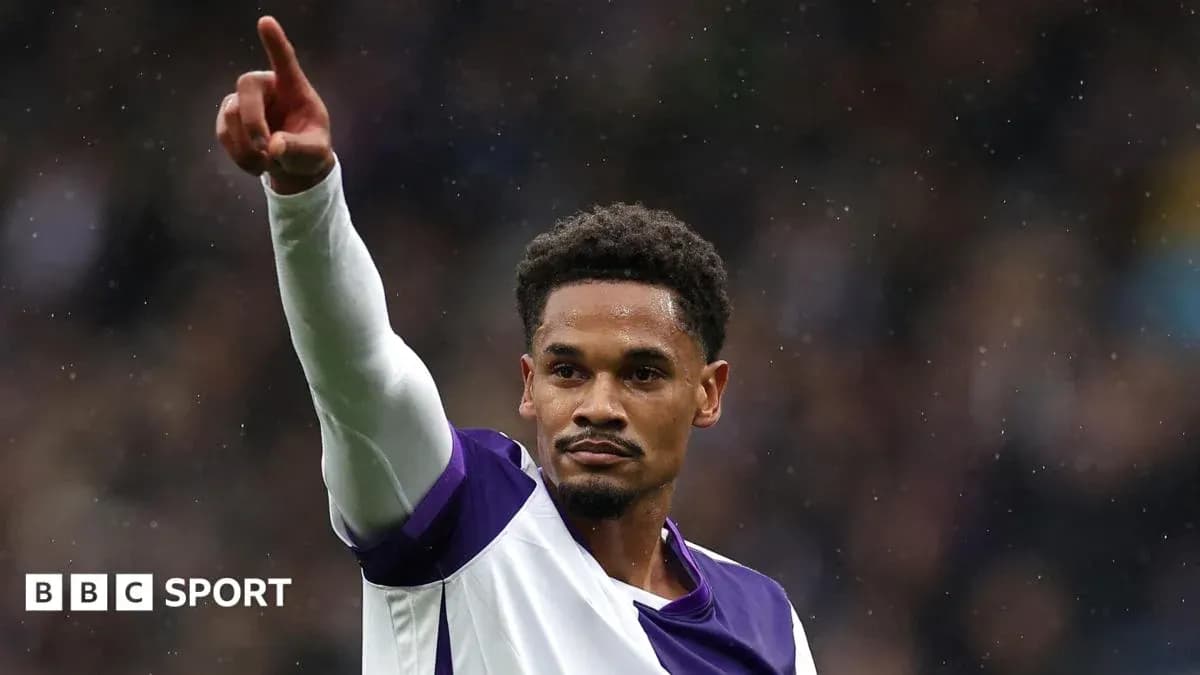
Crucially, several of those “relegation signings” stayed the course. O’Shea, Clarke, Greaves and January 2025 arrival Jaden Philogene all remained and became central figures in an immediate return to the top flight.
McKenna insisted at the time that the recruitment had been in the club’s “best long-term interests”. The balance sheet and the promotion that followed offer a strong argument that he was right.
But the Premier League is unforgiving. Sentiment counts for nothing if you go straight back down again.
O’Neil era: bravery, not nostalgia
McKenna stepped down on 10 June after three promotions in four full seasons. In came Gary O’Neil, a manager who knows from his time at Bournemouth and Wolves that survival is a sprint, not a seminar.
This summer, Ipswich have stopped shopping almost exclusively in their own backyard. They have gone global.
Emersonn and Florentino Luis are set to become the first Brazilians to play for the club. Sasa Lukic will be the first Serbian. Daizen Maeda, the first Japanese player in Ipswich colours. Of the 10 players purchased so far, only one – Chuba Akpom from Ajax – is British, and even that deal was an obligation triggered by promotion after an underwhelming loan spell.
The contrast with 2024 could hardly be sharper. Back then, Ipswich chose continuity and domestic comfort. Now they are embracing risk and reach.
Chairman Mark Ashton has been clear: Ipswich must be “a bit braver” this time. The profile of their targets tells you they have listened to the lessons of that bruising first Premier League campaign.
Power, pace and a different profile
One of the clearest takeaways from 2024-25 was that Ipswich simply did not have enough athleticism in key areas. Ashton has acknowledged the need for players with “a different set of physical attributes”.
Midfield was the most glaring weakness. There was not enough power, not enough ball-winning, not enough presence. That is why the arrivals of Florentino Luis and Lukic are so central to O’Neil’s plan. Both have experience at the highest level. Both are expected to anchor a more robust, more combative engine room.
They will need to adapt fast. Last season’s mainstays Azor Matusiwa and Jack Taylor are doubtful for the opening game after summer operations, stripping away some of the continuity that usually cushions promoted sides.
At the top end of the pitch, Ipswich also lacked a reliable finisher. No player scored more than 10 non-penalty goals in the Championship last season. For a team that dominated games in the second tier, that statistic cut deep.
The response has been emphatic. Ipswich broke their transfer record to land Brazilian striker Emersonn, 22, from Toulouse for an initial £24m. He is tall, quick, aggressive – exactly the physical profile O’Neil wants leading the line. But he is also raw, with just seven goals in 31 Ligue 1 appearances last season, 22 of them starts. The upside is clear; the adaptation curve is real.
Maeda arrives with a heavyweight scoring record from Celtic – 79 goals in 212 games – and a reputation as a tireless, selfless runner who can play through the middle or out wide. The caveat is obvious: Ipswich will not create Celtic-level chances in a season likely to be spent fighting the drop.
Behind them, the club have recruited two Dutch goalkeepers, including Kjell Scherpen. At 6ft 9in (2.06m), he is set to become the tallest player ever to appear in the Premier League. That alone will draw attention, but Ipswich are banking on far more than a novelty act between the posts.
World Cup pedigree and familiar faces
This is not scattergun spending. Several signings carry recent World Cup pedigree.
Maeda scored for Japan at this summer’s tournament. Morocco centre-back Issa Diop also found the net on the global stage. Ipswich could yet add a third World Cup goalscorer, with the club linked to Paraguayan forward Julio Enciso.
Enciso played under O’Neil at Strasbourg last season and had an injury-hit loan spell at Portman Road in the second half of 2024-25. His talent is obvious, his fitness record less reassuring. If Ipswich push that deal over the line, it would be a bet on familiarity and potential in a window otherwise defined by new horizons.
O’Neil is under no illusions about the scale of the task. “Two seasons ago, the club didn’t get anywhere near staying in the division and this time we need to do better,” he said last month. “That’s why we’re trying to add quality to the squad from different parts of the world and we’re trying to add some different attributes.”
The message after Saturday’s 3-0 win over Rayo Vallecano was equally clear. The “plan is to do quite a bit more” in the market. The spending, and the reshaping, are not finished.
A defining summer – and a familiar warning
With O’Neil installed, a £30m training ground redevelopment nearing completion and a recruitment strategy finally aligned with the realities of the modern Premier League, this feels like a crossroads summer for Ipswich Town.
The numbers are striking. Only three promoted clubs have ever spent more in a single summer window: Sunderland in 2025, Nottingham Forest in 2022 and Aston Villa in 2019. All three stayed up.
History, though, offers a sting in the tail. Fulham, Southampton, Burnley – and Ipswich themselves – have all spent at a similar level in recent years only to tumble straight back into the Championship. That level of investment has become the entry fee to be competitive, not a safety net.
Ipswich have chosen to step away from what made them comfortable and into a market they once avoided on principle. They have gone from domestic dependability to a dressing room that will speak multiple languages and bring wildly different experiences.
They have spent big, changed course and backed a new manager who knows that this time, there is no grace period.
The question is no longer whether Ipswich are brave enough. It is whether this bold, global rebuild can finally buy them what they have not managed for a quarter of a century: consecutive seasons in the Premier League.