Infantino's FIFA Plan Collapse: A Fight for Survival
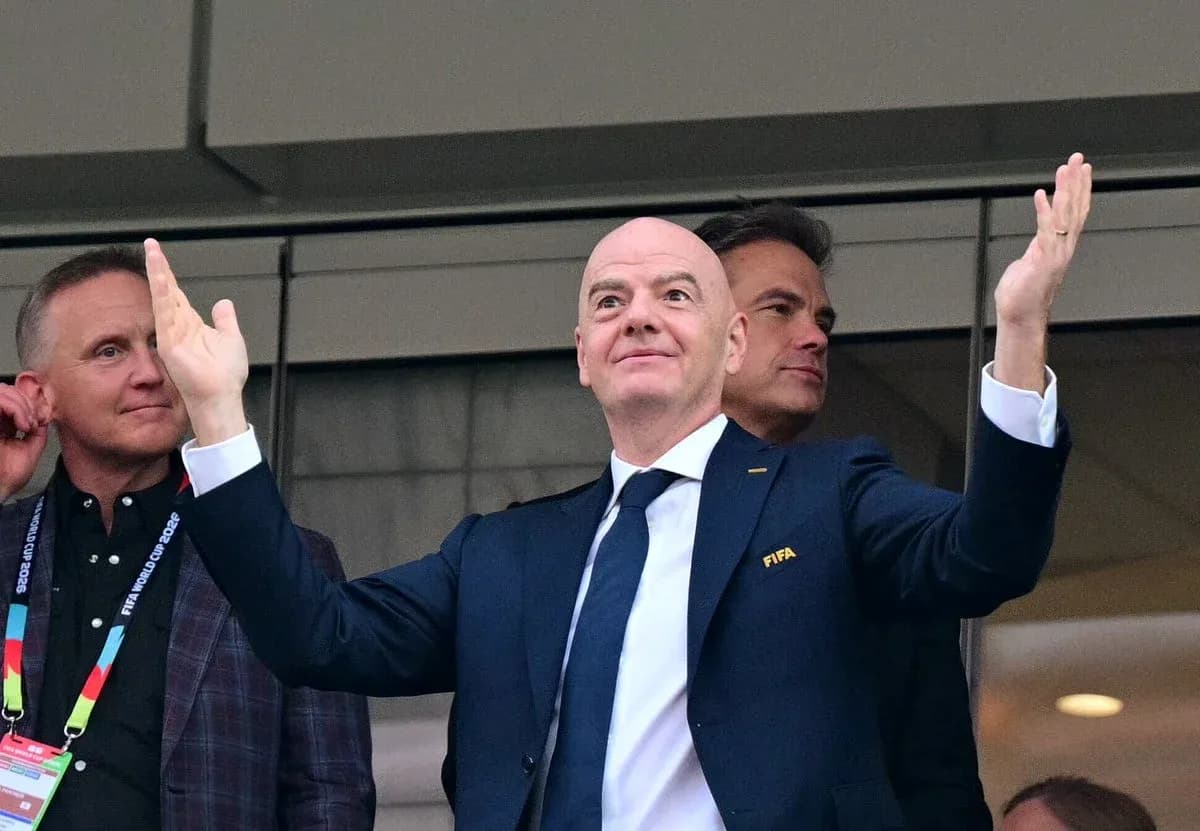
Gianni Infantino started the week selling a vision. He ended it fighting for his political life.
Late on Friday night, under fierce and growing pressure, FIFA and its president executed a dramatic U-turn, scrapping a contentious plan to sell a minority stake in a new company that would control the organisation’s commercial and event operations.
“Having listened carefully to all the views, it has become clear that the project has created divisions… that are no longer in the interest of the objective set out in the first place,” Infantino said in a statement. “As a result, this proposal will not proceed.”
For a man who has spent years centralising power in Zurich, it was a rare and public climbdown.
From $4.2bn vision to open revolt
The blueprint looked bold on paper. FIFA wanted to create a new private entity, FIFA Forward Enterprises (FFE), to run its flagship competitions — World Cups, Club World Cups and other major events. A 21 per cent minority stake in FFE would be sold to outside investors, with Joshua Kushner’s venture capital firm Thrive lined up as a key partner.
The numbers were eye-catching. FIFA said the deal would raise $4.2 billion (£3.2bn), money it promised to push directly into the global game through a new funding stream: the FIFA Fast-Forward Programme (FFFP). Total development funding over the next four years, FIFA argued, could surpass $10 billion.
There was a catch. The money came with a political twist.
Under the proposal, every one of FIFA’s 211 member associations would receive huge increases in guaranteed payments. Associations that opposed the FFE plan but saw it pass would still be rewarded: $20 million (£14.9m) each in the 2027-30 cycle, rising to $22 million in 2031-34 and $24 million in 2035-38, regardless of whether any stake in FFE was ultimately sold.
Those that backed the proposal, though, would get double in the first cycle: $40 million in 2027-30, before the same increases in the following periods.
It was a financial carrot on an unprecedented scale. But the politics around it detonated.
Confederations push back – hard
By the end of the week, three of FIFA’s six continental confederations had moved into open opposition.
UEFA led the charge. The European body warned that all 55 of its members would boycott FIFA competitions — including future World Cups — if the plan stayed on the table. That was not a vague threat. It was a direct challenge to the authority of the president and the viability of his biggest tournaments.
Concacaf and the Asian Football Confederation (AFC) soon followed. The AFC declared it stood in solidarity with UEFA and Concacaf, aligning Asia and North and Central America with Europe against Zurich.
Between them, those three confederations represent 137 of FIFA’s 211 member associations. A clear majority of the global game had moved into resistance.
FIFA initially tried to hold its line. Early on Friday in Europe, it released a statement insisting “nobody is selling football” and stressing its “commitment to an open and democratic consultation”, while signalling it would continue to push the project forward.
But the dam was already breaking.
South America’s CONMEBOL did not formally reject the plan, yet its carefully worded statement carried a warning of its own, stressing that financial and commercial decisions “must always serve the interests of football and never take precedence over its essence.”
The message from across the continents was unmistakable: the project had crossed a line.
Allies turn into critics
The external revolt was damaging enough. The internal backlash turned it into a crisis.
First came Carlos Cordeiro, one of Infantino’s advisers. He resigned his role and tore into the project, describing it as “a bad deal for FIFA’s Member Associations, a bad deal for football, and a bad deal for the long-term future of the game.”
Then Kevin Lamour, FIFA’s chief operating officer, went public. Speaking to The Associated Press, he said staff had been “deceived” by Infantino over the plan. He added that he would sleep better having spoken out, even if it cost him his job.
“It is the project of one person,” Lamour said. “Not only must this project not go ahead… but the time has now come for football political leaders to ask themselves the right questions and make the right decisions.”
When your own senior executives are accusing you of deception and calling for political leaders to act, the fight is no longer about a commercial structure. It is about survival.
Thrive, crucially, had not withdrawn from the negotiations by Friday night. The money was still there. But by then it no longer mattered. FIFA’s leadership had decided to pull the plug.
A few hours after CONMEBOL’s carefully phrased intervention, FIFA’s late-night statement wiped the project off the agenda.
A presidency shaken
The collapse of the FFE plan is more than a policy defeat. It has shaken the foundations of Infantino’s presidency.
He entered the week in a position of apparent strength. Under his watch, FIFA boasted $15 billion in revenue from the recent men’s World Cup. Many within the game saw his re-election at the March 2027 congress as a formality. Several federations had already submitted letters pledging their support.
By Friday night, that aura of inevitability had gone.
The Athletic reported that Infantino’s future was openly questioned during meetings of UEFA and Concacaf on Thursday. The threat of a boycott had already stripped away the assumption that his will would simply prevail. Once the AFC joined the opposition, he was no longer just facing a noisy minority. He was staring at the possibility of being outvoted by the very members he had spent years courting.
Lise Klaveness, president of the Norwegian Football Federation, captured the mood in Europe. “My clear impression at the moment is that he has lost a great deal of trust,” she told VG. “We didn’t vote for him last time, and we’ve been sceptical about this. There are many good things about FIFA, but if you take a lax approach to governance principles and rules, you quickly lose trust.”
Trust. The commodity that underpins any presidency in Zurich. The one thing development money cannot instantly buy back.
What comes next
On paper, Infantino remains a strong incumbent. He is still the sitting FIFA president. The development cheques he has already delivered to national associations around the world have built deep networks of support, especially outside Europe.
But this week has redrawn the map.
A project he drove personally has been abandoned under global pressure. Three confederations have shown they are willing to confront him collectively. Senior insiders have accused him of deception and called for political leaders to act. The perception of untouchability has gone.
The timeline is tight. Nominations for the 2027 FIFA presidential election must be submitted by November. For the first time in years, there is real talk of challengers emerging.
Infantino has chosen to save his job rather than his project. The FFE plan is dead. The political reckoning it triggered is only just beginning.