Three Hall of Famers, Ten Battles, 109 Rounds: The Rivalry That Shaped Lightweight Boxing's Golden Era
The Rivalry of Montgomery, Jack, and Williams
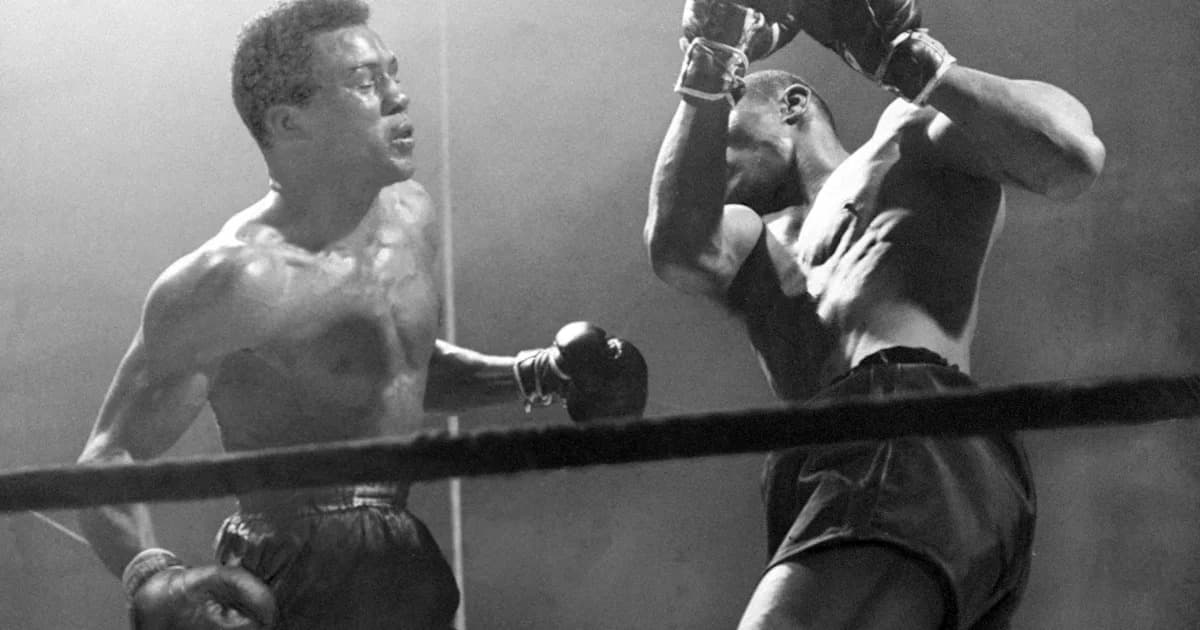
In the 1940s and 1950s, lightweight boxing was defined by a fierce rivalry among three future Hall of Famers: Bob Montgomery, Beau Jack, and Ike Williams. Together, they fought ten times over 109 rounds, pushing each other to the limits and creating a lasting legacy in the sport.
Backgrounds of the Fighters
Montgomery was born in 1919 in Sumter, South Carolina, and moved to Philadelphia as a teenager. He worked in an industrial laundry and began boxing at a gym called The Slaughterhouse. Managed by Joe Gramby, a key figure in Philadelphia boxing, Montgomery earned his nickname, "The Philadelphia Bobcat," for his aggressive, relentless style.
Beau Jack, originally Sidney Walker, was born in 1921 in Waynesboro, Georgia. After losing his mother young, he moved to Augusta, where he worked shining shoes at the Augusta National Golf Club. His boxing journey was supported by golf legend Bobby Jones and club members who helped fund his career.
Ike Williams was born in Brunswick, Georgia, in 1923 and moved to Trenton, New Jersey, after his parents separated. A tough street fighter turned boxer, Williams trained under Jesse Goss and excelled in multiple sports during high school.
Distinct Styles and Strengths
Historian Bert Sugar ranked Beau Jack No. 52 among boxing's greatest fighters. Jack attacked relentlessly, throwing punches from all angles with wild but effective movements. Williams, ranked No. 60, stood tall for a lightweight and combined reach with powerful combinations, tallying 61 knockouts in his career. Montgomery was known for his intense forward pressure and unyielding approach, earning respect despite not making Sugar's list.
Early Fights: Montgomery vs. Jack
Their first meeting was on May 21, 1943, at Madison Square Garden for the NYSAC lightweight title before 18,000 fans. Jack dominated early, but Montgomery rallied to win a hard-fought decision, scoring a knockdown in the 11th round. Though Montgomery claimed the New York title, many did not yet see him as undisputed champion due to previous losses to Sammy Angott.
They met again seven months later for a rematch, where Jack, guided by new trainer Larry Amadee’s tactics, won a 15-round decision, becoming only the second lightweight to regain a title from a previous conqueror.
Williams Enters the Picture
Williams debuted against Montgomery on January 25, 1944, in Philadelphia. Despite a 34-fight unbeaten streak, Williams was overwhelmed by Montgomery’s relentless body attacks and was knocked out in the final round after multiple knockdowns.
Montgomery and Jack fought two more times that year. Montgomery lost once by knockout in a non-title bout to Al Bummy Davis but bounced back to beat Jack in their third fight. Their fourth meeting ended with Jack winning a close majority decision in a non-title 10-rounder attended by veterans, raising funds for the war effort.
Williams vs. Montgomery and Jack
By 1947, Williams had captured the NBA lightweight title and defended it twice. On August 4, 1947, in front of over 30,000 fans in Philadelphia, Williams knocked Montgomery down twice en route to a decisive victory, ending Montgomery’s role in the trilogy.
Williams then faced Jack four times between 1948 and 1955. Their first championship bout at Shibe Park in 1948 saw Williams wear down Jack with brutal body shots, leading to a stoppage in the sixth round. They fought three more times without a title on the line, with Williams winning two and drawing once. Their final fight took place in Augusta, Georgia, in 1955, a fitting stage for two Georgian natives.
Legacy of the Rivalry
- Total fights: 10
- Total rounds: 109
- Montgomery vs. Jack: 2 wins each
- Williams vs. Montgomery: Williams 2 wins
- Williams vs. Jack: Williams 4 wins, Jack 1 win, 1 draw
Williams held the edge overall with a 4-1-1 record against his rivals, Montgomery stood at 3-3, and Jack’s record was 2-5-1. But beyond numbers, what matters is their readiness to face each other repeatedly despite the physical cost. Their battles attracted massive crowds and showcased a willingness to confront the toughest competition available.
Looking at modern lightweight stars like Ryan Garcia, Gervonta Davis, Teofimo Lopez, and Devin Haney, their limited encounters pale compared to the commitment shown by this trio. Maybe they could learn from the past if they want to build legacies remembered as vividly as those of Montgomery, Jack, and Williams.