Golden Boot Race at the 2026 World Cup: Messi, Mbappe, and More
“Sometimes in football, you have to score goals.”
Thierry Henry tossed that line out in 2008. It has never felt more relevant than now, with only four matches left at the 2026 World Cup and a Golden Boot race that refuses to blink.
The trophy itself is the prize everyone flew here for. But within that, there’s a second contest running at full tilt — a shootout for the tournament’s top scorer that, historically, rarely belongs to the team lifting the World Cup. Not since Ronaldo’s eight-goal rampage for Brazil in 2002 has the champion also housed the Golden Boot winner.
This edition has exploded with goals. Sixteen more teams than Qatar 2022, 40 extra games, and a calendar stuffed with chaos. Just Fontaine’s mythical 13-goal haul from 1958 still stands untouched, yet the volume of football has dragged more names into the frame than usual, and the margins are razor-thin.
How the Golden Boot is decided now
The rules are clear, and ruthless.
Since 1992, if players finish level on goals, assists act as the first tiebreak. That mattered in 2010, when David Villa, Diego Forlan and Wesley Sneijder all ended on five goals alongside Thomas Muller. Muller walked away with the award because he created three goals; the others managed just one assist each.
In 2006, a second layer was added. If goals and assists are identical, the winner is the player who needed the fewest minutes to score them. No shared prizes. No sentiment. The numbers separate the field.
Messi vs Mbappe: the headline act
1. Lionel Messi (Argentina) – 8 goals
(4 assists – 712 minutes)
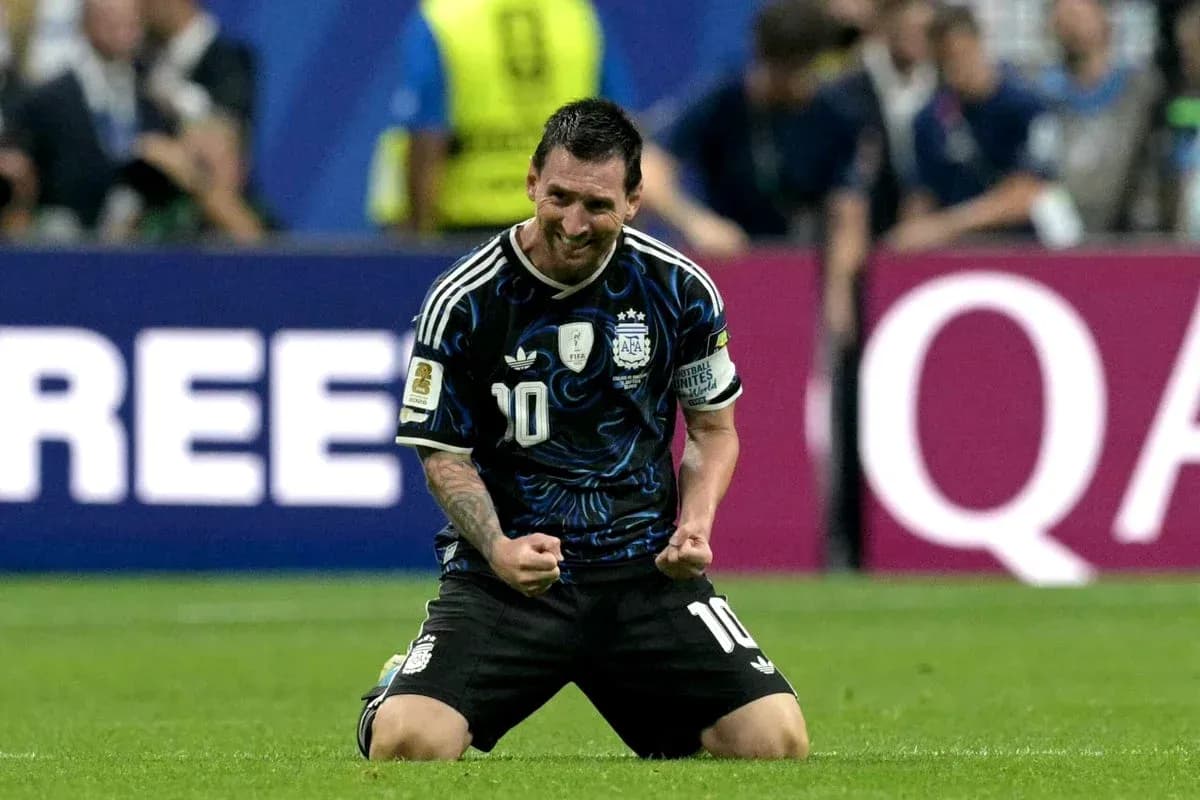
Messi’s World Cup began with a false start. He thought he had struck early against Algeria, only for VAR to slice it away for offside. The correction was temporary. He drifted into that familiar inside-left pocket, 20 yards out, and whipped a finish that nobody could take away.
After the break, he pounced again. Luca Zidane spilled a low drive from Alexis Mac Allister and the Argentina captain, alive to every rebound, rolled in the second. The hat-trick came in classic Messi fashion — a curling strike from the edge of the box, shaped like a pass, guided into the far corner with Zidane stranded.
His fourth arrived against Austria, only after he had missed a penalty. No hesitation the next time: a first-time finish from Facundo Medina’s pass, a goal that carried extra weight as it pushed him clear as the men’s World Cup all-time leading scorer. He added a fifth later in the same match, reacting quickest after his own shot had been blocked to finish from close range.
He did not even start the final group game against Jordan, yet still bent in an 80th-minute free kick to keep the tally climbing. Goal seven came in the round-of-32 win over Cape Verde. Goal eight? That was pure drama — a late equaliser against Egypt in the following round, dragged out of nothing, dragged out of habit.
Eight goals, four assists, 712 minutes. It’s a body of work built over an entire tournament, not just a hot week.
2. Kylian Mbappe (France) – 8 goals
(3 assists – 666 minutes)
Mbappe, though, has refused to let this become a one-man parade.
He opened with a brace in France’s 3-1 win over Senegal, all speed and certainty. Then he took charge again against Iraq, smashing in from range to break the game open and, after a long weather delay in Philadelphia, doubling the lead in the second half.
The knockouts kept feeding him. Two more against Sweden in the round of 32, both sharp, both ruthless. A penalty against Paraguay. Another strike against Morocco in the quarter-final. Every time the stakes rose, he found a way to leave a mark.
Spain finally shut the door in a 2-0 semi-final defeat. That loss means France’s last outing will be the third-place play-off on Saturday — one more, and only one more, chance for Mbappe to tilt the Golden Boot his way.
On goals alone, he and Messi are level. Assists give Messi the edge. Minutes played keep the Frenchman just in touch. One swing of a left boot or a dart through a high line could still flip the order.
Haaland’s early storm, England’s midfield finisher
3. Erling Haaland (Norway) – 7 goals*
(0 assists – 537 minutes)
Erling Haaland arrived at his first World Cup with all the subtlety of a wrecking ball.
Two goals against Iraq in Norway’s opener set the tone. The first, a trademark six-yard-box finish as he slid onto David Moller Wolfe’s low cross. The second, sheer force of will — closing down the goalkeeper and bundling the ball over the line.
Against Senegal he added his third, a calm side-footed finish, then a fourth with a clever volley. The knockouts sharpened the narrative. A late winner from close range against Ivory Coast in the round of 32, then a brace as Norway stunned Brazil in the last-16 tie, the second of those a surprise strike that underlined his knack for appearing where defenders least expect him.
Norway are out. Haaland sits on seven, with no more minutes to play. The asterisk matters. He can no longer add to his total, only wait and watch as others chase past him.
4. Jude Bellingham (England) – 6 goals
(1 assist – 574 minutes)
Jude Bellingham has turned a midfielder’s brief into a striker’s return.
He scored in both of England’s opening group wins — a 4-2 thriller against Croatia and a controlled 2-0 over Panama. From there, his influence only grew. Two goals in the last-32 victory against Mexico, then another brace in the quarter-final against Norway, each performance dragging him up the Golden Boot standings.
He edges his captain Harry Kane on minutes played — 574 to 627 — a small but significant detail if the two finish level. For now, Bellingham is the unexpected name muscling into a race usually reserved for pure forwards.
5. Harry Kane (England) – 6 goals
(1 assist – 627 minutes)
Kane’s World Cup has followed a more familiar arc.
Two goals in the opening win over Croatia, then a flat night against Ghana in a goalless draw. He returned to the scoresheet against Panama, striking England’s second in the final group game.
The knockout rounds reminded everyone why he has worn this crown before. Two second-half goals against DR Congo in the round of 32, dragging England through. Another from the penalty spot against Mexico. Six goals, one assist, a constant presence around the penalty area.
If England keep advancing, both he and Bellingham have the runway to make a late charge.
Supporting cast with a puncher’s chance
=6. Ousmane Dembele (France) – 5 goals
(2 assists – 492 minutes)
Ousmane Dembele arrived with a curious record: 19 major tournament appearances, no goals. That statistic evaporated in an instant.
He scored France’s third in the 3-0 win over Iraq, then detonated against Norway with a first-half hat-trick. Direct, daring, devastating. His fifth of the tournament came in the quarter-final against Morocco, a run of form that briefly put him among the most dangerous wide players in the competition.
With France now heading for the third-place play-off, Dembele has one more shot at padding those numbers.
=6. Mikel Oyarzabal (Spain) – 5 goals
(1 assist – 519 minutes*)
Spain’s campaign started with frustration, a draw against Cape Verde that asked questions. Mikel Oyarzabal answered them.
He scored twice in a 4-0 win over Saudi Arabia in the second group match, then repeated the trick with another brace in a 3-0 round-of-32 victory over Austria. Efficient, composed, always in the right pocket of space.
His fifth, and most significant, came from the penalty spot to open the scoring in Spain’s semi-final against France. Spain are through to the final; Oyarzabal’s minutes will stretch, and with them, his outside chance of climbing the list.
=8. Vinicius Junior (Brazil) – 4 goals*
(1 assist – 505 minutes)
Vinicius Junior spent his World Cup rescuing and embellishing.
He spared Brazil’s blushes in their opener against Morocco, smashing in an equaliser after a shock early deficit. He then struck again in a dominant win over Haiti, following two goals from Matheus Cunha.
Against Scotland, he punished Scott McKenna’s mistake, rolling in his third in as many games. His fourth came at the back post, a simple header from a teasing Bruno Guimaraes cross. Brazil are out now, which locks his tally at four.
=8. Ismaila Sarr (Senegal) – 4 goals*
(1 assist – 419 minutes)
Ismaila Sarr lit up Group I for Senegal.
He scored twice against Norway, the first an improvised, clipped finish while falling, the second a clean strike in a 3-2 defeat that did nothing to dull his impact. He added a third in Senegal’s final group game against Iraq, then a fourth against Belgium in the round of 32.
Senegal’s exit means Sarr’s World Cup is over, but his four goals in 419 minutes underline the threat he carried every time he picked up the ball.
=8. Julian Quinones (Mexico) – 4 goals*
(1 assist – 440 minutes)
Julian Quinones wrote his name into this tournament from the very first whistle.
He scored the opening goal of the World Cup as Mexico beat South Africa 2-0, then struck again in a 3-0 win over Czech Republic. In the last-32 against Ecuador, he once more broke the deadlock, thriving in high-pressure moments.
He even found the net against England in the last-32, adding a fourth to his tally. Given he top-scored in the Saudi Pro League with 33 goals in 31 games, this burst of form should never have surprised anyone.
Behind them, a pack of 11 players sits on three goals, all needing something extraordinary in the final days to enter the serious conversation.
The history behind the chase
The Golden Boot, originally the Golden Shoe when it was formally introduced in 1982, has always shadowed the main story. Top scorers have been noted since the 1930s, but the modern award has its own mythology.
In 2022, Kylian Mbappe became only the second man to score a hat-trick in a World Cup final, matching Geoff Hurst’s feat from 1966. Unlike Hurst, Mbappe did not leave with the trophy, but his eight goals equalled Ronaldo’s 2002 mark for the most in a single tournament.
Four years before that, Harry Kane’s six goals powered England to the semi-finals, where they fell to Croatia, but still secured him the Golden Boot.
Now, with the 2026 World Cup down to its final four matches, Messi and Mbappe are locked on eight, Haaland waits on seven, and a cluster of chasers lurk just behind. The numbers are set. The rules are clear.
All that’s left is the hardest part in football: scoring the next goal.