
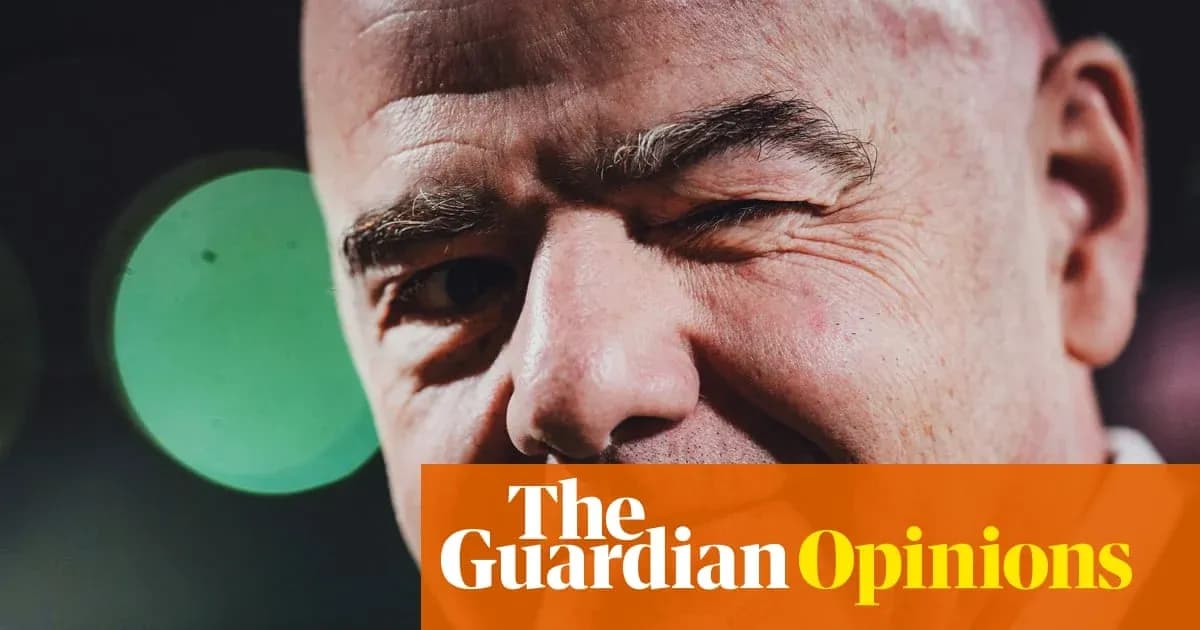
Gianni Infantino Must Resign for Football's Future
Gianni Infantino’s time is up.
Not next year. Not after another round of “dialogue” or a cosmetic reform package. The Fifa president has to go – either by resignation or through the legal mechanisms that still, just about, exist to protect football from the people running it.
This is not about one bad idea or a clumsy press conference. It is about an official who has systematically shredded trust in the game’s global governor, hollowing out what little credibility Fifa had rebuilt after the Blatter era and dragging the sport back into a familiar swamp.
A climbdown that fooled nobody
On Saturday morning, Infantino was forced into a public retreat. The grand plan to carve up the World Cup and sell slices of its future to private investors, under the banner of the Fifa Forward Enterprise (FFE), collapsed under the weight of global fury.
He accepted defeat, at least on paper, and spoke of resuming discussions on football’s growth “in the spirit of shared interest in our game”. The words were carefully chosen. The intent was obvious: survive the storm, buy time, and repackage the same vision later.
It cannot be allowed to work. Every extra day Infantino clings to office deepens the stain on an institution whose reputation is already scraping the floor.
The FFE scheme alone – a project that would have placed unprecedented power over football’s future in the hands of venture capital – would be enough to topple most leaders. Infantino launched it unilaterally, with minimal transparency, as though the World Cup were a private asset, not a shared cultural treasure.
But this is only one entry on an ever-expanding charge sheet.
Fifa’s own rules, broken from the top
Fifa’s statutes are clear about what the presidency is supposed to be. Article 10.3 sets out the role in black and white: the president must ensure Fifa’s objectives, mission, strategic direction, policies and values are “sustainably pursued, protected and implemented”, and must foster a “positive image of Fifa”.
The same article talks about “promoting friendly and peaceful relations within Fifa”. That line now reads like a dark joke. In recent days, federations and senior officials have queued up to distance themselves from Infantino, some publicly, many more in private. The organisation’s slogan, “football unites the world”, has never sounded so hollow.
Nothing in those rules gives a president licence to chase private schemes with minimal oversight, or to align major projects with political interests, including those of the current US administration or its satellites, without proper scrutiny. Yet that is exactly what has been happening.
A pattern of contempt
Where to start with the recent litany?
The Folarin Balogun saga pushed many in the European game to the brink. Before that, there was disbelief and anger when Infantino handed a new Fifa peace prize to Donald Trump in December, with little clarity about the selection process and highly contested claims about the US president’s supposed achievements.
Stakeholders were left exasperated by the way “hydration breaks” were brought into this summer’s World Cup, tinkering with the fabric of matches without meaningful consultation. It was another reminder that under this regime, the game itself is something to be experimented on, not safeguarded.
Then came the 2034 World Cup farce. The rushed, opaque bidding process ended with Saudi Arabia’s candidacy effectively waved through in December 2024, sparking global criticism and reinforcing the sense that Fifa’s biggest decisions are now stitched up in back rooms, not debated in boardrooms.
All of this arrived before Friday’s revelation that a 64‑team World Cup is being pushed ahead in full swing. Each move more drastic than the last. Each one chipping away at the sport’s competitive integrity and sense of proportion.
Uefa’s breaking point
By Saturday, the backlash had hardened into something more serious. Uefa, long frustrated, finally moved from words to action.
In a scathing statement, European football’s governing body demanded an end to “secret schemes on fast track timescales, cooked up by faceless individuals and of dubious benefit to the game”. The FFE project was the immediate trigger, but the anger ran far deeper – at the marginalisation of other decision-makers, at the culture of improvisation and secrecy around the most important questions in football.
This time, Uefa did not stop at rhetoric. It pledged to boycott future Fifa tournaments if Infantino did not withdraw his plan. That threat, backed by a united front from Europe’s power brokers, helped force his climbdown and handed Aleksander Ceferin a defining victory of his own presidency.
Yet even that will count for little if Infantino is allowed to regroup.
The Fifa president is understood to have hired a major consultancy in recent days to soothe relations with federations, rebuild alliances and, inevitably, dangle fresh promises. This is the familiar survival playbook: divide, delay, distribute money, and hope the mood softens.
A test of courage for the federations
Inside Uefa and other confederations, there is a clear recognition that the tempo cannot drop now. Senior figures are adamant: Infantino must not ride out this scandal.
One crucial step lies with the member associations themselves. Most had already sent formal letters pledging support for his re-election next March. Those letters now hang around their necks.
Recalling them would require a request to Fifa. If enough associations act, it would amount to a de facto vote of no confidence. Fifa lobbied aggressively for those pledges; many FAs would be deeply embarrassed if their earlier loyalty became public in the current climate.
But embarrassment is not the issue any more. Duty is.
Member associations exist to protect their sport, not to cower in the face of an overreaching president. If they back away now, they leave the job half done and invite more of the same. They cannot claim to be defending football while enabling the man driving it into crisis.
What comes after Infantino?
Uefa has already promised to explore a new model for distributing Fifa’s vast wealth, tapping into multibillion reserves without “selling the family silver” to private investors. Behind the scenes, it is working with other confederations to identify credible candidates to replace Infantino, with a view to contesting the election if he somehow clings on until then.
The stakes are obvious. This crisis can be the moment football resets its global governance, restores some integrity to its institutions and reasserts that the game belongs to its players, fans and communities – not to presidents and their pet projects.
But that only happens if Infantino is removed from the picture. Leave him in place and the pattern will repeat: another grand scheme, another rushed process, another controversy that drags the sport’s name through the mud.
Fifa, and by extension football itself, will keep lurching from one self‑inflicted disaster to the next.
And the world’s biggest game will remain trapped in a conversation about one man, his ego and his appetite for risk – when it should be talking about the football.





