
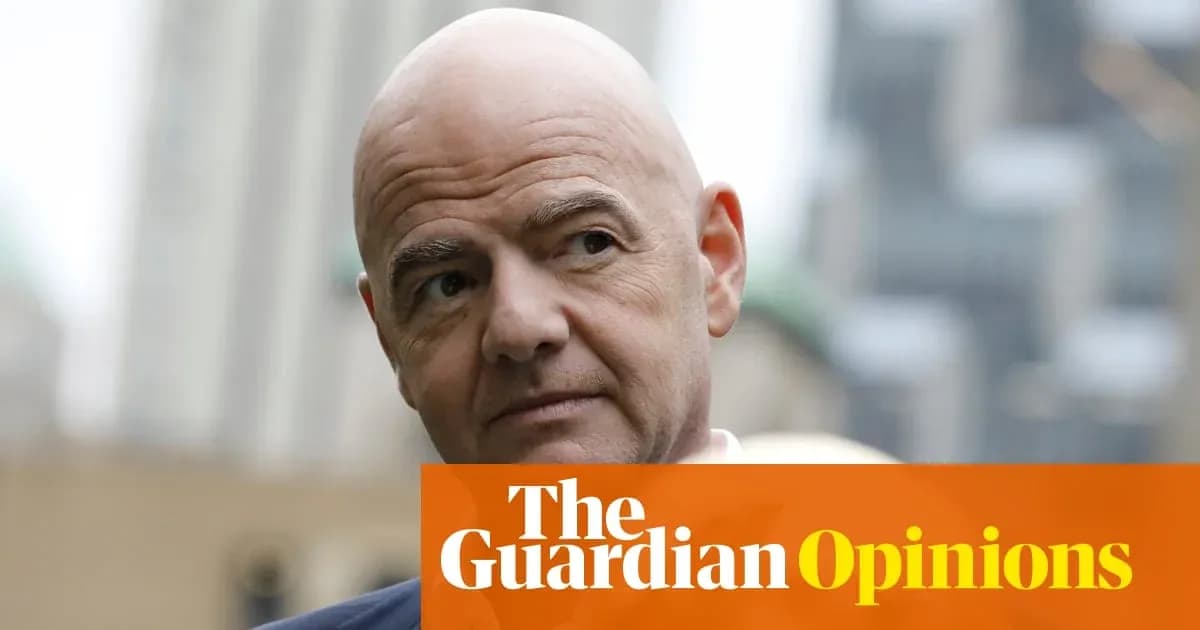
Gianni Infantino: The Rise of Fifa's Power Broker
Gianni Infantino arrived as the clean break. The bald technocrat from Uefa, the man who would restore “the image of Fifa” after Sepp Blatter’s ruinous reign, stepped into the Zurich spotlight in 2016 with talk of transparency, accountability and a new era.
He also promised something else: money. A “very significant increase” in funding for the 211 member associations. The applause, he predicted, would be global.
It has been loud enough to keep him in power. The cost to the game is becoming clearer by the year.
From bureaucrat to would‑be head of state
Back then, Infantino was filed away as a typical Swiss administrator – diligent, grey, safe. Nobody uses that description now. Inside football’s corridors of power, a different line does the rounds: “He thinks he’s running a nation state.”
That barb has never felt more pointed than this week, as Fifa unveiled plans – without meaningful consultation – to sell a slice of the World Cup’s commercial rights to outside investors. The governing body of football, edging towards a hybrid of political machine and private equity vehicle.
This is not a sudden lurch. It is the logical extension of a presidency built on relentless expansion – of tournaments, of revenue streams, of Infantino’s own reach.
Expansion as doctrine
The pattern was visible almost from day one. In 2016, barely settled into the office Blatter once dominated, Infantino floated the idea of enlarging the World Cup and upgrading the Club World Cup into a heavyweight global showpiece.
Two years later came another grand design: a worldwide Nations League, to be delivered by a new corporate structure and funded by external investment. The money on offer was enormous. The pushback, this time, was just strong enough. The project died, officially at least.
Other ideas did not. In 2017, Fifa confirmed that the 2026 World Cup would balloon to 48 teams, a fundamental reshaping of the sport’s central event. By 2021, as the dust settled on the European Super League fiasco, it emerged that the 12 rebel clubs had expected Fifa to quietly back their breakaway. They were wrong, but the assumption itself said plenty about how Infantino’s Fifa was viewed.
Later that same year, he went further still: a proposal to make the World Cup biennial. The most sacred rhythm in international football, up for renegotiation in the hunt for more inventory to sell.
Covid, cash and a faster drumbeat
Once football emerged from the Covid-19 shutdown, the tempo quickened. Clubs and associations were counting losses; Fifa stepped in with money from its Forward Programme, presenting itself as a financial lifeline.
At the same time, Infantino accelerated his redesign of the calendar. A 32‑team Club World Cup was launched, with immediate chatter about how and when it might be expanded again. The 2034 World Cup landed in Saudi Arabia’s lap almost uncontested, a process so swift it barely resembled a contest at all.
The 2030 edition will be stretched across three continents and six host nations, a sprawling, politically convenient compromise that also opens the door to more sponsors, more host deals, more content. Even that might not be the final form. There is open talk of taking the tournament to 64 national teams.
On the pitch, even the details have become part of the grand project. Mandatory hydration breaks, introduced at the end of last year, arrived framed as a welfare measure. They also create extra broadcast windows and natural slots for commercial messages.
Every tweak has a financial echo.
What is driving Infantino?
Inside boardrooms and executive lounges, one question keeps resurfacing: what is eating Gianni Infantino? What fuels this constant appetite for more – more teams, more games, more tournaments, more deals?
The first explanation is the oldest one in Fifa politics: patronage. Expanded competitions mean more prize money, more development grants, more travel, more visibility. That cash flows back to member associations, whose votes keep a president in office. Infantino has already effectively tripled Fifa’s revenues since 2016. That kind of growth buys loyalty.
He has also rewritten the rulebook on presidential term limits. Even so, his almost guaranteed third full term is supposed to be his last. If reelection is no longer the central prize, what is?
A soft landing or something bigger?
The latest commercial plan has sparked another theory. By carving out a new vehicle for World Cup rights, Infantino could be building his own landing pad for life after the presidency.
Reports in the Times suggested he might one day become CEO of the new venture, with a salary to match the corporate world rather than that of an NGO chief. Fifa has flatly denied any such discussions. Even if something like that eventually materialises, it still feels like an incomplete answer to a decade of upheaval.
The scale of the changes, the sheer volume of initiatives, suggests a motivation that goes beyond a comfortable retirement job.
Power, status and the high table
The simpler reading – and the one that is becoming harder to ignore – is that Infantino is intoxicated by status and power.
The Italian boy from a working‑class background in wealthy Switzerland, once bullied for his ginger hair, now sits with presidents and princes. The contrast is stark, and he appears to revel in it.
His taste for the high life surfaced early. Alongside the stories of private jets, he surrounded his 2016 campaign with a dozen former stars, the so‑called Fifa Legends, drafted in to give his candidacy a sheen of glamour.
Since taking office, the celebrity circle has shifted. Footballers have given way to heads of state. Infantino has been photographed and filmed alongside Vladimir Putin, the emir of Qatar, the crown prince of Saudi Arabia and the then US president, Donald Trump. The images are not incidental. They are part of the story he wants to tell about himself – a global operator at the very top table.
With that status has come real clout, or at least the appearance of it. He has pushed through reform after reform with minimal resistance from within Fifa or the wider game. Dissent has been rare, fragmented and largely ineffective.
But political alliances are rarely built on sentiment. They are transactional, fragile, and they come with invoices attached.
One senior football figure, assessing the new commercial project, argued that this latest scheme is not Infantino’s ambition at all. “Gianni has got in way over his head with Trump,” they said. “He [Trump] is now extracting his share of the World Cup rewards.”
If that claim is even close to the mark, the question facing football is no longer just what drives Infantino – but how much of the sport’s future he is prepared to trade to keep his place among the world’s power brokers.





