
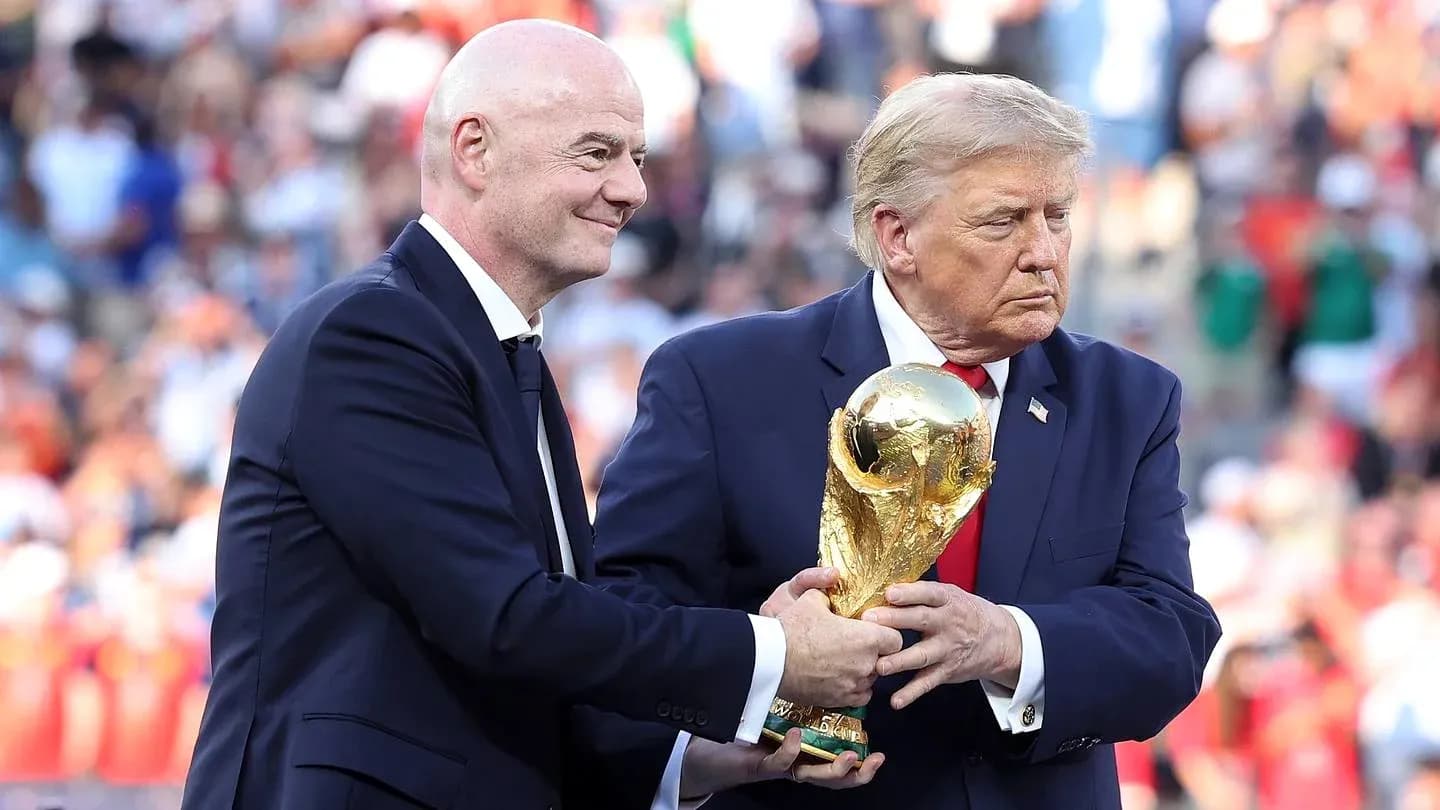
Gianni Infantino Faces Congressional Scrutiny Over Trump Ties
Gianni Infantino has been dragged from the touchline into the heart of Washington’s political arena.
The FIFA president has been asked to appear before the House Judiciary Committee to explain, in detail, the depth of his relationship with U.S. President Donald Trump and the influence the White House has wielded over world football’s governing body.
This is no routine courtesy call. It is a direct challenge to the way FIFA has operated during Trump’s presidency.
A Relationship Under the Microscope
Infantino and Trump have long projected a close alliance. That bond has now become the subject of formal scrutiny.
On paper, it starts with symbolism and spectacle. Infantino awarded Trump the first-ever FIFA Peace Prize. He took office space in Trump Tower in New York City. The World Cup draw was shifted to Washington’s John F. Kennedy Center, a venue that had been effectively taken over by Trump’s team.
Those decisions raised eyebrows at the time. They now sit at the center of a much sharper political inquiry.
The tension spiked during this summer’s World Cup. Trump personally reached out to Infantino to seek the lifting of a ban imposed on USMNT striker Folarin Balogun. The request was granted. The fallout was immediate: a formal complaint from the Norwegian Football Federation, which has been consistently vocal in its criticism of Infantino’s conduct.
For Rep. Jamie Raskin, a senior Democrat on the House Judiciary Committee, that episode was not an isolated incident. It was a tipping point.
Raskin Turns Up the Heat
Raskin has written to Infantino requesting a formal interview before the committee, seeking testimony and documentation about the president of FIFA’s dealings with Trump—on and off the pitch.
“The most recent quid pro quo that FIFA and President Trump orchestrated is not a victimless crime,” Raskin wrote. “It hurts Americans.
“FIFA has taken its newfound favored status in the Trump Administration as a sign that it may rip off its consumers, most notably, by employing illegal price gouging and fraudulent sales tactics for the World Cup.”
The language is as blunt as it is confrontational. Raskin’s letter draws a direct line from Infantino’s conduct to the corruption era of Sepp Blatter, a comparison no FIFA president wants to hear.
He accuses FIFA of “outright bribery” and claims Americans have been “defrauded and manipulated” over the spiraling costs and commercial structure of the World Cup, an area already under investigation by New Jersey attorney general Jennifer Davenport.
Raskin’s letter does more than ask questions. It “serves as notice” that Infantino is expected to preserve and present evidence of his relationship with Trump, including all communications “between FIFA personnel and individuals affiliated with the Trump Administration or its inaugural committee.”
Infantino is also requested to sit for a transcribed interview to defend his ties to the president.
Limited Power, High Stakes
For now, the political reality in Washington offers Infantino some breathing space.
Democrats sit in the House minority, which means Raskin lacks the unilateral power to compel testimony or documents from Infantino, FIFA, or Trump. Any legal action or formal subpoena would require a majority vote—something that could only come if November’s midterm elections shift the balance of power.
That is where sport and politics collide again.
The 2031 Women’s World Cup bidding process looms in the background. The tournament is expected to be co-hosted by the U.S., Mexico, Costa Rica and Jamaica. With questions already swirling around FIFA’s relationship with the Trump Administration, every step in that process will face sharper inspection—from pricing and ticketing to hosting contracts and political favors.
If Democrats gain ground in November, the calls for Infantino to answer under oath will only grow louder.
White House Hits Back
The White House has not taken Raskin’s move quietly.
Asked by The Athletic to respond, spokesperson Davis Ingle fired back with a scathing personal attack and a full-throated defense of Trump’s record with FIFA.
“Lightweight Jamie Raskin [is] a stupid person’s idea of a smart person,” Ingle said in a statement. “No other president in history could have pulled off the historic feat that President Trump delivered for the American people and the world.
“Thanks to his bold vision and decisive leadership, the 2026 FIFA World Cup generated billions of dollars in revenue, created a massive economic boost across host cities, and delivered a safe, secure and seamless experience for millions of fans and athletes from around the globe.
“It will undoubtedly go down as one of the greatest and most successful sporting events in history.”
The message from the White House is clear: Trump’s camp views the World Cup as a crowning achievement, not a scandal.
Football in the Crossfire
What began as a story about hospitality, awards and high-profile events has hardened into a confrontation over alleged price gouging, fraudulent sales tactics and political quid pro quos.
Infantino now finds himself in a familiar position for a FIFA president—caught between the demands of powerful political allies and the scrutiny of investigators who believe the game has been used as a vehicle for something far bigger than sport.
The next move may not come from Zurich or the pitch, but from Capitol Hill—and from the ballot box in November.





