Football Dreams: Special Olympics Journey from Bottesford to Birmingham
On a warm July evening in Scunthorpe, with England’s senior side chasing World Cup glory an ocean away, a very different kind of football dream was taking shape in the shade of Central Park’s trees.
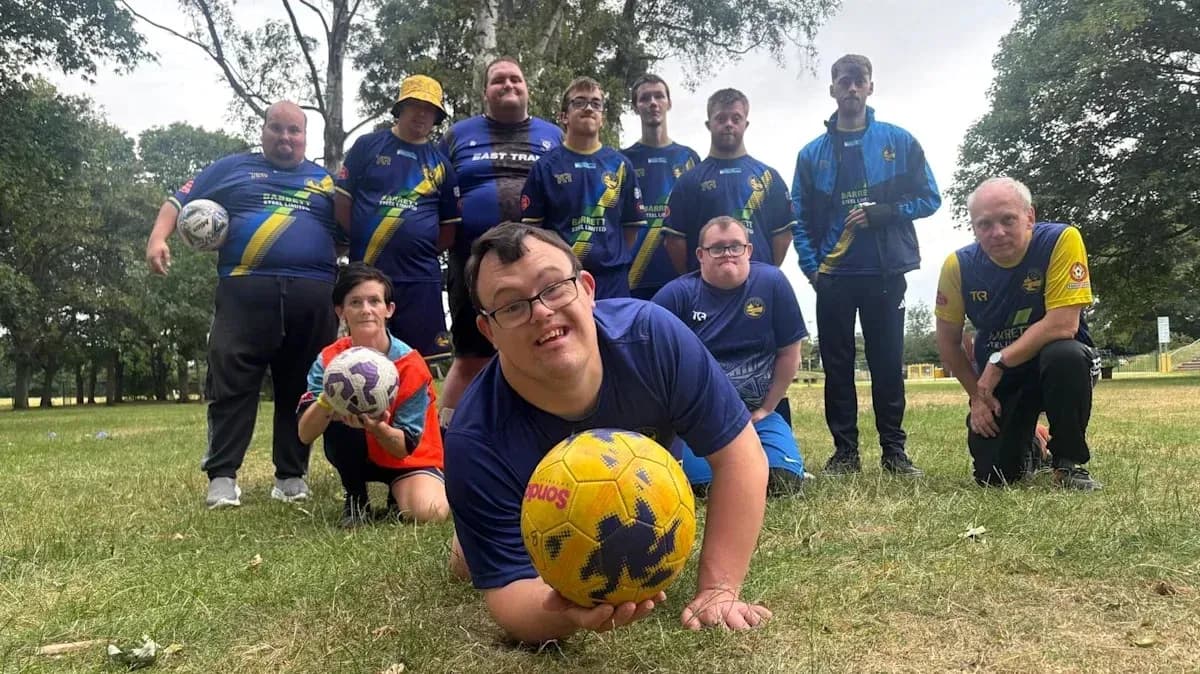
No TV gantries. No roaring stands. Just a tight circle of players with bibs, cones, and a shared obsession with the game – a squad of footballers with intellectual disabilities pushing through drills, touches, and sprints as they chase Special Olympics gold.
From small steps to national stage
This group began as a team for young adults with Down’s syndrome at Bottesford Town Football Club around a decade ago. It has since grown, quietly and steadily, into a broader squad that now includes players with autism, ADHD and other learning disabilities.
Those early sessions were about far more than first touches. Players were taking tiny, tentative steps towards social confidence, learning how to move within a team, how to communicate, how to belong. The football skills came, but slowly.
Now the picture is very different.
The squad trains in their own colours. They work to set routines. They talk openly about medals. Their target is clear: the Special Olympics GB National Summer Games at Alexander Stadium in Birmingham, running from 26 to 30 August.
For Jake, one of the longest-serving players, the build-up has a simple, sharp emotion.
“I feel happy,” he says, when asked about the tournament. He talks about taking corners, about how to “wrap” the ball into the net. He has history at this level – a silver medal from the 2017 Special Olympics – and a clear ambition this time: two goals and a gold.
A family’s fight for a place on the pitch
Jake’s journey is wrapped up in his mother Sue’s determination. She has been with the team from the very beginning, organising fundraising, sorting transport, making sure the players get to training and games. Her other son, Aiden, who also has disabilities, is learning to coach the team.
The original idea was simple but powerful. Jake has Down’s syndrome. He loves football. Mainstream teams, though, were a struggle.
He couldn’t keep up. The pace, the intensity, the demands – they left him on the outside of the game he adored.
So Sue went to Bottesford Town FC and asked for something different: a space where Jake and his friends could actually play, not just watch from the touchline.
“For Jake to be able to play football was just such a big thing for him,” she says. It is his passion, the thing that lights him up. He didn’t want an adapted hobby. He wanted football.
The impact has gone far beyond technique. Yes, the first touch has sharpened and the positional sense has improved. But the friendships have deepened too. The group has built a kind of dressing-room bond that is often taken for granted in the professional game.
“When your child is born and you find out they have a disability, it’s a complete unknown,” Sue says. Her promise to herself was that her boys would “access as much as possible in their lives”. Football has become one of the main routes to that.
Bottesford Town FC, she says, have been “amazing” – offering their sports hall for training and a 4G pitch that keeps the players active all year round.
Setbacks, sacrifice and a £10,000 hurdle
The road to Birmingham has not been smooth.
The team were accepted into the Special Olympics in 2021, only to see the Games cancelled because of the Covid-19 pandemic. The decision hit hard. Routines were broken, momentum lost. For players like Jake, that gap in structure and purpose was more than just a blank space in the calendar.
“It set quite a few of them back,” Sue says. Jake was one of those who struggled.
The bigger test, though, has been financial. To get two teams to this year’s Games – covering travel and accommodation – they needed to raise £10,000. That figure has loomed over every raffle, every fundraiser, every appeal.
Yet the closer the Games come, the more the focus shifts back to what happens on the pitch.
Manager Michael Potts talks about training “ramping up”. The players, he says, are “excited”. The 4G surface has helped them refine their game, giving them a consistent base to work from, no matter the weather.
With the squad now including players with a range of intellectual disabilities, the coaching team has had to rethink its approach. Sessions are adapted, instructions tailored, support adjusted so each player can understand their role and thrive within it.
Rock-solid at the back, dreaming of gold
Between the posts stands Mason, the goalkeeper, who sums up his side’s defensive mindset in two words: “rock solid”.
Ask him how England’s men might tighten up at the back and his answer is straight out of a dressing-room debrief: train hard, and make sure the goalkeeper gets the basics right, especially “throwing the ball out” properly to start attacks.
He carries his own big-game memory into Birmingham – a penalty save at his last competition – and his own target: gold.
Out in defence, Taylor has been part of this story for a decade. He joined the team 10 years ago and has grown with it. He talks about training going well, about staying committed. His advice to others is blunt and familiar to any pro: train hard. His prediction for himself? Four goals.
As the evening draws in over Central Park, the scene is a world away from New York’s vast stadiums and global spotlights. Yet the intensity is the same. Cones are collected, water bottles drained, final instructions given. The players move off the pitch in small groups, still talking about corners, saves, tackles, goals.
Walking back through the park, it’s impossible to miss the professionalism in the way they prepare, the seriousness with which they treat their chance.
The next time this team gathers after Birmingham, some of them may have medals around their necks. The question is no longer whether they belong on this stage.
It’s how far their football – and their dreams – can take them next.