Fifa's Vision for Football's Future: More Tournaments and Higher Ticket Prices
Fifa’s bold new sales pitch lays bare a vision of football’s future driven by more tournaments, higher ticket prices and a heavy reliance on debt – and it wants the game’s 211 national associations to sign off quickly.
At the heart of the plan is a 25-page sales deck, “Fifa Forward Enterprise Member Materials”, seen by the Guardian. It sets out a proposal to spin off Fifa’s commercial operations into a new company and sell 20% of it to a group led by US investor Joshua Kushner, brother of Jared Kushner, Donald Trump’s son-in-law.
The blueprint has been put together by JP Morgan, the same US bank that helped mastermind the doomed European Super League project five years ago. The language is familiar: growth, scale, monetisation. The numbers are eye-catching.
Cash on the table – and a bigger promise later
To win over member associations, Fifa is dangling immediate money. Each of the 211 members has been told they could receive a $20m (£15m) sign-up payment, potentially as early as January.
The document then goes further. It projects that Fifa Forward payments – the four-year development grants that underpin many federations’ finances – would rise to $24m per association in the 2035‑39 cycle. That is the long-term lure: accept the deal now, and the cheques get bigger later.
JP Morgan spells out how that uplift would be funded. The growth, it says, will come from “a growing tournament portfolio”, “third party sources of capital and debt financing”, and a sharper focus on “high yield” partnerships and events.
The message is blunt. More events. More expensive events. More borrowing.
A calendar under siege
Buried in the pitch is a striking figure: a plan to more than double the number of global tournaments per year, from 200 to 450. For a sport already creaking under the weight of an expanded World Cup, bloated Champions League formats and a relentless club schedule, that number lands like a warning siren.
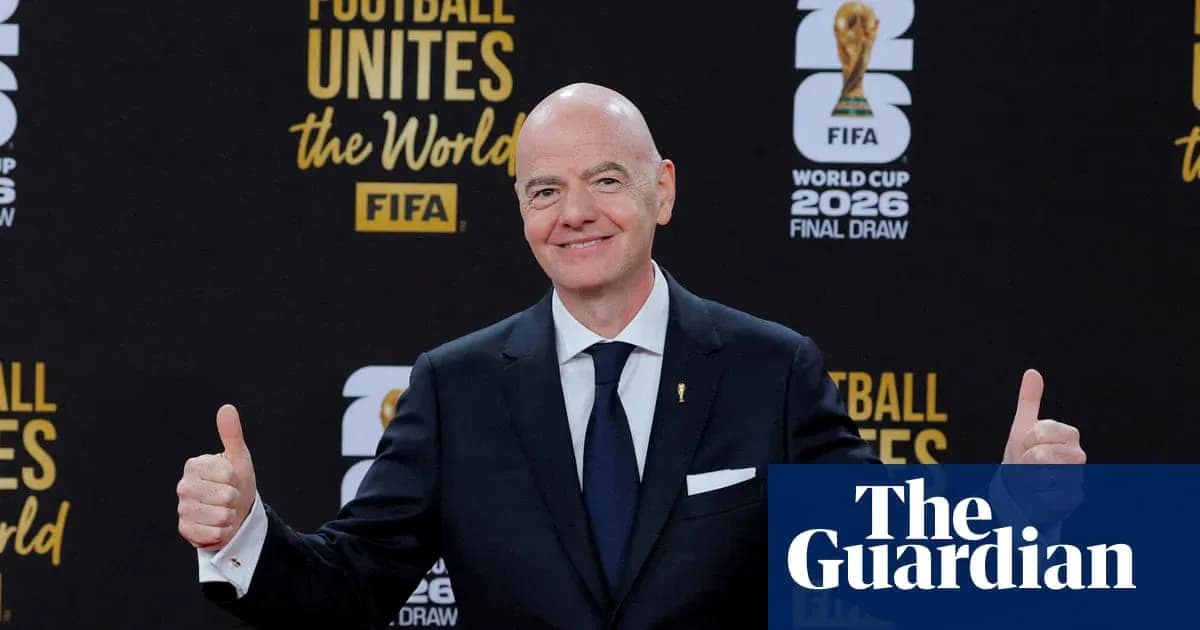
The most obvious cash cow is the World Cup itself. Gianni Infantino floated the idea of a biennial World Cup five years ago and met fierce resistance from confederations, leagues, players and fans. The new document does not spell out a specific frequency, but the logic is clear: staging the showpiece more often is the fastest route to more revenue.
Player workload, already a flashpoint between Fifa, domestic leagues and players’ unions, would come under even greater strain if the tournament portfolio swells in the way JP Morgan envisages. The calendar, once again, becomes a battleground.
Chasing the American giants
To justify the push, JP Morgan frames Fifa as “undermonetized” and lines it up against the heavyweights of US sport. The comparison is striking – and, to many in the game, deeply flawed.
Fifa’s stated annual revenue of $3.6bn is set against the NFL’s $21.2bn, Major League Baseball’s $13.1bn and the NBA’s $12.5bn. All three are private, franchise-based leagues. Fifa is a global governing body with a mandate that stretches from grassroots pitches to the World Cup final.
Yet in the deck, those distinctions are brushed aside. The implication is simple: if American leagues can extract that much from their products, football’s world body should be able to push far closer.
That logic also extends to how fans watch the game. JP Morgan highlights a plan to “expand and optimize media rights monetization”, opening the door to a shift of World Cup and other flagship events towards subscription broadcasters or streaming platforms. The days of universal free-to-air access for the sport’s biggest moments could be under threat.
Debt, secrecy and a rush to vote
If the revenue ambition is vast, the financial engineering is just as aggressive. The sales deck leans heavily on “third party sources of capital and debt financing”, despite Fifa currently sitting on cash reserves of around $4bn and having generated $15bn in revenues over the current four-year cycle.
That has already triggered alarm among some within the game. One senior figure questioned why an organisation with that level of reserves needs to load itself with debt. Another queried the logic of comparing Fifa to member-run US leagues while asking national associations to accept the risks.
The proposed timetable has also raised eyebrows. According to the document, “Investors will be given access to a term sheet and select materials” in August – before Fifa’s members have even voted on whether to approve the sale.
Just as striking is what the deck does not say. Beyond the initial reference to Kushner’s group, there is scant detail on the investor consortium: no clarity on their projected returns, no explanation of their exit strategy, no outline of the long-term control they might wield over football’s commercial future.
For a deal that would carve off a fifth of Fifa’s commercial arm, the opacity is hard to ignore.
A glaring omission
There is one absence that leaps off the page. Across 25 pages of projections, comparisons and growth charts, women’s football is not mentioned once.
At a time when the Women’s World Cup has broken attendance and broadcast records, when federations and players are pushing for equal treatment and investment, the omission is stark. The deck sells a vision of expansion and profit, but half the sport is invisible in the plan.
The document, sent to all 211 member associations on Wednesday night, has already provoked a strong and sceptical reaction. Questions over debt, transparency, calendar congestion and the very identity of the game are now on the table.
Fifa has been approached for comment. The next move belongs to its members – and their vote will decide whether the sport’s commercial future is driven from Zurich, or from a balance sheet built on debt and an ever more crowded calendar.