Fifa's Crisis: Confidence and Controversy
Fifa insists confidence is coming back. How do we know? Because Fifa says so.
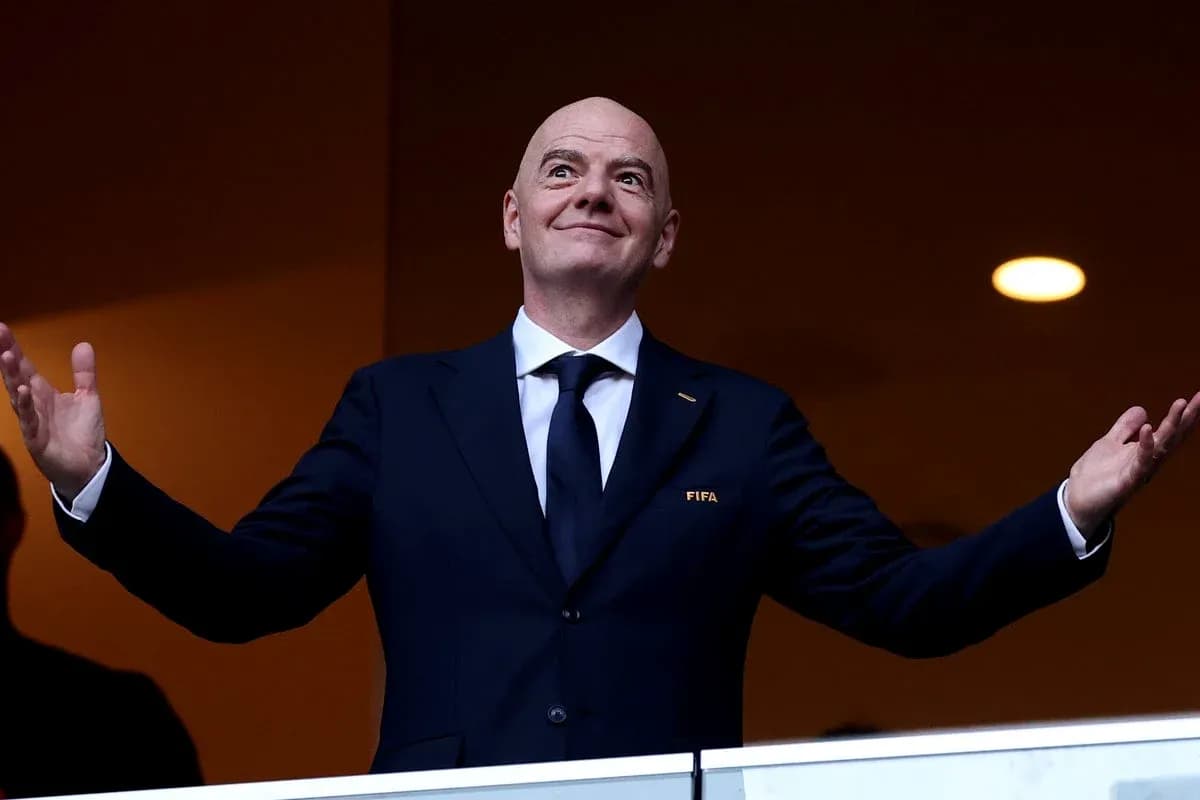
In a week when world football’s governing body tried to sell off the World Cup, then claimed it had never really meant to, the organisation has retreated into a bunker of self‑pity and defiance. The crisis, sparked by Gianni Infantino’s grand plan to hand commercial control of the sport’s crown jewel to private investors, has been recast in Zurich as something else entirely: an unfair “attack” on a misunderstood institution.
The problem for Fifa is that almost nobody outside its own inner circle seems to agree.
A coup in all but name
The “Fifa Forward Enterprise proposal” was not some routine piece of governance. It was an attempt, driven by Infantino, to reshape the economics of the World Cup and, by extension, the global game. Yet those who should have been central to such a decision – confederations, national associations, clubs, players, fans – were largely left in the dark.
So were some of Fifa’s own senior figures. Its chief operating officer Kevin Lamour, head of global football development Arsène Wenger, and others were not properly consulted. A plan of seismic importance appeared to have been cooked up in near‑secrecy, with only a select few – and, notoriously, members of the Kushner family – brought into the loop.
That is not a communication breakdown. That looks like a power play. A coup against football’s collective governance, staged by its supposed guardian.
The backlash was instant and ferocious. Many of the 211 member associations, who technically make up Fifa, rebelled. Several demanded Infantino’s departure. Others came out openly against the proposal itself. For once, the fractured interests of global football found common ground – in opposition to the president.
The Rabat reset – on Fifa’s terms
Under pressure, Fifa convened what it called a “constructive and positive meeting” in Rabat, Morocco. The outcome, according to a joint letter from Infantino and secretary general Mattias Grafström, was nothing less than the start of a new dawn.
“Fifa’s top management is fully confident that the outcomes of today’s meeting will help restore confidence in the organisation,” the letter declared.
Nineteen words that reveal the scale of the delusion. Confidence, they suggest, can be restored because Fifa says it has been.
The letter did at least concede that “mistakes made were acknowledged”. It even edged towards contrition: “It was agreed that it was not the intention for the Fifa council and Fifa member associations to feel excluded from the process.”
Not the intention. Which raises the obvious question: why were they excluded?
The scheme was so secretive that only a tiny circle knew the details. Associations understood that those voting for the plan would receive more money from Fifa than those who did not. Many saw that as perilously close to bribery, even if the word never appears in Infantino’s carefully crafted missive.
The proposal is now officially “off the table”. Infantino has promised there will be no repeat and that a review will be conducted. Yet the review will be run by the same Fifa hierarchy that tried to force the project through in the first place. Judge, jury and defendant, all under the same roof.
Thin skin, thick walls
If the World Cup sell‑off has been shelved, the siege mentality has not. Infantino’s recent, touchy Instagram posts have now been translated into institutional policy.
“It was agreed that Fifa will no longer tolerate any attacks on its integrity, good governance and due process and will take all necessary measures to protect and safeguard its name and reputation,” the letter warned.
The language could have been lifted from a political rally. The victimhood is familiar too. Donald Trump has long cast himself as the target of conspiracies and unfair assaults; now Fifa, an organisation mired in scandal for more than a decade, claims the same moral high ground.
Yet the idea that Fifa’s reputation can still be “safeguarded” belongs to another era. The damage did not begin with this latest fiasco. It has been layered, decision by decision, under the Infantino regime.
Suspensions for Cristiano Ronaldo and Folarin Balogun were quashed in ways that raised eyebrows across the game. Rules were bent to ease Lionel Messi’s Inter Miami into the Club World Cup. The United States was allowed to bar Somali referee Omar Artan from entering the country. Fifa courted Trump, then created a peace prize and handed it to a man who would go on to launch an illegal war.
Each episode chipped away at whatever remained of Fifa’s moral authority. Together, they turned the governing body into a byword for greed and political convenience.
A game sold short
In the United States, ordinary fans did not blame “the system” for soaring ticket prices. They blamed Fifa. The name itself became shorthand for excess. For deals done in back rooms. For a World Cup that felt less like a festival of football and more like a commercial asset to be sweated.
Fifa did not look like an impartial guardian of the sport when it granted what many saw as preferential treatment to the Trump administration, or when decisions appeared to lean towards the wishes of the White House. It did not look like a representative of the global game when it tried to sell off the World Cup without properly informing most of that game.
Now, confronted by one of the biggest crises of its modern history – a global sport thrown into turmoil by a single man’s project – Fifa’s answer is to declare itself the victim and threaten to silence its critics.
If the organisation is serious about restoring its reputation, the route is brutally simple: real transparency, real accountability, and new leadership. The latest dispatch from Infantino’s Fifa offers none of those.
The question is no longer whether football trusts Fifa. It is how long the game is prepared to tolerate a governing body that so clearly does not trust anyone else.