FC Cincinnati II Edges Columbus Crew II in Thrilling 2-1 Match
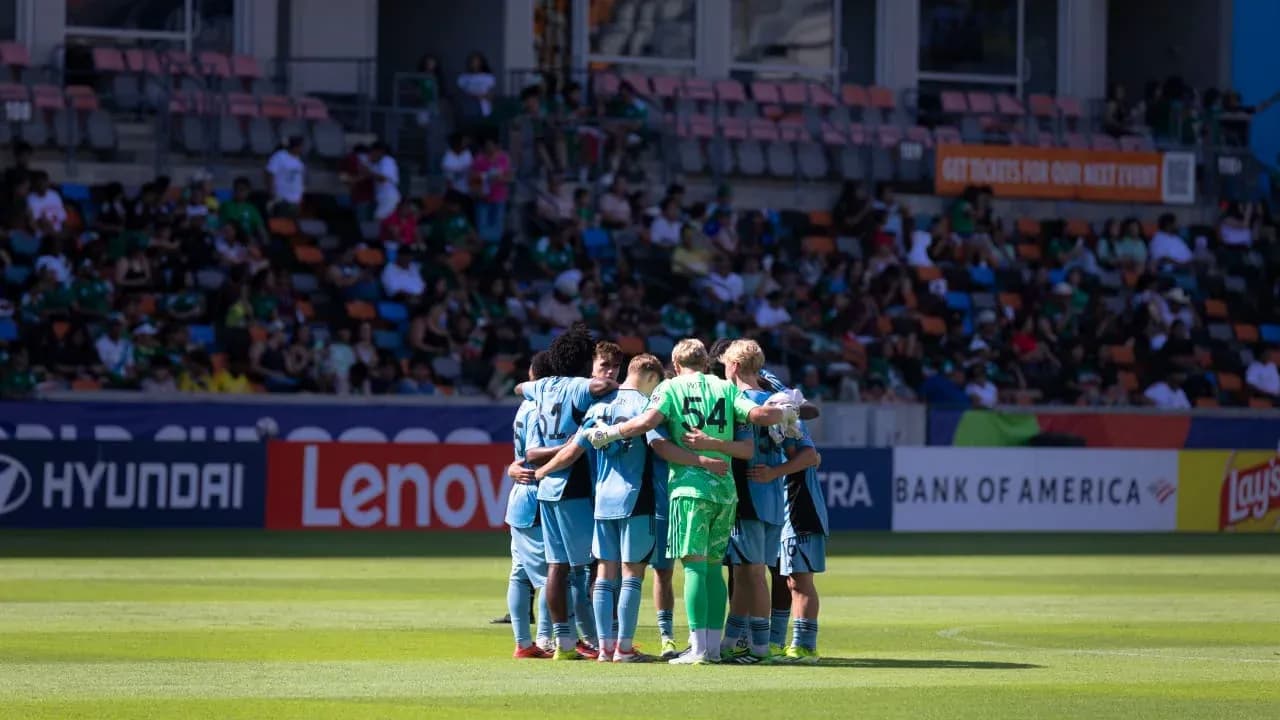
Under the lights at NKU Soccer Stadium, this felt less like a routine MLS Next Pro group-stage fixture and more like a clash of two very different footballing identities. FC Cincinnati II, erratic but dangerous at home, edged Columbus Crew II 2–1, a scoreline that cut against the grain of the pre-game narrative but fit perfectly with the match’s emotional arc.
Heading into this game, Columbus Crew II were the established force. In total this campaign they had played 10 league matches, winning 6 and losing 4, with 17 goals scored and 17 conceded for a goal difference of 0. At home they had been perfect – 5 wins from 5 – and on their travels they still carried a threat, with 7 away goals and an away goals-for average of 1.4. FC Cincinnati II, by contrast, came in as an inconsistent, home-heavy side: in total this campaign they had played 8 matches, winning 3 and losing 5, scoring 11 and conceding 12 for a goal difference of -1. But the split told the real story. At home they had 3 wins from 4, with 9 goals scored and only 4 conceded, an attacking average of 2.3 goals at home and a defensive average of 1.0. On their travels they had lost all 4, scoring just 2 and conceding 8.
This, then, was a meeting of extremes: a Columbus side with promotion ambitions from the Eastern Conference, and a Cincinnati group still trying to stitch together a coherent identity, but with a clear home-field edge.
I. The Big Picture: How the Game Bent the Season’s Logic
The full-time score of 2–1 to FC Cincinnati II turned the standings logic on its head. Columbus Crew II, ranked 3rd in the Eastern Conference heading into this game with 17 points and a promotion-playoff trajectory, were expected to impose themselves. Cincinnati, 12th in the conference with 9 points, were supposed to be the vulnerable underdog.
Instead, NKU Soccer Stadium became a proving ground for Cincinnati’s home DNA: high-output attacking, backed by a defense that is far more secure on its own turf than their overall numbers suggest. The half-time score of 1–1 reflected the balance of risk and ambition, but the full-time 2–1 spoke of a side willing to lean into its strengths and live with the chaos.
II. Tactical Voids and Discipline: Edges at the Margins
There were no officially listed absentees in the data, so both squads arrived with depth intact. For Columbus Crew II, that meant coach Federico Higuain could lean on a youthful but technically confident XI: K. Abbott and O. Presthus anchoring the back line, G. Di Noto and I. Heffess offering structure, and a front unit of N. Rincon, J. Chirinos and Z. Zengue given license to probe.
Cincinnati’s bench was deeper – nine substitutes named to Columbus’ five – and that numerical advantage hinted at a tactical lever: fresh legs late on, especially in a league where intensity often swings matches after the hour mark. With F. Mrozek between the posts, a defensive cohort including F. Samson, G. Flores and W. Kuisel, and a midfield spine built around M. Sullivan and A. Lajhar, the hosts had enough balance to absorb and then counter.
Discipline has been a defining subplot for both sides this season. Heading into this game, FC Cincinnati II’s yellow-card distribution showed a sharp early-game spike: 27.78% of their yellows arrived between 0–15 minutes, with another 22.22% between 46–60 minutes. There is also a notable late-game flashpoint: 11.11% of yellows between 76–90 minutes, and a solitary but significant red card in that same 76–90 window, accounting for 100.00% of their reds. Columbus Crew II, meanwhile, spread their aggression differently: 26.32% of their yellows came between 31–45 minutes and another 26.32% between 61–75, with 15.79% in the 76–90 stretch. They also carried the memory of an early red – 100.00% of their reds arriving in the 0–15 window.
This disciplinary profile framed the contest: Cincinnati risk-prone at the start and at the end, Columbus combustible around the edges of each half. Over 90 minutes, the side that managed those emotional peaks better was always likely to tilt the game.
III. Key Matchups: Hunter vs Shield, Engine vs Engine
Without official top-scorer or assist charts, the “Hunter vs Shield” battle in this fixture was more collective than individual.
For Columbus Crew II, the “hunter” was their away attack as a unit. On their travels they had averaged 1.4 goals, with a biggest away win of 1–3 and a demonstrated ability to score in bursts. They arrived knowing that FC Cincinnati II’s total defensive average was 1.5 goals conceded per match, and 2.0 conceded on their travels – but crucially, only 1.0 conceded at home. The shield, then, was Cincinnati’s home back line, which had produced 2 clean sheets in 4 home fixtures and never conceded more than 3 in a single home game this season.
In goal, F. Mrozek’s presence underpinned that shield, supported by defenders like G. Flores and W. Kuisel, who were tasked with compressing space against Columbus’ fluid front line of N. Rincon and Z. Zengue. The Crew’s ability to combine between the lines through G. De Libera and B. Adu-Gyamfi ran straight into Cincinnati’s compact central block of M. Sullivan and A. Lajhar.
The “engine room” duel was just as decisive. Columbus’ midfield, built around T. Brown’s industry and the distribution of G. De Libera, had to outplay Cincinnati’s central pair of Sullivan and Lajhar, with C. Sphire offering connective tissue between lines. Cincinnati’s plan was clear: use the ball more directly, maximize the physicality of S. Chirila and L. Orejarena up front, and trust that their home attacking average of 2.3 goals could be replicated if they turned midfield duels into transition moments.
On the bench, Columbus had creative and control options in M. Nyeman and R. Aoki, while Cincinnati could change profiles entirely with D. Hurtado, N. Gassan, or the guile of G. Marioni. Every substitution vector – [IN] replaced [OUT] – had the potential to tilt tempo and territory, particularly after the 60-minute mark when Columbus’ yellow-card spikes historically appear.
IV. Statistical Prognosis and Tactical Verdict
From a pure numbers standpoint, Columbus Crew II entered as the more balanced side: in total this campaign they averaged 1.8 goals for and 1.7 against, while FC Cincinnati II averaged 1.4 for and 1.5 against. Columbus’ all-round goal difference of 0 versus Cincinnati’s -1 suggested a marginal edge, and their promotion-chasing rank in the Eastern Conference underlined it.
Yet the split between home and away form was the real tactical compass. Cincinnati at home: 3 wins from 4, 9 scored, 4 conceded, 2 clean sheets, 0 failed-to-score outings. Columbus away: 1 win, 4 losses, 7 scored, 13 conceded, an away defensive average of 2.6 goals against and 0 clean sheets.
The 2–1 final felt like the logical intersection of those trends. Cincinnati’s home attack did not quite hit their 2.3-goal average, but came close; their defense held Columbus below the away attacking average of 1.4. Columbus’ structural issues on their travels – conceding heavily, struggling to control game states once behind – resurfaced here.
If we layer an Expected Goals lens over these patterns, the prognosis is clear. A Cincinnati side that creates volume at home, backed by a defense that is significantly tighter on its own pitch, will often edge xG in front of their own supporters, especially against a Columbus team whose away defensive numbers (2.6 goals conceded on average) hint at high-quality chances allowed. The absence of any penalties missed for either side this season – Cincinnati have converted 1 of 1, Columbus have yet to take one – also suggests that the margins in this match were earned in open play, not gifted from the spot.
Following this result, the tactical story is less about an upset and more about a rebalancing. FC Cincinnati II confirmed that their home identity is robust enough to trouble even the conference’s promotion contenders. Columbus Crew II, for all their quality and structure, were once again reminded that their biggest challenge is not in Columbus, but on their travels, where their shield has yet to match the ambition of their hunters.