Everton's Season Review: From European Dreams to Mid-Table Stagnation
For much of last season, Everton’s gaze was fixed on the sky.
Jack Grealish arrived on loan and lit the place up. Kiernan Dewsbury-Hall kept deciding tight games. Thierno Barry and Beto, written off early, started to look like proper Premier League forwards. On 21 March, a 3-0 dismantling of Chelsea at Hill Dickinson Stadium pushed Everton up to eighth, three points off the Champions League places with seven to play.
Europe didn’t just feel possible. It felt inevitable.
Then the season fell apart.
Everton did not win another game. Not one. It became the longest winless run since David Moyes returned for his second spell in charge in 2025, a collapse that dragged them from dreamers to also-rans in the space of a month.
The turning point came quietly enough: a 2-2 draw at Brentford on 11 April. From that moment to the end of the campaign, Everton’s form ranked among the worst in the league. Over that stretch they sat in the bottom three on results alone, one of only three sides – along with relegated Burnley and Wolves – who failed to win a single match.
Even so, when Sunderland arrived on Merseyside for the final home game of 2025-26, the door to Europe was still ajar. The mood around Hill Dickinson was hopeful, if tense. In his programme notes, chief executive Angus Kinnear chose the phrase “happily dissatisfied” to sum up the campaign. It jarred with supporters even before kick-off. After a limp 3-1 defeat to the newly promoted visitors, it sounded tone-deaf.
Sunderland rode that result all the way to seventh place and European football for the first time in 53 years. Everton, who had been glancing at the top four in March, finished 13th.
Again.
Same position, different story
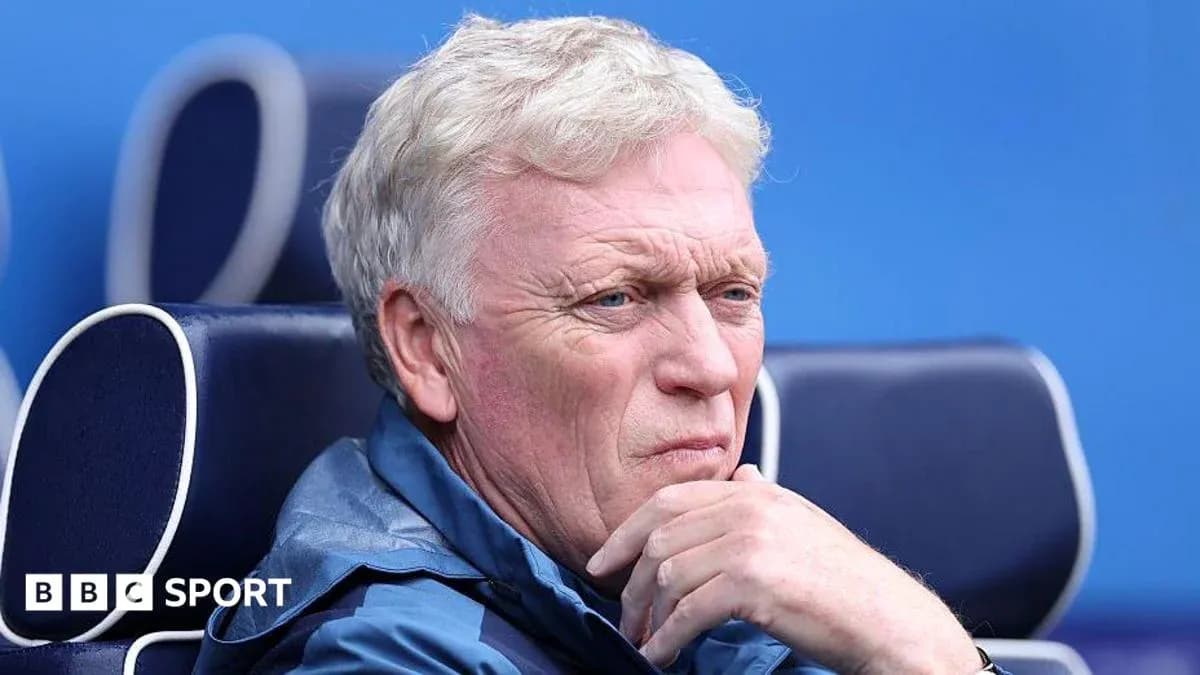
For Moyes, the symmetry is brutal. Two seasons back in charge, two 13th-place finishes. On paper, it screams stagnation. In reality, the context is harsher and more complicated.
When he walked back through the door 18 months ago, Everton were a point above the relegation zone and drowning in off-field chaos: financial breaches, points deductions, a fanbase exhausted by permanent crisis. He dragged them to safety, 23 points clear of the bottom three. Stability, not style, was the job.
Last summer, with the Friedkin Group in charge and the threat of relegation eased, Everton pushed their chips forward. A net spend of £97m – the biggest single-window outlay in the club’s history – was meant to turn survival into something more ambitious. Instead, they finished in the same place, with just one extra point.
Former midfielder Leon Osman, who knows both Moyes and Everton’s scars, sees progress in the repetition. Two consecutive mid-table seasons, after years spent staring down the trapdoor, feel to him like a platform rather than a ceiling. The first year under Moyes’s return brought a surge; the second, he argues, brought something rarer at Goodison and now Hill Dickinson: calm.
Moyes, 63, has been blunt about the financial landscape. Over the past five years, Everton rank 15th for net spend among the current Premier League clubs. They have spent, but they have also wasted, and they are no longer among the division’s financial bullies.
The league table offers a sharp reminder of that. Bournemouth turned a profit of £81m on transfers last summer and finished sixth. Brighton banked £41m and still took eighth. Everton’s £97m outlay bought them one extra point and a long, uncomfortable look in the mirror.
New home, old problems
The move to the Hill Dickinson Stadium was supposed to mark a clean break with the past. A state-of-the-art arena on the waterfront, a symbol of a modern Everton. Instead, home became a problem.
Their average of 1.2 points per game at Hill Dickinson was the lowest by any side starting life in a new Premier League stadium in the competition’s history. On the road, they were among the division’s top seven. At home, they looked nervous, inhibited, and occasionally lost.
Osman believes the club is still adjusting – to the new ground, to the new ownership, to the residue of years spent firefighting. He also points to one clear football reason for the spring collapse: the loss of Grealish to a stress fracture in January.
The numbers back him up. With Grealish in the side, Everton won 45% of their games and averaged 1.6 points per match. Without him, the win rate dropped to 22%, the points to one per game. The attack lost its spark, and the whole structure sagged.
Moyes’s intensity, usually a strength, became a strain on a small squad that simply ran out of legs.
Squad in flux, plan in progress
Everton’s transfer strategy remains a work in progress, scarred by the Farhad Moshiri era. Eight players signed for £20m or more under the previous owner eventually walked away for nothing. That sort of waste leaves a mark.
The Friedkin Group tried to reset the approach last summer with a youth-focused recruitment drive. Nine players came in. So far, the returns have been mixed.
Grealish and Dewsbury-Hall have been clear successes. Beyond them, the picture is murkier. Tyler Dibling, a £35m signing from Southampton, started only six league games. Adam Aznou, the young left-back brought in from Bayern Munich, is still waiting for his Premier League debut. Barry, 23, dominated in the air – no one won more aerial duels in their first top-flight season – but his finishing veered from ruthless to erratic. Merlin Rohl needed months to find his feet, then suddenly looked the part with a strong run of four starts in May.
Everton know they need more from that group. They may soon need them whether Moyes fully trusts them or not.
The summer ahead
BBC Radio Merseyside reporter Giulia Bould has reported that Grealish is expected to re-sign on loan later in the window as he continues his rehabilitation. The deal would keep his wages at around £200,000 per week – a huge commitment for a club still repairing its balance sheet, but also a reflection of how transformative he was when fit.
Iliman Ndiaye, one of Everton’s brighter attacking sparks, has been linked with a move to Saudi Arabia. Osman admits he would hate to see him go, even if a big fee might allow Everton to spread the money across two or three positions. It is the familiar Premier League equation: one sale, several solutions, and a risk that the original problem returns.
The departures of Seamus Coleman and Idrissa Gueye remove more than 600 Premier League appearances from the dressing room. That experience drain explains the interest in a player like Christian Norgaard and sharpens the concern around James Garner’s groin surgery, which will rule him out of the start of the season.
For Moyes, it creates a paradox. He may have to lean on younger players he has so far been cautious to expose. Dibling, Aznou, Lewis Dobbin, the next wave – they now sit closer to the front of the queue.
“They need to show they’re capable and deserve to play,” Osman has said, putting the onus firmly on the youngsters. A year of adapting to Moyes’s demands, he believes, should help players like Dibling and Youssef Chermiti’s contemporary George step up and turn a thin squad into a deeper, more trustworthy one.
Stability has been won, at least for now. The panic about relegation has faded. Moyes has 12 months left on his deal and every expectation, from inside and out, that he will see it through.
The question is no longer whether Everton can survive. It is whether this version of Everton, under this manager, can finally turn that hard-earned stability into something more than 13th place.