
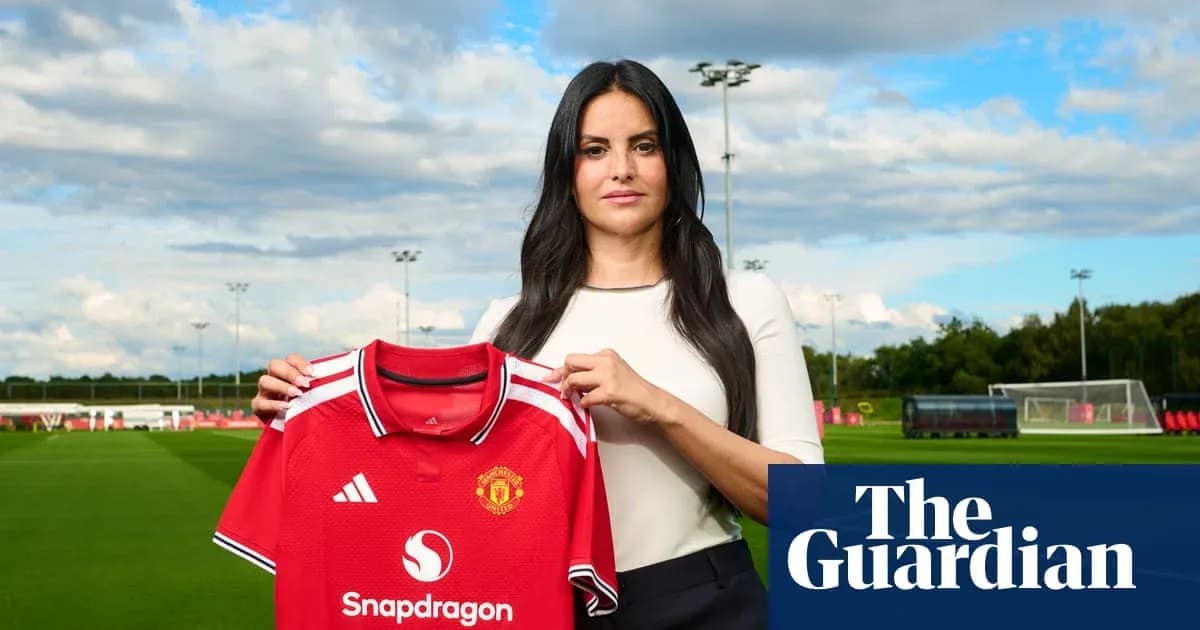
Eva Olid Takes Charge of Manchester United Women: A Dream Job
Eva Olid steps into Manchester United Women with a phrase every supporter wants to hear from a new head coach: this is her dream job.
The 40-year-old Spaniard has signed a two-year deal running to 2028, with an option for a further year, and walks into Old Trafford at a moment of deliberate reset. She replaces Marc Skinner, whose exit was confirmed on Monday and caught many inside the women’s game off guard. United, though, have moved quickly – and pointedly.
A builder, not a buyer
Olid arrives with her reputation forged not in superclub comfort, but in graft. At Hearts she took a side on the margins of the Scottish women’s game and pushed them all the way to a first Scottish Women’s Premier League title, leaving this summer by mutual agreement after five years that changed the club’s trajectory.
That body of work matters at United. The club is signalling a shift: less about throwing money at transfer windows, more about polishing what is already in the building. The message from the hierarchy is clear – the future is homegrown.
In a statement, the club framed Olid’s appointment as the start of “an exciting new era for Manchester United Women” and spoke of “a clear vision for long-term, sustainable growth and success.” Behind the corporate language sits a concrete plan: academy-first, identity-first, patient but ambitious.
They point to “important foundations” already in place to nurture homegrown talent and young players alongside senior internationals, and to “significant investment” in academy infrastructure and facilities. United do not just want a good youth system. They want the leading one in the country.
A coach aligned with the club’s DNA
Olid sounds like she has read that brief and embraced it. Speaking to the club’s website, she called the role “a dream come true” and immediately homed in on the tools at her disposal.
“The club has outstanding infrastructure and everything we need to achieve our ambitions,” she said. Training facilities? “Excellent.” The academy? Already producing players “capable of performing in a competitive first team.” Around her, an “exceptional group of support staff.”
This is not a coach arriving to tear everything up. It is a coach walking into a structure she believes can support her work.
“There is already so much talent within our squad,” she added, stressing her eagerness to help players “fulfil their immense potential.” The word “alignment” cropped up, too – a “shared vision for long-term success” between bench and board. For a club still relatively young in its modern women’s era, that harmony could be decisive.
She did not bother to hide her impatience either: “I cannot wait to begin preparing a team that will make our incredible supporters proud.”
Taking the next step
Olid inherits a side that is close, but not yet close enough. United finished fourth in the Women’s Super League last season, reached the quarter-finals of the Women’s Champions League and made it to the League Cup final. Respectable. Competitive. But still on the outside looking in when it comes to titles.
The question now is whether a coach known for squeezing every drop from limited resources can turn a talented, well-backed squad into serial contenders.
Matt Johnson, United’s director of women’s football, is convinced she can. He described Olid as “an outstanding coach with an incredible determination to succeed,” and highlighted what she did at Heart of Midlothian: maximising individuals while imposing an “exciting style of football.”
For Johnson, this is not just a tactical appointment, it is ideological. “Eva is the perfect coach to lead us into an exciting new era,” he said, underlining her commitment to “developing exciting homegrown and young players” – a tradition he calls “deeply embedded” in United’s history and culture. The brief also includes elevating established senior internationals, with both strands “an integral part” of the club’s long-term plan.
The outline is bold: a United women’s side that looks and feels like United, built on youth, identity and a clear way of playing, not just on chequebook statements.
Olid has her dream. United have their architect. The real test starts when the first ball rolls and those academy graduates are asked to carry a club’s ambitions on their shoulders.





