European Football's New Season: Returns and Surprises
European football’s new season will open with a familiar feeling: old names back from the dead, tiny clubs punching through concrete ceilings, and one promotion story loaded with far more than points and goals.
Some returns are romantic. Others are raw. All of them say something about where the game is heading.
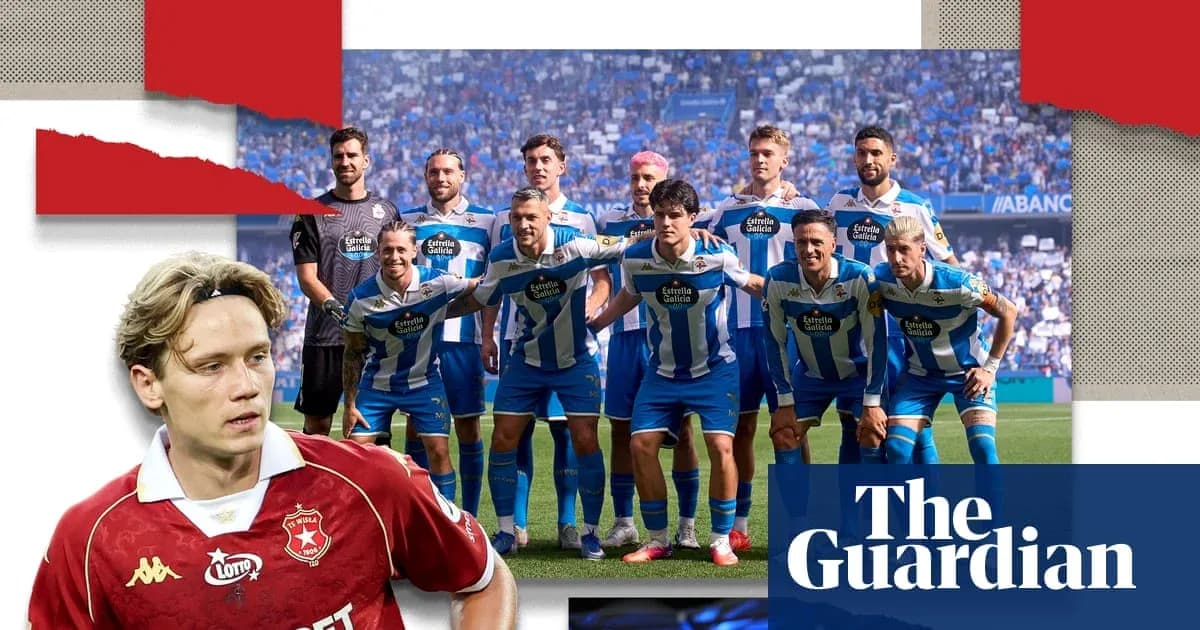
Deportivo La Coruña: Ghosts of a Superpower
For a generation, Deportivo La Coruña were not just part of La Liga – they were a problem for its giants.
From 1993 to 2004, Dépor lived permanently in the rarefied air of the top three, gatecrashing a private party hosted by Barcelona, Valencia and Real Madrid. They won the title in 1999, pushed deep into Europe and came within a tie against José Mourinho’s Porto of a Champions League final. For a while, the Galicians were the club nobody in Spain’s elite wanted to see on the fixture list.
Then the gravity of the established order dragged them down. First to mid-table. Then out of the conversation entirely. By 2020, Deportivo were no longer a nuisance for the big boys; they were stuck in the regional third tier, a fallen power playing on the margins.
It took four years just to climb back to the second division. That alone felt like a rescue mission. What followed was something more dramatic: a surge from 15th in 2024-25 to automatic promotion last season, a vertical leap that jolted the Riazor awake.
The golden era of Juan Carlos Valerón and Diego Tristán is a memory now, grainy and glorious. Yet the intent is clear. Deportivo are not treating this as a sightseeing trip back in La Liga. They have moved decisively, bringing in Mallorca goalkeeper Leo Román and veteran striker Pierre-Emerick Aubameyang to steady the club at the top level rather than simply cling on.
Dépor are not alone in dusting off an old nameplate. Racing Santander return as Segunda champions after 15 years away, Málaga re-emerge after their own drop into the third tier in 2023-24. Spain’s top flight is starting to look like a reunion, but only one question matters: which of these old faces can survive long enough to feel permanent again?
Elversberg: A Village on the Bundesliga Map
Germany offers a very different picture: a promotion race that set ancient muscle against a club small enough to be swallowed by its own dream.
Schalke, a club of industrial heft and European pedigree, finally escaped a second tier they have inhabited in four of the last five seasons, taking the 2. Bundesliga title. That part of the story fits the script.
The twist came just behind them. Runners-up Elversberg come from a modest Saarland town whose entire population could squeeze into Schalke’s Veltins-Arena four times over. Three years ago, in 2021-22, they were still grinding away in the regional leagues. Now they are walking into a Bundesliga where their first two visitors will be Leverkusen and Bayern Munich. No gentle introduction. No time to breathe.
Their rise has been as sharp as it has been unlikely. Horst Steffen guided the club up the ladder, only to depart for Werder Bremen last summer after Elversberg fell short in the promotion playoff. His new job lasted just nine months. The club he left behind kept climbing.
Elversberg turned to Vincent Wagner, hired from Hoffenheim’s second team, and simply carried on. While the stadium undergoes expansion work throughout the season to hit the 15,000-capacity mark required at this level, the team’s adaptation will need to be far quicker. Bayern and Leverkusen do not wait for anyone to settle in.
In a league used to seeing “sleeping giants” stumble up and down the divisions, Elversberg are something else: a club that has skipped several chapters of the usual script and woken up in the middle of a fairy tale – with the wolves already at the door.
Le Mans: From Financial Crash to the Fast Lane
France’s top flight has become a playground for investors with global portfolios and long-term plans. Paris FC enjoy billionaire backing. Strasbourg sit under the BlueCo umbrella. City Football Group add promoted Troyes to their growing network, with partner club Lommel stepping into Belgium’s top tier at the same time.
Le Mans arrive with a similar model and a very different flavour.
The club comes from a city etched into the motorsport consciousness. Their stadium lies inside the iconic Circuit de la Sarthe, where the 24 Hours of Le Mans has been run for a century. In football terms, though, their top-flight spell in the 2010s was brief, and the crash that followed was brutal. Financial ruin sent them spiralling down the ladder.
They clawed their way back to Ligue 2, regrouped, and then the story shifted again. Last August, a Brazilian consortium, OutField, took over the club. The names attached to the project ensured instant attention: Novak Djokovic, Thibaut Courtois, Felipe Massa, Kevin Magnussen. Tennis royalty, a Champions League-winning goalkeeper and two F1 drivers, all tied to a club that once looked destined for obscurity.
The temptation in such situations is obvious: spend big, burn bright, worry later. Le Mans have chosen another route. They have reopened the academy, poured resources into youth development and targeted potential rather than big-name comfort. The gears have changed quickly, but the driving style is cautious, almost studious.
In a league where money often shouts, Le Mans are trying to build something that hums quietly, grows steadily and lasts longer than a single lap.
Amedspor: Football on the Fault Line
Some promotions are sporting stories. Amedspor’s is political, cultural and deeply charged.
Officially Amed SK, the club from Diyarbakir will play in the Turkish Super Lig for the first time this season. Their city sits far from the power centres of Istanbul and Ankara, much closer to the borders with Iraq and Syria. It is the largest Kurdish-majority city in Turkey, and over the past decade the club have become a lightning rod for Kurdish identity.
In 2014, the club added “Amed” – the Kurdish name for Diyarbakir – to their title. The change transformed them. It drew in a broader, more diverse support, but it also pulled them into the middle of one of the country’s most sensitive debates.
On the pitch, Amedspor climbed from the third and fourth tiers to the brink of the elite. Off it, they paid a heavy price. Fans faced abuse, intimidation and outright attacks from opposing supporters. The Turkish FA responded not by opening dialogue, but by banning Amedspor fans from away games until 2020.
Now they step into the Super Lig and into a spotlight that will not always be kind. Security concerns are real. The potential for flashpoints is obvious. Yet there are faint signs of a shift. When Amedspor sealed promotion, President Recep Tayyip Erdogan – who has consistently refused to use Diyarbakir’s Kurdish name – publicly congratulated the club. The message raised eyebrows and questions. Was it a gesture of pragmatism, a political calculation, or the start of something softer?
Whatever the answer, Amedspor’s matches will carry a weight that goes far beyond the table. Every away trip, every choreographed display, every refereeing decision will be watched, parsed and argued over. Their debut season will test not only the team, but the league’s ability to handle a club that represents far more than itself.
Wisla Krakow: A Giant Relearns the Game
In Poland, one of the country’s grandest institutions has fought its way back to where it believes it belongs.
Wisla Krakow, founded 120 years ago, own 14 league titles and a place in the national football psyche that few can match. For decades, the White Star were a fixture in the top division. That run ended in 2022. Four seasons outside the elite followed, a sobering exile that forced the club to confront what it had become.
They did not drift aimlessly. With former player Jakub Blaszczykowski on board as a minority investor, Wisla used the time to modernise. Analytics took on a bigger role. The academy became more than a slogan. The club, so often driven by emotion, began to listen to numbers as well as nostalgia.
Results arrived. As a second-tier side in 2024, they lifted their fifth Polish Cup, a reminder that their ceiling remains high. Promotion completed the reset. Their first game back in the Ekstraklasa, a 2-1 win over Katowice, felt like a statement. The football mattered, but so did the spectacle: a red-and-white pyro show rolling around the stands, a visual declaration that Wisla were done hiding.
The return of the “Holy War” with Cracovia adds another layer. Krakow, Poland’s second-largest city, suddenly has three teams in the top flight after Wieczysta Krakow came up through the playoffs. Wieczysta’s own stadium does not yet meet league standards, so they will ground-share with Wisla, turning every home weekend into a negotiation of space, noise and identity.
For Wisla, this is no simple homecoming. It is a test of whether an old power, rebuilt with new tools, can stand firm in a city that has never felt so crowded at the top.
From La Coruña to Diyarbakir, from a stadium inside a racetrack to a village club facing Bayern Munich, Europe’s new arrivals and returning heavyweights are not just filling spaces in a fixture list. They are stress-testing the structures around them – financial, cultural, political.
The season will reveal which of them are merely visiting and which are here to redraw the map.