Erling Haaland: The Viral Star of the World Cup
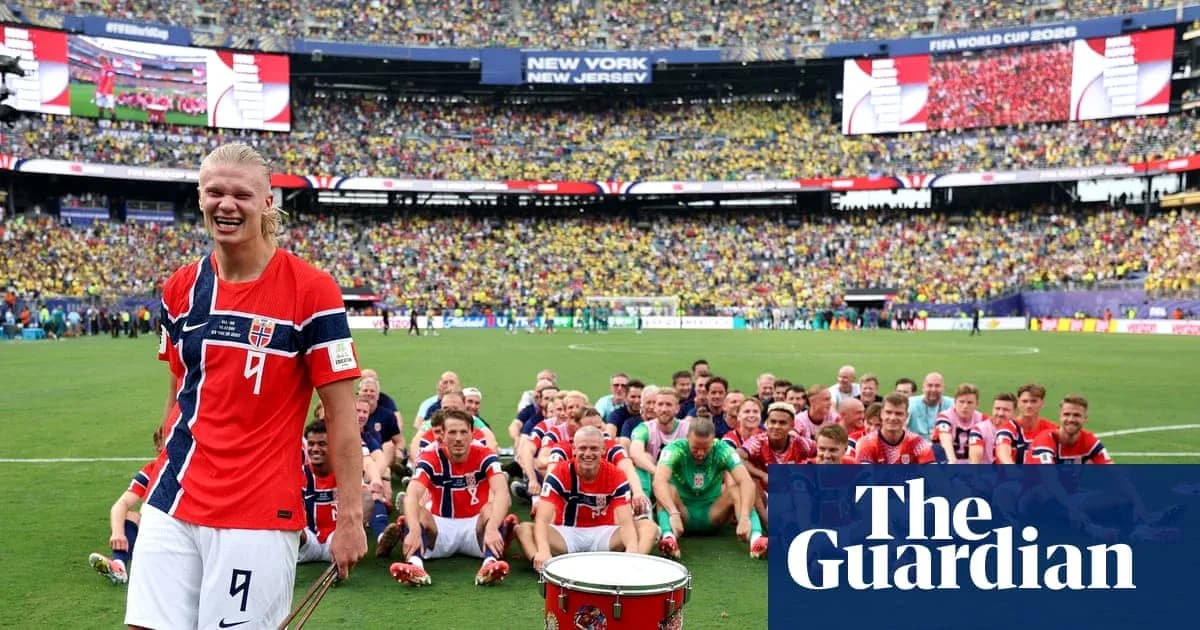
Erling Haaland is chasing the Golden Boot, but he has already won a different race. In a World Cup stuffed with storylines, the Norway striker has become its most viral star.
He arrived with a built-in fanbase: adored in Norway, idolised in the blue half of Manchester. Leeds United supporters claim him as well, clinging proudly to the detail that he was born in the city while his father, Alf-Inge Haaland, played at Elland Road. A Yorkshire childhood, a Manchester present, a global future.
Now, with Norway into the quarter-finals, the rest of the planet has caught up. Not just with the goals. With the circus that follows him everywhere he goes.
A World Cup won on phones
In the first week of July, “Haaland” crashed into the UK’s overall top 10 TikTok searches, a 300% week-on-week surge that made him the most searched World Cup player over that spell. “Haaland best moments” rocketed even faster, up 1,300% in a week. Since the tournament kicked off, more than 14,000 posts using #Haaland or #ErlingHaaland have appeared, an explosion of almost 500% month on month.
The numbers are staggering, even in a sport used to big figures. There are 1.4 million posts about him in total. Yet the two giants of the previous era still tower above: #Messi sits at 25 million posts, #Ronaldo at 22.3 million. Haaland’s fame is climbing at speed, but the summit remains occupied.
The trajectory, though, is unmistakable. This is a World Cup being watched on television and replayed on phones, and Haaland is dominating the second screen.
Santa suits, Shrek selfies and “raw dogging” flights
Haaland’s digital rise did not begin at this World Cup. Last Christmas, he pulled on a Santa suit in Manchester, went undercover and handed out presents to children in a video on his YouTube channel. The stunt did big numbers. So did an Instagram story in which he joked about “raw dogging” a flight – no food, no water, no entertainment – a throwaway line that ricocheted around social media.
This tournament has turned that steady hum into a roar. His Instagram and TikTok output has taken off, while 4.7 million people now follow his Snapchat stories, waiting for the next odd, deadpan slice of his life.
Haaland leans into it. He even joins the joke. When an Instagram user posted a picture of a green onion and asked if they were “losing it” or if it looked like Haaland, the striker replied with a meme of a dog hurriedly winding up a car window – the internet’s shorthand for hiding.
The response to his main account has been ferocious. During the World Cup, his Instagram following has jumped from 40 million to 60 million, making him the fastest-growing major player on the platform. His Reels have been watched more than 683 million times since the tournament began.
Fans are rewarded with the full Haaland universe. A mocked-up selfie with Shrek, captioned “Selfie with my twin.” A snap of him disguised as a tourist in New York, baseball cap and sunglasses in place of boots and shin pads. A shopping trip in Texas where the Viking helmet gives way to a cowboy hat.
Even Google has joined the show. Type his name into the search bar and rowers in Viking helmets glide across the screen in a playful animation. The algorithm has picked its warrior.
Viral for more than goals
The clips that travel fastest are not always about finishing or footwork. Some of the most shared videos show Haaland’s behaviour away from the spotlight. One now-famous moment captures him carefully folding his shirt and handing it to a kit man while others toss theirs on the floor. It is a tiny act, but the internet loves these glimpses of respect and humility.
His friendship with Jude Bellingham has become another thread in the tapestry. The bond formed at Borussia Dortmund has survived their club split and now lights up the World Cup. Fans compare them to the duelling hockey players from HBO’s Heated Rivalry, a fictional feud repurposed as a meme as Norway prepare to face England on Saturday.
The halo effect is obvious. There are 1.3 million TikTok posts about Bellingham, a figure that dwarfs the 277,600 attached to England captain Harry Kane. Haaland’s spotlight spills onto those around him.
For some, this tournament has been their introduction. One 18-year-old TikTok creator from the Netherlands, whose video about Haaland and Bellingham has been shared more than 100,000 times, admitted she “didn’t know Haaland before this World Cup”. She usually tunes in only when her own country plays, but this time her For You page filled with Haaland’s jokes, Snap stories and “funny moments”. That was enough. She started making content about him, drawn in by what she called his “vibe” and the “bromance” with Bellingham.
Haaland is not just scoring goals. He is converting neutrals.
The lookalike and the legend-building
The World Cup has also thrown up a doppelgänger. Russian model Anastasia Kostromitina went viral after her mother posted a video of her mimicking Haaland’s poses, responding to people who said she looked like him. With long blond hair, piercing blue eyes and a tall frame, the resemblance is clear.
At first, she said, the comparison confused her. Now she embraces it. Being likened to “such an amazing athlete” is, in her words, “not bad at all”. She calls him humble, praises his talent and seems happy to share a fraction of his spotlight.
This is how modern football mythology is built: through goals, yes, but also through memes, lookalikes, shared clips and in-jokes that reach people who might never watch 90 minutes.
“We’ve seen this for years”
Back in Manchester, the reaction feels different. For City supporters, the world is simply catching up.
“He is a great asset for our club,” says Dante Friend from the 1894 fan group. They talk about a superstar who feels strangely accessible. He follows fan accounts. He stays in touch with key supporters. The sense, among many, is that he is “one of us”, even as his face flashes across millions of screens.
Kevin Parker, general secretary of the Manchester City official supporters club, puts it bluntly. On the pitch, Haaland is “right up there with the best strikers, goalscorers in the world”. Off it, City fans have long viewed him as “a different sort of footballer” – not in terms of talent, but personality.
He comes across as genuinely likeable, Parker says, and now the World Cup has handed that personality to a global audience. For three seasons, City fans have seen the jokes, the self-mockery, the refusal to take himself too seriously. Now everybody else does too.
Howard Cohen, chair of the Manchester City Disabled Supporters Association, remembers the early stories when Haaland first arrived in England. Some corners of the media painted him as quiet, reserved, almost robotic. That image has not survived contact with reality.
“He’s really come out of his shell very quickly,” Cohen says. In truth, he argues, Haaland was never that shy figure. What people see now is someone who can laugh with anyone, who enjoys the absurdity of his own fame and refuses to let it harden him.
At a World Cup that has carried its share of controversy and criticism of Fifa, Haaland’s presence offers a different tone. City fans talk about the “positive vibe” he brings, the sense that, amid all the noise, he still treats football as entertainment.
The goals may yet decide whether he leaves with the Golden Boot. The clips, the memes, the stories and the smiles have already done something else: they have turned Erling Haaland into the defining face of this World Cup’s digital age.
The real question now is not how many he scores, but how far this combination of ruthless finishing and restless charisma can carry him in a sport that has never been more online.