
Enzo Maresca Takes on Daunting Task at Manchester City
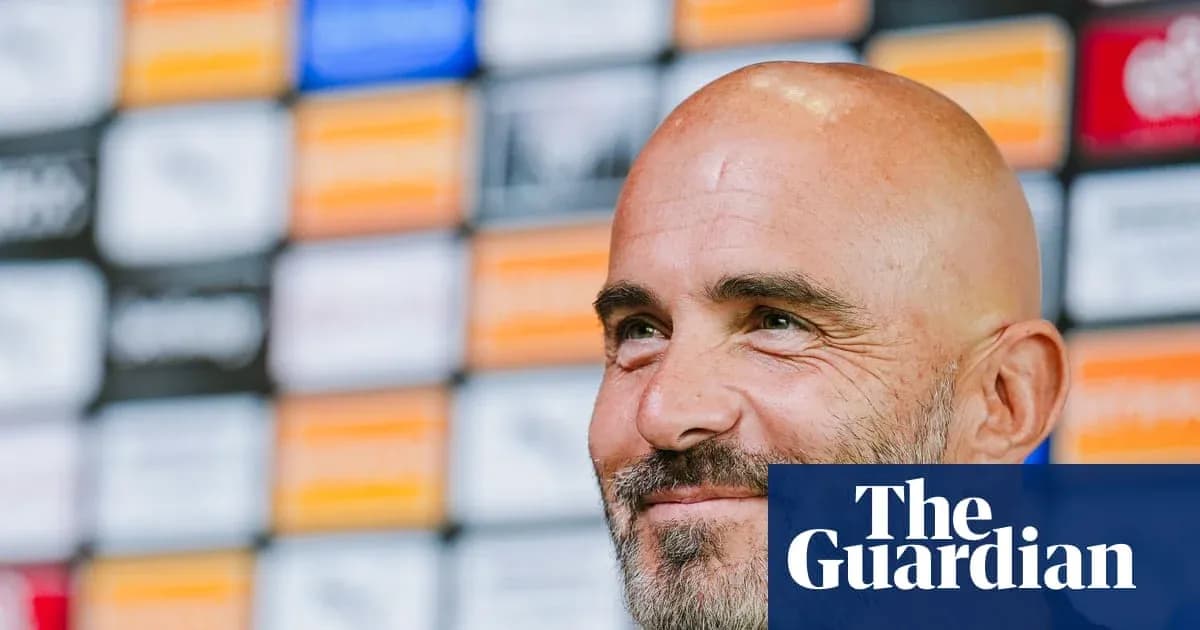
Enzo Maresca walked into the room looking like a man back from holiday, not one about to inherit the most daunting job in club football. Relaxed, tanned, he opened not with himself, not with Pep Guardiola, but with a nod to the past.
“Before we start, I would like to send a message and a big hug to Kevin Keegan’s family for this moment,” he said, paying tribute to the former Manchester City manager after his death on Monday.
It was a gentle start to a brutal assignment. Because once the pleasantries fade, Maresca is the man who has to follow Guardiola.
Naming the giants
Maresca, 46, sat in the same seat Guardiola occupied for a decade of almost unbroken brilliance, the dais that became a kind of throne. He did not pretend the shadow wasn’t there. He stepped straight into it.
He referenced Sir Alex Ferguson. He referenced Arsène Wenger. He did so unprompted, which told its own story. He knows exactly what he is walking into.
“The history of the manager with many years in the same club always struggled a little bit. After Sir Alex, after Arsène,” he said. “But also, it’s a challenge to try to do the right things immediately for this organisation, for the fans, for everyone.”
How do you follow a man who delivered 20 trophies in 10 years and altered the standards of an entire league? You confront the comparison head-on and hope, eventually, to write your own.
Behind Maresca, a giant “Welcome back Enzo” billboard filled the backdrop. City framed him as a returning son, not an outsider. He had already led the club’s elite development squad in 2020-21, then returned as Guardiola’s assistant during the 2022-23 treble season. The familiarity helps. It will not protect him if results slide.
He knows that too. So he leaned on another pillar of the project: stability.
“This club has had three managers in 17 years,” he pointed out. “This is not normal, so this is one of the things that I’m confident we can do a great job and continue to do the job that has been done in the last years. Roberto [Mancini] was here, then Manuel [Pellegrini] and then Pep – for 10 years.”
The message was clear. City do not sack on a whim. They choose carefully, then back their choice.
From Mancini’s angst to Pep’s genius – and now Maresca
Mancini’s reign, from December 2009 to May 2013, brought trophies but also turbulence, a constant hum of friction that jarred with chairman Khaldoon al-Mubarak and chief executive Ferran Soriano. Pellegrini was the opposite: calm, understated, a steady hand. Then came Guardiola, who turned the club into a machine and a reference point.
Al-Mubarak and Soriano have already worked closely with Maresca across his two previous spells. They have seen the coach, the temperament, the way he fits the club’s footballing doctrine. They are convinced he is the full package: tactically sharp, emotionally balanced, steeped in the City way.
His recent past, though, has not been without complication. His exit from Chelsea on New Year’s Day was messy enough that it ended with an apology from him and a £17m compensation cheque from City to the London club. When that episode was raised, the shutters briefly came down.
“I feel quite lucky in terms of my former clubs – Leicester, Chelsea – I think we did a great job,” he said. “In both clubs, the identity of the team was clear, the success of the team was clear, and I feel very lucky to be part of these clubs. But now we are here today. That is the most important thing, just about City. And nothing to add.”
No elaboration. No reopening of old wounds. His eyes are on Manchester now.
The record speaks loudly enough. At Leicester, he delivered the Championship title. At Chelsea, he took a drifting squad to fourth in the Premier League, added a Conference League crown, then lifted the Fifa Club World Cup last summer with a ruthless 3-0 dismantling of Paris Saint‑Germain. That night in particular felt like a calling card. City were watching.
He did not shy away from expectations. He spoke openly of “titles” as the target for the coming season. Not transition. Not consolidation. Titles.
Building a new City
To chase them, he already has serious backing. Elliot Anderson has arrived from Nottingham Forest for £116m to bolster the midfield. Lille’s Ayyoub Bouaddi, who impressed for Morocco at the World Cup, remains a live option to further strengthen that area.
Maresca also retains a keen interest in Malo Gusto, one of his right-backs at Chelsea, as he shapes the squad in his image. If Omar Marmoush departs, City are ready to move for a similar, quick, direct forward to keep the front line sharp and unpredictable.
One player he cannot afford to lose is the man who knits everything together: Rodri. The Spain midfielder, fresh from lifting the World Cup on Sunday and collecting the Golden Ball as the tournament’s outstanding player, remains the metronome of City’s increasingly frantic domestic battles.
Rodri, 30, will undergo surgery on a back problem on Monday. The initial outlook is relatively positive; the issue is not thought to be too serious. He will miss the opening weekend, when City host Bournemouth, but the real tension lies elsewhere.
The date that matters is 1 September. Transfer deadline day. Rodri has a year left on his contract and has so far declined to sign the new deal on the table. Real Madrid are circling in the background, weighing up whether to move for a midfielder who controls games like few others in world football. For Maresca, that saga hovers over everything.
Asia tour, young legs, and a ticking clock
Before the window closes, there is work to do on the grass. On Tuesday, Maresca and his squad fly to Asia for a pre-season tour that will test both his ideas and his players’ legs. Inter await in Hong Kong. K-League All Stars and Atlético Madrid stand in front of them in Seoul.
For now, Maresca is leaning heavily on youth.
“I’m working at the moment with many young players,” he said. “That is always good because they are full of energy and some of them are very good. The last group of players are going to join three or four days before the Community Shield and we will have all the squad.”
Those returning late from the World Cup – including Josko Gvardiol, Mateo Kovacic and Abdukodir Khusanov – will rejoin just in time for the curtain-raiser. The Community Shield, against Arsenal in Cardiff on Sunday 16 August, will be the first serious glimpse of Maresca’s City against elite opposition.
That is when the comparisons with Guardiola will begin in earnest. The patterns of play will be scrutinised. The shape without the ball. The rotations in midfield. The way he uses his full-backs. Every tweak will be held up against a decade of perfection.
Maresca is not naïve about that. He knows the game is shifting too.
“You need to adapt, evolve,” he said, speaking about his style. “Set pieces, man to man – it’s a little bit the direction where football is going. We managers, it’s our duty to find solutions.”
The Guardiola era at City was defined by a man who always seemed to find one more solution, one more angle, one more way to bend a match to his will. Now the question hangs over Maresca.
In a club built on long-term conviction but conditioned to immediate success, how quickly can he find his?





