Enzo Maresca Returns to Manchester City as Head Coach
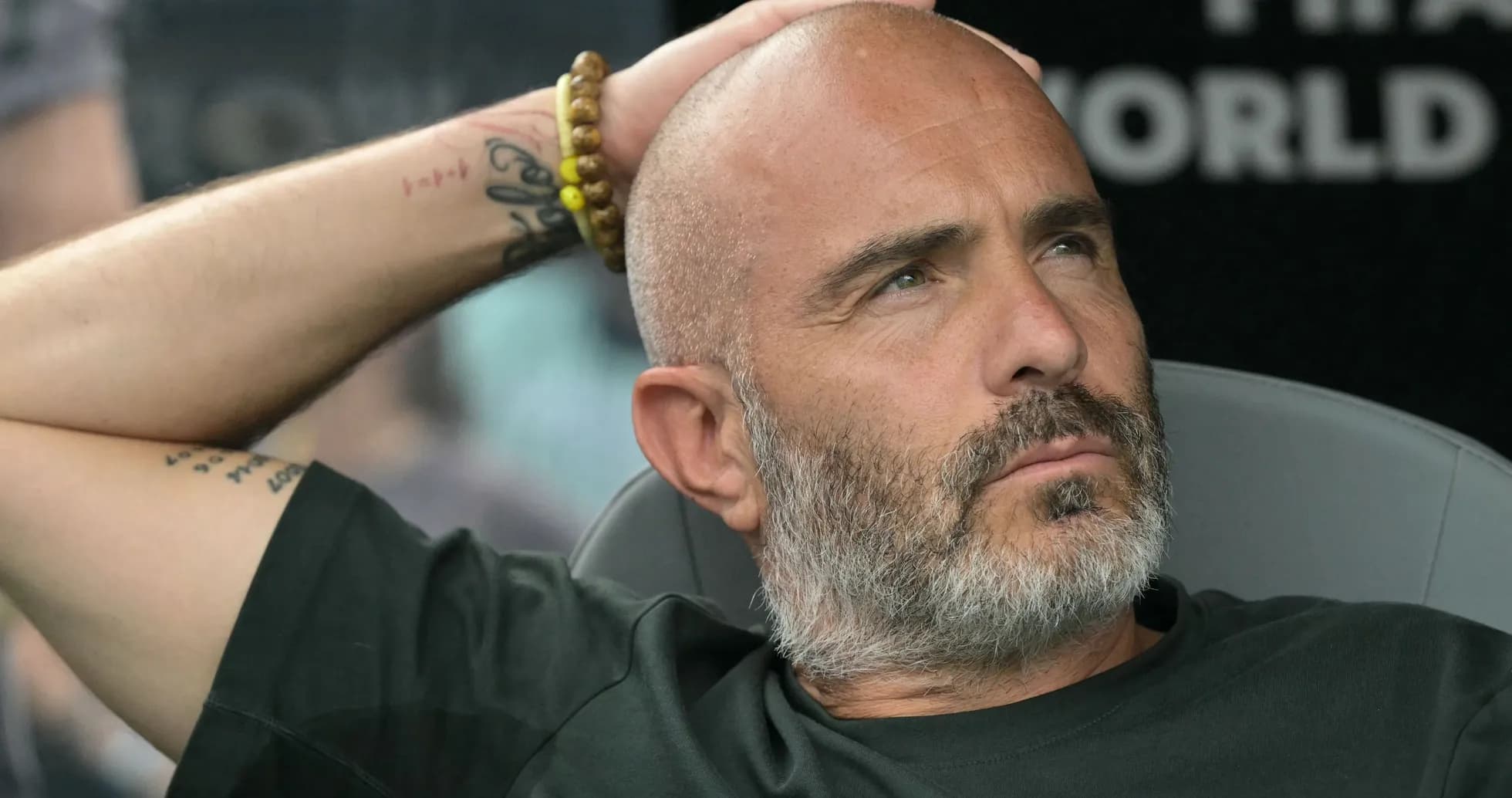
Enzo Maresca walks back into Manchester City not as an apprentice this time, but as the man asked to follow the most transformative coach of his generation. He knows exactly what that means. He also knows exactly where he is.
His first act in front of the cameras was not about tactics or transfers. It was about people. Before a question had been asked, he paused the football talk to send condolences to the family of Kevin Keegan. Only then did he turn to his own story.
“I feel as though I have returned home,” he said, describing a sense of belonging that, for him, never really went away. Maresca has been here before, twice: first with the elite development squad, then as part of Pep Guardiola’s staff in 2022-23. This, though, is different. This is his team, his project, his name on the door.
A club he already understands
Maresca made it clear why he said yes so quickly when City called. He knows the building, the corridors, the people. He knows the way this club thinks.
“I know the institution well, and I have known the people inside the club for years,” he said. The word he kept coming back to was “stability”. Three coaches in roughly 17 years: Roberto Mancini, Manuel Pellegrini, Pep Guardiola. A modern rarity, and a powerful safety net for any new man walking into a serial-winning dressing room.
That continuity, Maresca believes, is the foundation of City’s era of dominance. It is also why he did not hesitate. “From the moment Manchester City contacted me, I had no doubt about accepting this challenge.”
He arrives with a winner’s CV of his own. Promotion and a Championship title with Leicester City in 2023-24. A UEFA Conference League and a FIFA Club World Cup with Chelsea across 2024 and 2025. He has already shown he can impose an identity and deliver trophies under pressure. City expect nothing less here.
Living in Guardiola’s shadow – and using it
To replace Guardiola is to inherit both a dynasty and a burden. Maresca did not try to play down the scale of it.
“Pep is perhaps the best coach in the world over the past twenty or twenty-five years,” he said. For many, that would be a weight. For him, it is a privilege and a test rolled into one.
He reached for the longest reigns in the game to frame his task: Sir Alex Ferguson at Manchester United, Arsène Wenger at Arsenal. Clubs who lived under one man’s ideas for decades, then had to confront the shock of change.
Maresca is not promising to be Guardiola 2.0. What he is promising is clarity from day one. “My goal now is to do the right things from the very beginning for the sake of the club and the fans.” The institution, he stressed again, is what matters most. The project began with Mancini, moved through Pellegrini, exploded under Guardiola. His job is to keep the line going, not redraw it.
Transfers, tweaks and a long summer
On recruitment, Maresca sounded like a coach who knows the work is only half-done. “There is always something that can be done,” he admitted, but he anchored everything in the reality of the market. Deals depend on movement elsewhere; opportunities appear late. City are still active.
For now, his training pitches are filled with youth. The senior internationals will drip back in “three or four days before the Community Shield”, he confirmed. Until then, the academy is under the spotlight.
He likes what he sees. “I am working with a large number of young players, and they have great energy,” he said, picking out their “very impressive levels” without naming names. For a coach who made his name developing talent at City’s under-23s, this is familiar territory. It is also a crucial early window into the depth he will need across a long season.
Rodri, surgery and the rumour mill
No modern City press conference passes without a question about a star’s future. This time it was Rodri. Speculation has swirled around the midfielder, but Maresca did not flinch.
“Big players are always surrounded by rumours,” he said, pointing to Rodri’s World Cup win and consistent excellence as magnets for interest. The key detail, though, was medical, not market-based: Rodri will undergo surgery on Monday, then rest, then return. There was no sense of a player being eased towards the exit.
“Any coach in the world would want to sign Rodri,” Maresca added, underlining the Spaniard’s importance. The message was simple: he is ours, he is recovering, and he will be back.
Chelsea in the rear-view mirror
If there was any appetite for a feud with Chelsea after their pointed statement on his departure, Maresca refused to feed it.
He described himself as “fortunate” to have worked at Leicester and Chelsea, proud of the “successes and a clear identity” forged at both. Then he shut the door. “My focus now is entirely on Manchester City, and there is nothing I have to add.” No fireworks, no lingering drama. He has moved on.
Grealish, Trafford and decisions still to come
Jack Grealish’s name inevitably surfaced. The answer was firm, but not final.
“Jack is here, and he is a Manchester City player,” Maresca said. As long as that remains the case, he sees it as his duty to work with him. He spoke warmly of Grealish’s “big heart” and “wonderful personality”, and then left the rest hanging: “we will see what happens later.” City’s stance is clear for now; the window will decide the rest.
The same tone applied to James Trafford, a goalkeeper Maresca knows better than most. Trafford was his No 1 in the under-23s and is now back in the senior group.
“I know James well,” he said, but again pointed to the unpredictability of the market. “The transfer window is open, anything is possible.” At present, Trafford is one of City’s goalkeepers. Whether he remains that way when the window shuts is another question.
Evolving ideas, familiar principles
Maresca spoke like a coach acutely aware that football never stands still. Set pieces, pressing structures, man-to-man defending – everything shifts, everything gets studied, copied, countered. “Everything changes over time, and you have to adapt to that,” he said. It is the job.
What will not change much is his core identity. City hired him, he believes, because some of his ideas already rhyme with what the Etihad has watched for years.
“I had a clear identity at Leicester and Chelsea,” he said. Press when the ball is lost. Control the match. Impose your style. Above all, win. That is the blueprint he intends to bring into a dressing room conditioned to dominate.
Long balls, Donnarumma and Haaland
The most intriguing tactical question of the day came late. With Gianluigi Donnarumma at one end and Erling Haaland at the other, could City add a more direct weapon to their armoury?
Maresca did not blink. “That could be one of the solutions,” he admitted. Sometimes short, sometimes long. Sometimes build, sometimes break. The opponent will decide, the game will dictate.
Having a goalkeeper of Donnarumma’s range and a striker of Haaland’s physicality gives City “a great advantage”. He was careful, though, not to let that become a label. This will not turn into a long-ball side. It will be one more tool, one more way to hurt teams who think they have solved the Guardiola-era puzzle.
Varied solutions. Different answers for different matches. That is how Maresca sees the next chapter at Manchester City: not as a copy of what came before, but as an evolution of it. The question now is simple and brutal in its clarity.
Can he keep a winning machine not just running, but racing ahead, in a league that has spent years trying to catch it?