
England's World Cup Victory Over Croatia: Tuchel's Era Begins
The scoreline says statement win. The performance says this England side is still very much under construction.
Thomas Tuchel’s first World Cup match in charge delivered goals, drama and a reminder that international tournaments rarely allow you to ease your way in. England put four past Croatia, showed real attacking depth, yet still walked away with their defensive frailties under the microscope.
Rooney’s warning on England’s soft centre
Wayne Rooney has seen enough big tournaments to know that details decide them. What bothered him was the first Croatia goal.
“We could do so much better with the first goal,” the former England striker said, dissecting the concession. Jude Bellingham, he felt, was “a bit flat-footed” as the challenge came in. John Stones, in Rooney’s eyes, didn’t need to commit: “There’s no real danger and Pickford is in a good position, but he doesn’t stay on his feet. He gambles.”
That gamble dragged Nico O’Reilly across, the move opened up, and Croatia punished England with a sharp set, a clean cut-back and a tidy finish. Classic tournament football: one lapse, one goal.
Could Jordan Pickford have done more? Rooney wasn’t letting the goalkeeper off lightly. “I’m always critical of goalkeepers,” he admitted. “If Jordan is getting a hand on it like he does then he’ll be disappointed.”
It was, from Croatia’s point of view, an excellent goal. From England’s, it was a preventable one. That distinction matters in knockout football.
Richards: England “played into Croatia’s hands”
The second Croatian goal told a similar story for Micah Richards. For him, both strikes were avoidable, and the pattern was clear.
“What England did was played into their hands,” the former defender said. Croatia were allowed to get their technical players on the ball, to dictate, to feel comfortable.
The frustration for Richards lay in the contrast. In terms of energy, England swarmed Croatia for long spells. Push that aggression “ten or fifteen yards further forward,” he argued, and those dangerous situations never materialise.
That, in his view, is where Tuchel’s bench becomes crucial. The manager has options who can raise the tempo late on, change the press, suffocate games. “Having the flexibility of the energy off the bench is going to be pivotal going forward,” Richards said. The warning was clear: intensity must become England’s default, not just a phase.
Stones, Konsa and a looming decision
Tuchel made one of the headline calls of the night at the back, pairing John Stones with Ezri Konsa at the heart of England’s defence. On paper, it looks progressive: ball-playing, front-foot, comfortable stepping into midfield. On the grass, it was anything but settled.
Stones, short of minutes at Manchester City last season, saw plenty of the ball. He often took responsibility for building from deep, inviting pressure to open passing lanes. That bravery is part of what makes him valuable, but it came with obvious risk and the odd nervous intake of breath.
Alongside him, Konsa – a regular under Tuchel since the German took charge – showed glimpses of his usual calm. There were neat interventions, composed touches. Yet he, too, looked short of rhythm as the pair tried to find an understanding in real time, under World Cup lights.
England conceded twice in that first half. The question now is unavoidable. Does Tuchel back his chosen duo to grow into the tournament, or does he turn to Marc Guéhi to steady things for the next game against Ghana?
It is not a theoretical debate. One wrong call at a World Cup can end a campaign. Tuchel must decide quickly whether this is just early-tournament rust or the sign of a partnership that doesn’t quite fit.
Gordon’s grounded debut
At the other end of the pitch, Anthony Gordon’s night carried a different tone: personal fulfilment wrapped in team-first rhetoric.
“It has been a crazy couple of weeks and that just topped it off,” the forward told BBC Radio 5 Live after making his World Cup debut. “First World Cup game, something I have dreamed about as a kid.”
He didn’t linger on himself for long. “Special, but it is not about me. Self-centredness is a disease and I don’t want to be a part of that.”
Gordon was quick to spread the praise. Marcus Rashford came on and scored, Bukayo Saka and Morgan Rogers added fresh threat. “It is a collective,” he said, framing his own milestone inside the broader picture.
On the match, he was honest enough to admit the wobble. “A difficult first half – their goal came from nowhere and stunned us a little bit. We came out really strong in the second half and got what we wanted. They were really good and that can’t be underestimated when you look at the game.”
That balance – respect for the opponent, recognition of England’s response – is exactly the mindset Tuchel will want in a young dressing room.
Rashford changes the game – and sharpens the market
If Gordon’s story was about arrival, Marcus Rashford’s was about reminder.
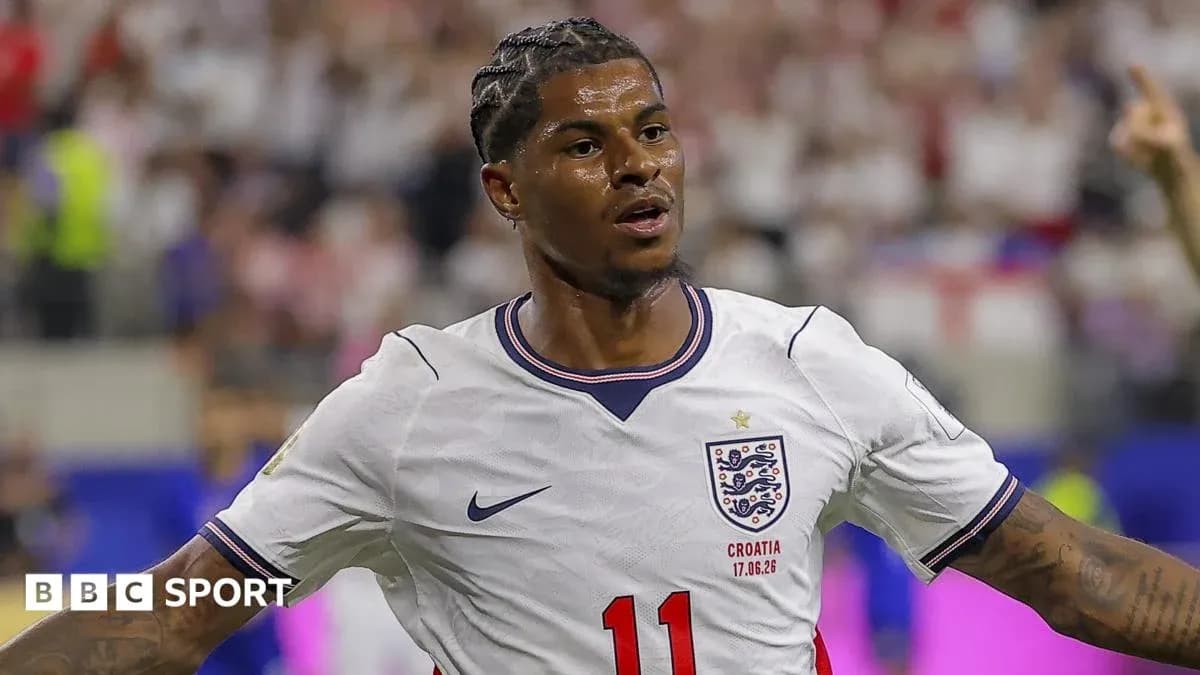
Thrown on from the bench, Rashford scored and made what was described as a “pretty positive impact” in his substitute cameo. For England, it underlined the depth available in the attacking positions. For Manchester United, it added another layer to an already complicated summer.
On 1 July, Rashford formally reverts to being a United player after Barcelona chose not to trigger a £26m option to buy the 28-year-old. United’s stance is clear: they want £40m for a forward who still has two years left on a £325,000-a-week contract.
They are equally firm on the structure of any deal. Another loan to Barcelona, which the La Liga club favour, is off the table from United’s side. The club cannot, of course, force Rashford into a move he does not want, and his salary immediately narrows the list of realistic buyers.
As things stand, United expect him back after his mandatory three-week post-World Cup break, in time for a training camp in the Republic of Ireland. That is the default plan. The market, and Rashford’s own wishes, will decide whether it holds.
Performances like this one do not settle the issue, but they do shift the mood. They remind suitors of his value, they remind United what they might be losing, and they remind England why he remains such a dangerous weapon off the bench.
Four goals, three points, and a manager with big calls to make at both ends of the pitch. For England and for Rashford, this was more than just an opening win. It felt like the start of a story that will run deep into the summer.





