England's Midfield Dilemma: Rice and Anderson's Role
England’s midfield debate has rumbled on all week. Declan Rice and Elliot Anderson: too similar, or the platform this team needs?
Some want both sacrificed for another creator, two number tens buzzing around the box instead of what they see as a pair of holding midfielders. They want England on the front foot, flooding the final third, taking risks.
But strip away the noise and you’re left with a simple truth: Rice and Anderson are two of the best central midfielders in the Premier League. They just happen to do their damage from deeper territory.
Anderson can open the pitch with his range of passing. Rice covers ground like few others, his engine allowing him to patrol, press and recycle without ever seeming to empty the tank. Their weekly brief for their clubs is clear – sit, build, protect – start the move rather than finish it.
That’s the dilemma. Do you ask one of them to break habit and break lines?
In theory, the double pivot gives England exactly what modern full-backs crave: insurance. With Rice and Anderson locked in, the full-backs can step high, join the attacks and stretch a low block. On the tactics board, it works.
On the pitch, if it’s flat after an hour, something has to give.
This is where the manager earns his money. The right change on 60 or 70 minutes can tilt a knockout tie. Get it wrong and control evaporates, spaces open, and a game you were bossing turns on a single counter-attack. The temptation to throw on every attacker on the bench is real. So is the risk.
And England cannot be naïve. DR Congo carry far more threat than Panama. They are not here to make up the numbers; they’ve earned this stage and they have weapons that punish over-commitment.
So yes, England must be wary on the break. But they cannot play with the handbrake on.
This is knockout football. You don’t pass your way into the quarter-finals by playing safe square balls and turning down the killer pass. Some will go astray. Some will be cut out. The point is to keep asking questions, keep threading those passes, keep knocking at the door until something gives.
Expect another low block. Expect England to see a lot of the ball, again. That demands variety, not just possession for possession’s sake. More shots from distance. More willingness to let fly when the edge of the box opens up. A deflection, a second ball, a goalkeeper unsighted – tournaments are often decided by moments like that, not just the perfect cut-back.
England also need a different mindset from the group games against Ghana and Panama. This is the sharp end now. Lose, and you’re out.
The shirt gets heavier in these games. Knockout football at a World Cup brings its own weight, especially when the draw says you should win. Players know the headlines are already written if they don’t.
Plenty in this squad will remember what happened in France in 2016 against Iceland, or will have grown up watching it. On paper, that was a tie England “had” to win as well. They didn’t. That scar tissue should sharpen focus. Full concentration, no drifting, no assuming the game will eventually bend to the favourite.
DR Congo won’t be overawed. Their AFCON run showed that. There’s Premier League know-how throughout the side, and in Yoane Wissa they have a forward who can torment defenders for 90 minutes.
Wissa never quite exploded at Newcastle the way he would have wanted, but this World Cup has brought him to life. His movement, his relentlessness, the way he forces centre-backs to constantly adjust – DR Congo lean on that. He is the reference point in their attack, the one England’s back line cannot switch off against.
Behind him, Axel Tuanzebe has quietly rebuilt his reputation. Those who watched AFCON closely saw it: his pace drags his team 10 yards higher. He may not look electric over the first stride, but over distance he eats up ground and recovers situations that should be lost. That allows DR Congo to be bolder.
His injury history is well known. So is the way he’s handled it. The gym work, the preparation, the professionalism – it shows when he steps onto the pitch. He talks constantly along the back line, organises, leads. You don’t come through Manchester United’s academy, break into their first team and survive in that environment unless you can really play. His journey there and back again says plenty about his character.
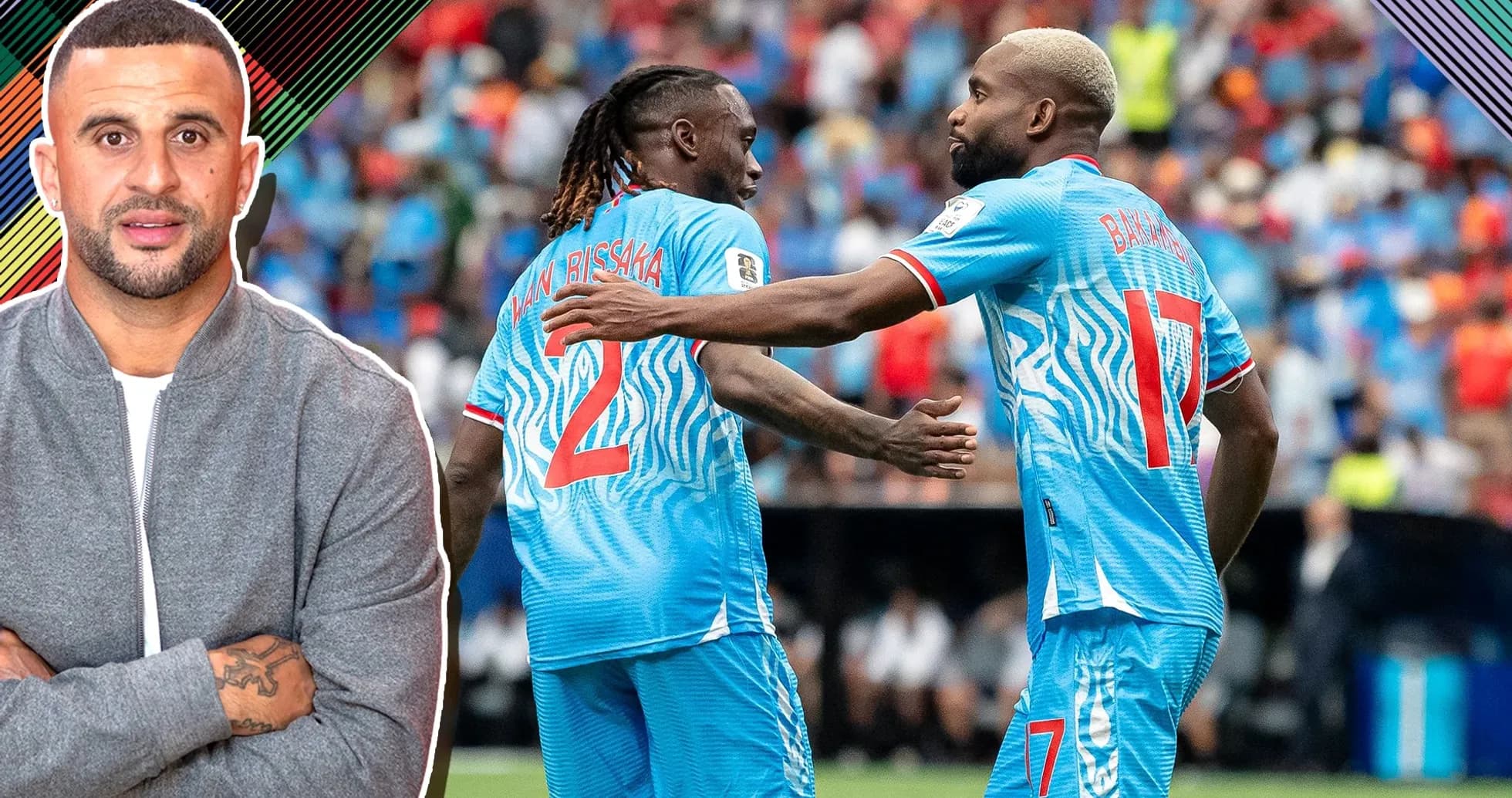
Tuanzebe’s versatility is another asset. Comfortable at centre-back, equally at home at right-back, he offers options. But on that flank, there is already a specialist: Aaron Wan-Bissaka.
Wan-Bissaka remains one of the toughest one-v-one defenders in the game. Wingers think they’ve skipped away from him, then out comes that telescopic leg, perfectly timed, again and again. At City they called him “Go-Go Gadget” for a reason. He relishes the duel, takes pride in shutting down the very best.
If Marcus Rashford features, that battle down England’s left will be compelling. Former Manchester United team-mates, countless hours on the training ground against each other, now face to face on the biggest stage. Rashford knows exactly what Wan-Bissaka can do. Wan-Bissaka knows every feint and burst Rashford has in his locker.
All of this sits around the central question: how brave will England be?
They have the quality, the runners, the structure. They have two elite midfielders in Rice and Anderson who can both protect and provoke. They have memories of past failures and the talent to write something very different.
This should be an England win. On paper.
On the grass, against this DR Congo side, it will be anything but straightforward.