
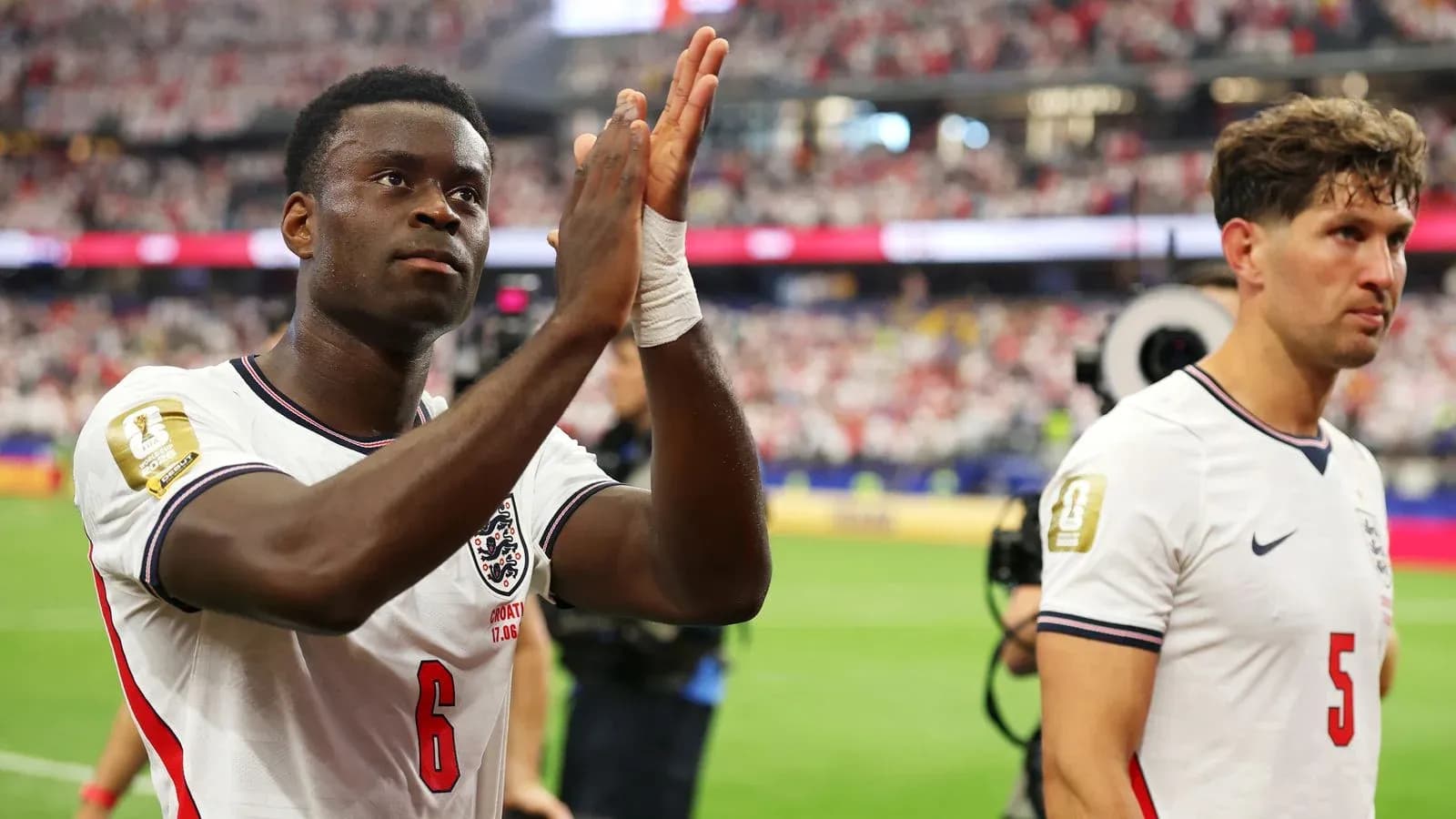
England’s Defensive Dilemma: Can Tuchel Find the Right Blend?
England’s forwards lit up Dallas. Their defenders did not.
Thomas Tuchel’s side ripped through Croatia in a thrilling second half, but beneath the attacking fireworks lay a familiar, nagging question: can this back line really carry England through a World Cup?
A partnership under the microscope
The decision to start Ezri Konsa alongside John Stones always felt like a gamble. Marc Guehi, the form centre-back of England’s Premier League contingent, sat and watched. By half-time, the doubts had company.
Stones went to ground too early for Croatia’s first goal, exposing the space behind him. Konsa then misread a simple chipped pass in the build-up to the second. Two lapses, two punishments, and a pundit’s verdict that cut straight to the point.
“Is Konsa and Stones a partnership that can win us the World Cup?” Gary Neville asked on ITV at the break. His conclusion was clear enough: Declan Rice and Elliot Anderson would have to shield that defence far better than they had managed in the first 45 minutes.
The problems weren’t limited to individual errors. Croatia’s high press rattled England’s build-up. Both centre-backs coughed up possession under pressure, inviting trouble in areas where Tuchel’s side usually look composed.
By full-time, the passing numbers looked neat. The rest did not. Stones finished with just one attempted tackle – unsuccessful – and a single clearance in 87 minutes, winning four of seven duels. Konsa won only three of eight duels, just one of five in the air, and did not register a tackle or interception. For a World Cup opener, it was a flimsy platform.
Jamie Carragher didn’t sugar-coat it on Sky Sports News the following morning. “We probably lack something defensively to go all the way,” he said, pouring cold water on the optimism generated by England’s attacking surge.
The attack had clicked. The defence still looked like a work in progress.
The Guehi question
That is where Marc Guehi comes in.
Guehi has quietly transformed his reputation over the past two years. At the last Euros, England were built on a rugged back line and a misfiring attack. Now the narrative has flipped, and Guehi has gone up a level.
Since joining Manchester City from Crystal Palace in January, the 25-year-old has slipped into Pep Guardiola’s system with almost suspicious ease. Another FA Cup winners’ medal in May underlined his rise, but the numbers tell the real story.
From his Premier League debut for City in January, Guehi ranked among the best in the division for defensive and ball-playing metrics. He was 10th for possession won in the defensive third, fourth for interceptions, sixth for forward passes and fifth for passes completed in that period. Combative, front-foot, and composed on the ball: exactly the blend England lacked against Croatia.
The knock-on effect has been brutal for Stones. The City defender, once a fixture under Guardiola, simply couldn’t get back into the team ahead of Guehi. Stones has made it clear he was fit and available during the run-in, but Guardiola consistently chose Guehi. That choice now hangs over Tuchel.
Stones will leave City this summer at the end of his contract after starting just five Premier League games in the past year. City lost four of those. Tuchel still values him highly – his experience, leadership and distribution earned him a World Cup place despite limited minutes – but the Croatia display raised a sharper tactical issue.
Did Tuchel make his own life harder by using Stones on the left of the centre-back pairing to accommodate Konsa on the right?
The wrong side of the pitch
Tuchel had trialled the Stones–Konsa combination against Costa Rica in the final warm-up. Even then, it looked like a compromise. Modern centre-backs are specialists in their zones, and Stones has rarely operated on the left for City.
Across the past three seasons, he has logged just 371 minutes at left centre-back, compared with 1,151 on the right. The difference showed. His body shape, his angles, his decision to dive in for that first Croatia goal – all of it hinted at a player not entirely at home.
Guehi, by contrast, has spent much of his career on the left despite being right-footed. At Palace he anchored the left of a back three. At City he has shown he can flip sides when required. Like Stones, he can play both roles, but he looks naturally comfortable on the left.
“When you have been playing on one side for a long time and you switch to the other side it can throw you off a little bit,” Guehi admitted to Sky Sports in December. It was a simple line, but it cuts to the heart of Tuchel’s dilemma.
Recall Guehi. Move Stones back to his natural right side. Restore a pairing that looked stable in England’s first World Cup warm-up against New Zealand. On paper, it feels the logical reset before Tuesday’s Group L meeting with Ghana.
Yet football squads are not built on paper alone.
Konsa, James and the Tuchel trade-offs
Where would that leave Konsa?
Under Tuchel, only Jordan Pickford and Harry Kane have played more minutes for England. Konsa has been a trusted lieutenant, a regular starter at centre-back. Guehi has actually begun more games alongside Konsa than alongside Stones in this era. To drop Konsa after one World Cup match – one England still won – would be ruthless.
There is a third way. Play all three.
Tuchel has already tested that structure. Against Wales in October, Konsa started at right-back with Stones and Guehi in the middle. The Aston Villa defender has the physical, defensively-minded profile Tuchel prefers in that role, a choice that has pushed more attacking full-backs such as Trent Alexander-Arnold to the fringes.
The obvious casualty would be Reece James. That would be a harsh call after his late cameo in midfield against Croatia drew praise, but Tuchel’s choices at right-back come with a medical asterisk. James’ injury record is a constant concern. He has started England’s last two fixtures, against Costa Rica and Croatia, yet had not started back-to-back games for Chelsea since March.
If Tuchel wants to manage James’ minutes, he has to pick his moment. Rest him now, against a physically strong Ghana side with qualification and group position still in the balance? Or wait for the final match against a weaker Panama team?
Each option carries risk. Remove James and you lose thrust down the right, but you gain an extra centre-back and potentially greater solidity. Keep him in and you maintain attacking width, but you delay the chance to bed in a more conservative, tournament-ready structure.
Tuchel’s World Cup puzzle
Tuchel’s problem is not a lack of options. It is choosing the right blend at the right time.
England’s second-half display against Croatia showed a side capable of tearing teams apart when the game opens up. But World Cups are rarely won in chaos. They are won by teams who can suffer without cracking, who can see out tight spells without conceding from the first real mistake.
That is the standard Guehi has been hitting at City. It is the standard Stones once set at his peak. It is the standard Konsa has convinced Tuchel he can reach in an England shirt.
Now the manager must decide which combination he trusts when the margins shrink and the stakes rise. Ghana will not care about England’s selection politics. They will test the fault lines they saw in Dallas.
Tuchel can lean into loyalty. He can pivot to form. Or he can reshape the entire back line to carry all three of his favoured defenders.
Whichever way he turns, this World Cup will not be defined by England’s attacking highlights alone. It will be decided by whether he solves the riddle at the heart of his defence in time.





