
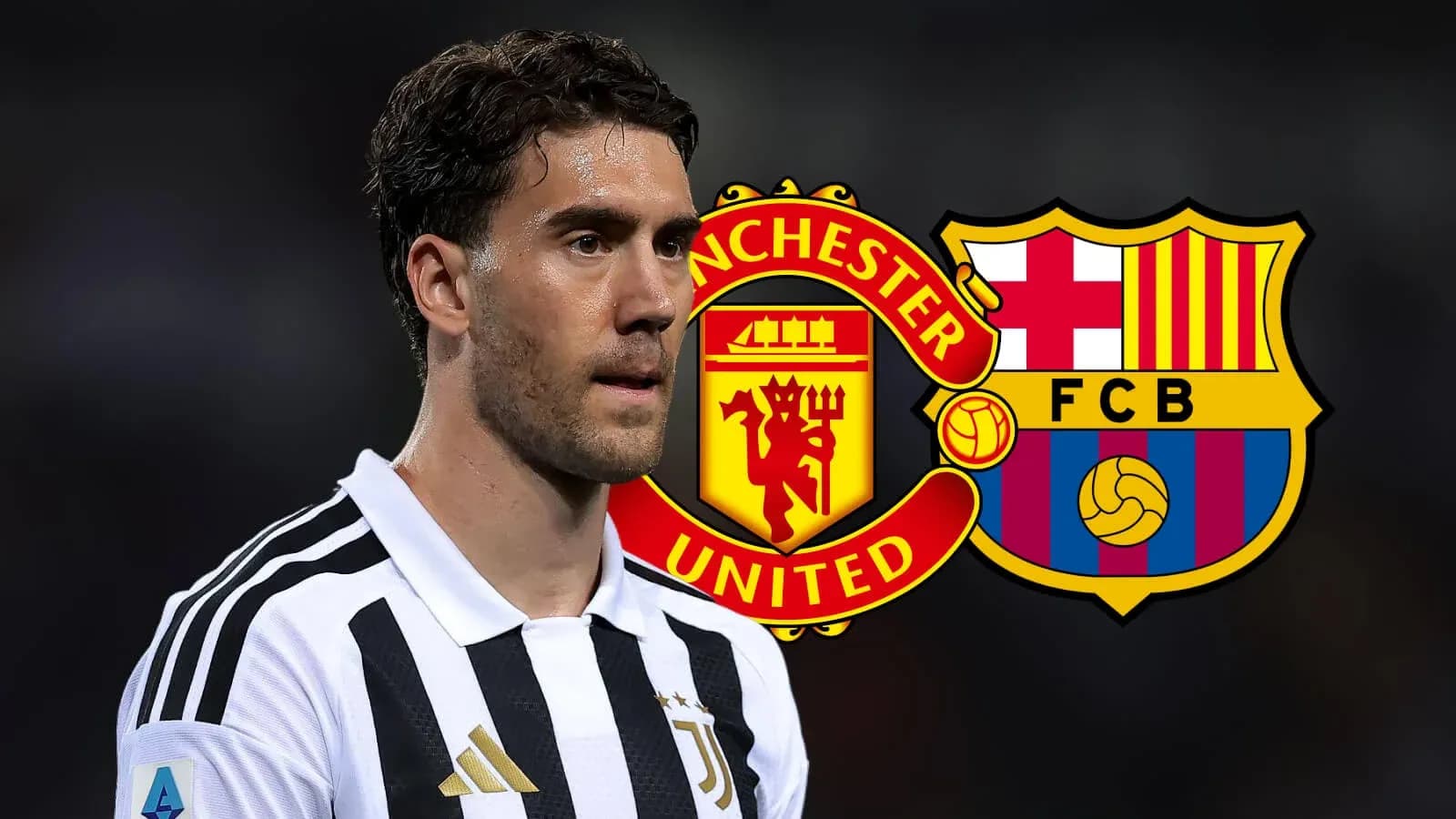
Dusan Vlahovic: A Striker in Limbo as Transfer Market Closes
By late July, the transfer market usually looks familiar. The best of the released players have already found new homes, agents are polishing the final details, and the stragglers are haggling over contracts in the shadows of pre-season friendlies.
This summer, though, the standout free agent is still standing on the outside, watching.
Dusan Vlahovic, 26 years old, eight full Serie A seasons behind him, no club.
A £30 million player by Transfermarkt’s valuation, and yet, as August looms, still unemployed.
A striker in limbo
Vlahovic has just closed a four-and-a-half-year chapter at Juventus, after three-and-a-half seasons at Fiorentina. That’s a serious body of work in one of Europe’s toughest leagues, and for six straight campaigns he has hit double figures in goals. On paper, this is exactly the profile that gets snapped up early.
Instead, he waits.
There are whispers, of course. Manchester United’s name has crept into the conversation. Barcelona’s, too. His camp has been mentioned in the same breath as both. But there are no agreements, no medicals booked, no “here we go” moments. Just a high-profile centre-forward sitting on the market, his future unresolved.
You can see why clubs are tempted. Vlahovic is a proper No. 9. Big frame, commanding presence, a striker who can finish with either foot, attack crosses with his head, and even step up over a dead ball. He can run with it, he can pin a centre-back, he can be the reference point.
You can also see why they hesitate. His link-up play is patchy. His pressing doesn’t always match modern expectations. The consistency that separates the very good from the elite has never fully settled into his game.
So what exactly are you buying?
The player he is, the player he was meant to be
The tension with Vlahovic lies in three versions of him: the player he is now, the player he once promised to become, and the player he might still turn into.
At Fiorentina, he looked like the next big thing. A storm of a forward, raw but ruthless, dragging defenders around and scoring enough to make Europe take notice. Arsenal circled. Juventus pounced, committing up to €80 million for a 22-year-old they believed would become their attacking centrepiece for a decade.
That leap never quite happened.
His best league return for Juventus in a full season was 18 goals in 2023–24. Last season, the total dropped to 10. Across his time in Turin, he averaged around 15 goals per season. Respectable numbers, solid output, but not the return Juventus thought they were buying for that fee and that role. They wanted a guaranteed 20-plus every year, the kind of striker you build a title charge around.
He hasn’t consistently been that.
This is the crux of his current problem. Vlahovic is clearly not a failure, but he has not become the world-class, untouchable No. 9 many forecasted. He sits in that awkward middle ground: better than most, short of the very top. There is still time for him to climb a rung, yet that clock ticks louder with every week he spends training alone.
And without a club, there is no platform to prove anyone wrong.
The wage problem
If there is one thing dragging this saga out, it is money.
Last season, Vlahovic was not only Juventus’ highest earner; he was the top-paid player in all of Serie A. Twenty-two players on lower wages outscored him. That is a brutal statistic for any sporting director to digest when they sit down with his representatives.
His salary reflects the star he was supposed to become. His output reflects the striker he currently is.
Top clubs notice that gap. When Vlahovic’s name came across Barcelona’s desk – a club openly in need of a central striker – the response was cautious. Tempting profile, big reputation, but questions that won’t go away.
The layer below the superclubs feels it, too. Manchester United, a giant in name but not in current standing, fit that bracket. Ambitious, desperate to improve, but wary of another expensive gamble who doesn’t quite shift the needle.
Even Juventus might have kept him if the numbers were different. According to Tuttosport, Vlahovic wanted €8 million a year, around £132,000 per week. For a player they no longer saw as central to their future, it was too steep.
Giorgio Chiellini, now a director and once Vlahovic’s teammate, summed it up bluntly: with those figures, he was unlikely to stay in Italy. The striker, Chiellini said, was right to seek a different type of salary elsewhere.
For Premier League clubs, those wages are not outrageous. They are the going rate for a starting striker with pedigree. The question is whether Vlahovic represents value at that level. Right now, the market’s silence suggests doubt.
Pride, compromise and a shrinking window
There is, on the surface, a simple solution: Vlahovic lowers his demands.
Reports indicate he is willing to do that, but not for everyone. He would accept less from a Barcelona than from a Besiktas, for example. That hierarchy makes sense from his perspective. Status matters. So does the stage on which you play.
From the clubs’ side, though, the calculation is harsher. If they trim their ambitions and take a “good but not great” striker, are they settling? Are they locking themselves into a compromise that blocks them from landing a genuinely elite forward down the line?
The irony is that the global shortage of top-level No. 9s should play in Vlahovic’s favour. There are only so many truly elite strikers on the planet, and even fewer who are available at any price. In theory, that should make a player of his level – proven, experienced, still young – extremely attractive, especially as the window edges towards deadline day and panic starts to set in.
As a free agent, he has one advantage: he can sign after the window shuts. Clubs can take their time. They can wait to see if other targets fall through. They can circle back.
But that works both ways. The longer he waits, the longer he goes without competitive football, without a pre-season, without the rhythm that strikers live on. For a player trying to convince the world he belongs near the top, drifting into September without a badge on his chest is a dangerous look.
Right now, that is exactly where he is heading.
A 26-year-old striker with eight Serie A seasons, a history of double figures, and a valuation that still screams “asset” is staring at the prospect of starting the new campaign without a club.
For someone once tipped to dominate Europe’s penalty areas, that is not just a twist in the story. It is a stark question: does Dusan Vlahovic still have the career his talent promised in his own hands, or has the market already given its verdict?





