Diomande: Real Madrid's New Vertical Threat
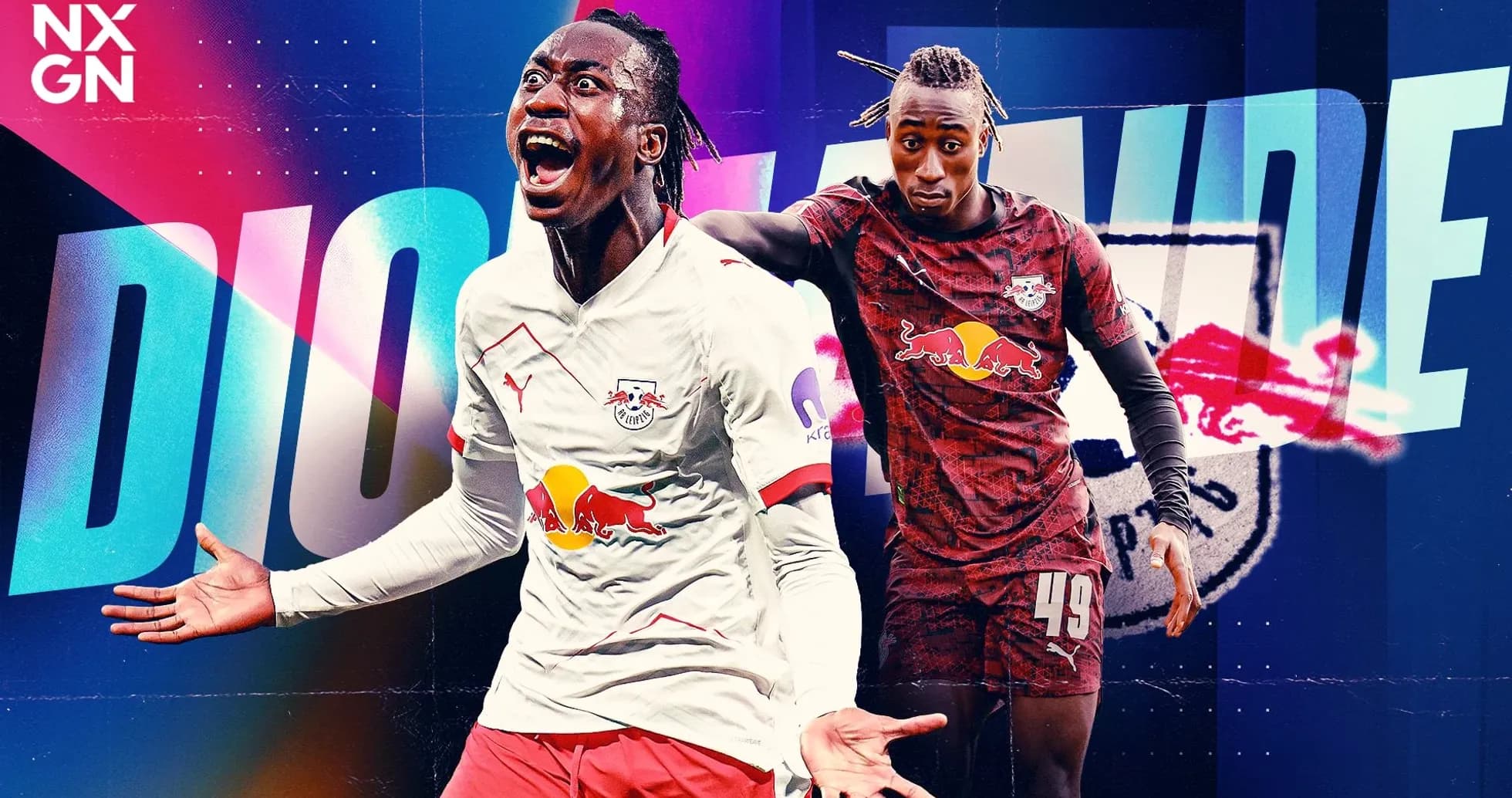
Diomande, the Vertical Bullet Madrid Want to Unleash
Real Madrid have chased wide players of every flavour over the last decade, but Diomande arrives cut from a different cloth. He is not Vinicius Júnior, not a winger who caresses the ball and knits play between the lines. His game is more brutal than that. More direct.
His defining trait? Vertical shock.
The Ivorian explodes rather than glides. He is sharp and ruthless in straight lines, blessed with a first step that rips defensive shapes apart. At the last World Cup he hit a top speed of 34.7 km/h – rapid by any standard, even if it still sits behind Kylian Mbappé’s searing 37.6 km/h. When he opens his stride, back lines instinctively drop five yards.
Speed alone doesn’t explain him. The numbers from his last Bundesliga season with Leipzig paint a winger who lives to attack his man. Diomande completed 118 successful dribbles from 213 attempts – almost double the tally of the league’s next-best dribbler, Michael Olise, who finished with 65 from 149. That is not a stylistic quirk. It is a game plan.
A Right-Sider Who Refuses to Stay in One Lane
Diomande is naturally a right-sided player, and Leipzig used him that way. He logged 1,591 minutes on the right wing last season, compared with just 478 on the left. Yet that imbalance in minutes only underlines his biggest advantage over a specialist like Vinicius: versatility. He is comfortable on both flanks, and the way he interprets each side is very different.
On the right, he behaves like a classic touchline winger. He receives the ball to feet, wide and high, almost glued to the chalk. The first instinct is not chaos but calculation. He takes his full-back on, pulls him into a duel, lifts his head and scans. If the picture is not clear, he resets and asks for the ball again.
With his natural right foot, he prefers to stretch the pitch, attack the outside lane, hit the byline and then pull the ball back. He can beat defenders from a standing start or while already at pace, but he does it less with tricks than with raw power and sudden changes of speed.
His diagonal movements infield from the right lack the surgical precision of a naturally left-footed player such as Olise. That is logical. His left foot is still more tool than weapon, even if it produced several goals last season when he shifted the ball onto it at the last moment on the edge of the area. He tends to lean on that weaker side in long, driving carries, using the stride rather than the strike to hurt opponents.
From that tension comes his most fearsome pattern. When rivals block the outside lane and sit deep, Diomande has found an “escape route”: he drags markers across the pitch, then whips the ball into the front zone or towards the weak side with a cross. He bends defences out of shape almost by force.
The data supports the eye test. On the right wing he produces more of everything in the final third. Per 90 minutes he attempts more dribbles (4.41 versus 3.23 on the left), completes more crosses (0.91 versus 0.67) and plays more passes into the box (2.21 versus 1.48). His shot volume is higher (1.7 versus 1.48) and so are his expected goals (0.21 versus 0.16). The trade-off is clear: he also loses possession more often (2.21 versus 1.48).
The right flank turns him into a machine of repeated thrusts, forever asking the same uncomfortable question of his full-back.
On the Left, the Chaos Creator
Shift him to the left and the picture changes. The minutes drop, but the boldness rises.
Diomande still starts wide, but he doesn’t live on the touchline in the same way. He touches the ball less often in those starting zones, yet he pops up more where it really hurts: inside the box. On the left, he records 7.8 touches in the opponent’s area per 90 minutes, compared with 6.51 on the right.
Out there, he stops worrying about bulldozing down the flank. He no longer leans so heavily on physical duels or straight-line sprints on the outside. His right foot becomes a weapon to cut infield, to shoot, to whip crosses from inside channels. That single change alters his personality. He plays more directly, more aggressively, and his confidence in his dribbling is obvious.
Two numbers jump off the page. Operating from the left, his expected goals spike to 1.17 from 0.84, and his expected assists climb to 0.43 from 0.21. The volume of actions is lower than on the right, but the weight of them is heavier.
Put simply: the right wing turns him into a relentless chance generator, constantly beating men, crossing and surging. The left wing turns him into an agent of chaos, a player who wants to decide games rather than just disturb them.
One pattern keeps reappearing despite the reduced minutes. Diomande is ruthless at attacking empty spaces away from the ball. He often receives in tight pockets with his back to goal, where defenders think they have him pinned. He answers with quick wall passes, sharp one-twos and explosive runs into the gap he has just created. Give him space to run into and he becomes almost impossible to contain.
Relentless Without the Ball
His work does not stop when possession is lost. Whichever flank he occupies, his defensive output barely shifts. Energy defines him. So does his instinct the moment the ball breaks loose.
Among Bundesliga forwards with at least 1,000 minutes played, Diomande led the league in ball recoveries with 148. He ranked second for pass interceptions with 16 and fourth for successful tackles with 19. Those are not numbers of a luxury winger waiting for service. They belong to a front-line presser who relishes the dirty work.
At set pieces he tends to hold a reactive position, staying switched on for the second ball rather than contesting the first. Once possession flips, he explodes into life.
On the counter he often moves inside, almost as a central runner rather than a pure winger. That is where his dribbling and speed become lethal, especially when he attacks the space behind the defence from an off-the-ball starting point. One stride, two, and he is gone.
It is no coincidence that his profile stirs memories at the Bernabéu. Under José Mourinho, Real Madrid built a devastating transition machine, with Cristiano Ronaldo and Ángel Di María ripping into open grass on either side. Diomande has the tools to attack those same corridors, to turn defensive clearances into goal chances in seconds.
The only real question for Madrid now is not whether he fits their idea of a wide forward. The numbers, and the footage, answer that.
It is simpler, and more tantalising: will he carve teams open from the right, or will he be unleashed on the left, where he seems to enjoy chaos the most?