
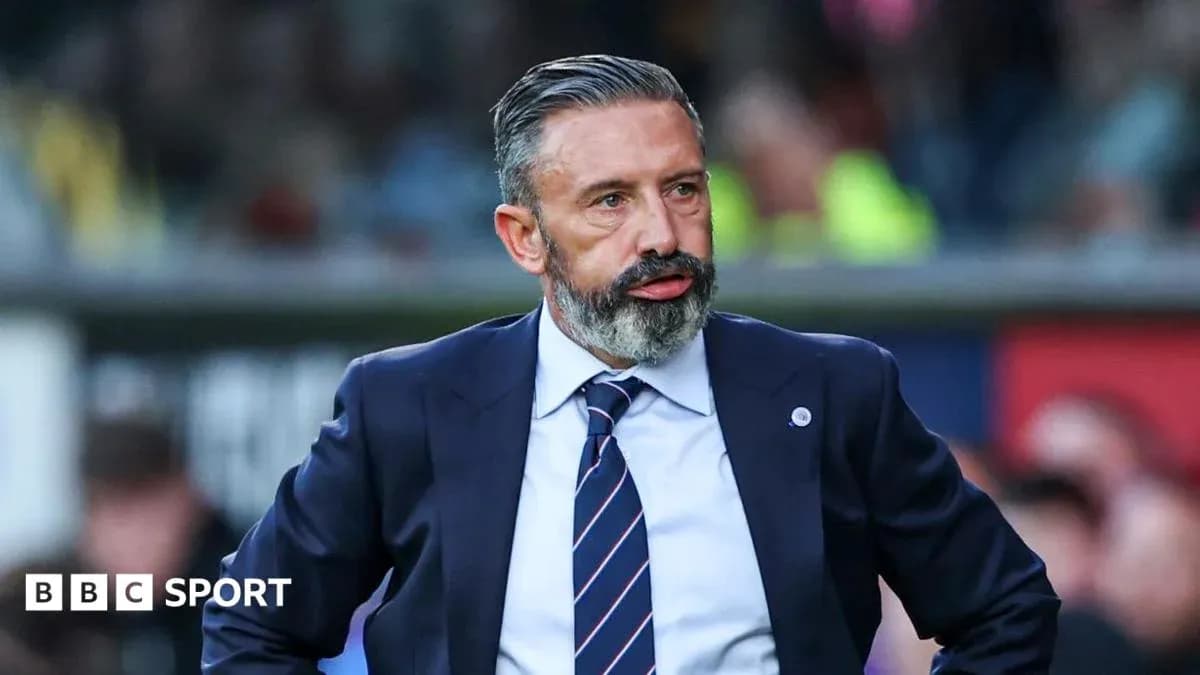
Derek McInnes' Rangers Start: A Cautious Draw at Dundee United
Derek McInnes’ first step as Rangers manager was never going to define his reign. But it did reveal just how far his new team has to travel.
A 1-1 draw at Dundee United is not a disaster on paper. On the pitch, it felt like a warning.
Same Scoreline, Very Different Era
A year ago, an opening-day draw at Motherwell sparked fury from Russell Martin and set the tone for a troubled campaign. This time, under the Friday night lights at Tannadice, the reaction was cooler, more measured.
McInnes, back in the Glasgow spotlight after spells at Aberdeen, Kilmarnock and Hearts, cut a controlled figure. No public dressing down. No melodrama. Just a blunt assessment of a side still learning his demands.
They needed that composure. Rangers trailed at the break to a first-half strike from Lachlan Rose, punished for a flat, disjointed opening in which Dundee United’s energy and cohesion outshone the visitors’ new-look XI.
The response came after the interval. Thelo Aasgaard, comfortably Rangers’ sharpest attacking outlet, dragged them level and briefly tilted the game in their favour. Yet the surge never became a storm. The pressure eased when it should have intensified, and Rangers almost paid for it when Jesse Randall, clean through late on, lifted a tame finish straight at debutant goalkeeper Ivor Pandur.
McInnes did not sugar-coat it: a point gained in the table, two dropped in reality.
A Manager Preaches Patience
“It’s one game,” he reminded, speaking to Sky Sports after the final whistle. His message was clear: judge this project when it has actually taken shape, not when the paint is still drying.
“We’ve dropped a couple of points, but we weren’t good enough to get all three,” he admitted, before stressing the need for trust in the process and a cleaner execution of the basics. The rhetoric was familiar, but the delivery was calm, almost methodical.
There is, undeniably, a sense of reset around Rangers. McInnes has walked into a squad being rebuilt on the fly and asked to restore authority while the foundations are still being laid.
Former Rangers striker Steven Thompson echoed that sense of perspective. Speaking on BBC Radio Scotland, he pointed to the venue, the timing and the context.
It was not the start Rangers wanted. It was also not the night to reach for the panic button.
New Faces, Old Problems
If this was a first glimpse of McInnes’ Rangers, it came with a heavy dose of reality.
Pandur started in goal. Ben Godfrey anchored the defence. Cammy Devlin and Lawrence Shankland, both familiar to the manager from Hearts, were thrown straight in. This was not a cautious easing-in of new recruits; it was a full-blooded reshaping from the first whistle.
From the bench, Dan Neil and Ross McCrorie added to the sense of churn. This is a squad in motion, and McInnes made no attempt to hide the fact that more arrivals are planned in the coming weeks.
Yet for all the fresh faces, some of the old flaws resurfaced. The structure without the ball wobbled. The distances between lines grew. Dundee United found too much space in areas where a McInnes side is usually ruthless.
Andy Halliday, another former Rangers man, did not miss what he saw as a tactical red flag. Speaking on Sportsound, he zeroed in on the lack of compactness, the cardinal sin for a team that started with defensive numbers but never quite looked defensively secure.
His verdict was blunt: aside from Aasgaard, the standout individual displays belonged to Dundee United.
Rangers, he said, remain a work in progress. The phrase felt generous and damning all at once.
Defensive Concerns, Wide-Open Question
The concerns are not just tactical. They are physical and administrative too.
Godfrey limped off with a hamstring issue, an early and unwelcome complication for a player signed to bring authority and athleticism to the back line. At the same time, Rangers still do not know if new signing Olwethu Makhanya will receive his visa in time for Thursday’s Europa League qualifier away to Jagiellonia Bialystok.
McInnes wants defensive reinforcements. He may have no choice but to accelerate that search.
Yet his sharpest concern lies further up the pitch. Rangers lacked width, pace and one-on-one threat in the very areas he sees as crucial.
Djeidi Gassama started on the left but lasted only 45 minutes before being withdrawn at half-time. By the end, Rangers had Mohamed Diomande and Aasgaard operating narrow, searching for pockets rather than stretching the game.
McInnes did not hide his frustration. As the match opened up, the spaces were there to attack. Rangers simply did not have the players to exploit them.
He spelled it out: he wants a winger who can go past defenders, force them backwards, and change the rhythm of a game. Without that, his forwards remain dependent on service that never quite arrived at Tannadice.
A Long Road, Starting With a Stumble
So what did this night really tell us?
It showed a manager who will not be spooked by one result, but who already has a clear, unforgiving checklist of what must improve. It highlighted a squad still being assembled, still uncertain of its shape, still short of the cutting edge and control demanded by the badge.
It also underlined the stakes. Rangers travel to Poland this week with questions over their defence, a glaring need for width, and a manager publicly calling for more help in the market.
One game, as McInnes said, is not a season. But in a club that measures campaigns in trophies and turning points, how long will patience last if nights like this become a pattern rather than a prologue?





