The Decline of Exclusivity in Football Journalism
The word “exclusive” used to mean something in football journalism. A scoop. A secret. A story someone had to dig for.
Today, it apparently means listening to a publicly available podcast and typing out what you hear.
The ‘exclusive’ at the tip
The Sun splashed on Friday with what it dressed up as a major story:
“Man Utd icon Nicky Butt BANNED from local tip after ‘raging’ row with staff”
Capital letters. “Icon”. “Raging”. “BANNED”. All the usual siren words, all pointing to a tale of high drama and simmering tension.
The reality? A middle‑aged man recounting a mundane run‑in at a recycling centre.
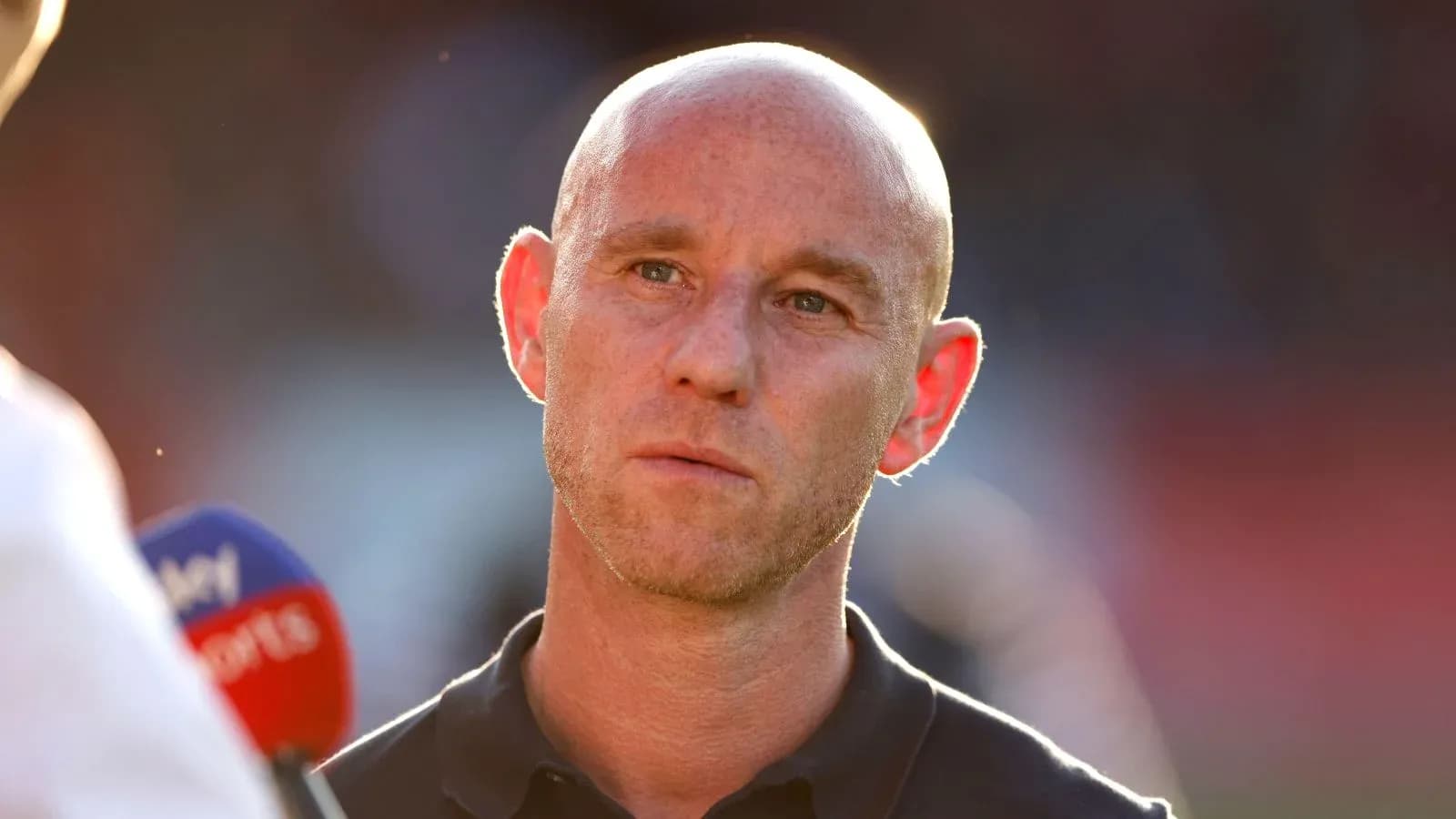
Nicky Butt told the story on The Good, The Bad & The Football podcast, which he co-hosts with Paul Scholes and Paddy McGuinness. Not in a hushed, off‑the‑record chat. Not in a private WhatsApp. On a show he does every week.
He described turning up at what is believed to be the Woodhouse Lane Recycling Centre in Altrincham, only to be accused by an attendant of trying to sneak items in because his car windows were blacked out.
“He said to me, ‘Your windows are blacked out because you’re sneaking stuff into it, into the tip’. And I went, ‘No, it’s standard, mate’,” Butt recalled.
From there, the story ambles along. Butt decides he’s going in anyway. He drives up the ramp. He spots the attendant trying to chase him, walkie‑talkie in hand. Butt empties the bags at the top, heads back down the hill, and the attendant “goes mad” at him.
“Anyway, I’m banned from the tip,” Butt concluded.
It’s the kind of anecdote you might tolerate from a mate over a pint, then instantly forget. The Sun, though, wrapped it in an EXCLUSIVE banner, as if they had uncovered a state secret rather than pressed play on a podcast app.
There is no sign of further reporting. No council contacted to confirm whether Butt is actually banned. No witness, no follow‑up, no attempt to verify anything beyond Butt’s own telling of the story. The paper did, however, note that Butt had been “contacted for comment” on the comments he had already made in public.
Tipgate, apparently, is a thing now.
Liverpool, reunions and a headline sleight of hand
While The Sun was busy elevating recycling‑centre chat to headline status, the Mirror took a different route: the old transfer‑window misdirection.
Their hook:
“Darwin Nunez in line for unexpected Liverpool reunion after transfer twist”
On first glance, the implication is obvious. Darwin Núñez. Liverpool. Reunion. It hints at something dramatic: a return to Anfield, or at the very least a move that would bring him back to the Premier League to face his former club.
It’s neither.
Buried in the piece is the actual story: Mohamed Salah could be joined at Trabzonspor by Núñez, with the Turkish club targeting Liverpool’s current star and one of his former team‑mates.
The “Liverpool reunion” isn’t about Núñez reuniting with Liverpool. It’s about Salah potentially reuniting with a former Liverpool colleague in Turkey. A Salah reunion, in other words, repackaged as a Núñez headline to drag a few more eyeballs down the page.
It’s a neat trick. It’s also the kind of semantic gymnastics that turns transfer coverage into white noise.
Arsenal, one pre-season defeat and five “lessons”
If there is one thing the modern football news cycle cannot abide, it is a quiet day. Arsenal’s pre-season defeat to Real Betis has been drafted in to fill that gap.
On Thursday, The Sun cranked up the alarm over a single friendly. There were hints of long‑term damage, suggestions that the loss might ripple all the way into the 2026/27 Premier League title race. One bad afternoon, stretched across a season that hasn’t even started.
Twenty‑four hours later, the same game was back on the slab.
“Five things we learned from Arsenal’s woeful loss to Real Betis with Kepa displaced as No2 and Tzolis’ lethal asset”
Five things. From a pre-season match. From a game where players build fitness, managers experiment, and line‑ups bear only a passing resemblance to what we will see when the real points are on the line.
The tone is familiar: “woeful loss”, “sky is falling”, doom flickering at the edges of a July kick‑about. The piece sits among what has become a cluster of stories pushing the same theme – that Arsenal’s pre-season stutter is somehow an omen of catastrophe.
Tucked away in there is a line that almost undercuts the whole production:
“A pre-season defeat is never the end of the world…”
If that had been the starting point, the coverage might have breathed. Instead, it reads like a disclaimer attached to a panic button.
Polls, outrage and the next manufactured headline
While Arsenal’s friendly is being mined for crisis content, the Daily Express is busy priming its own machine.
The paper has long relied on a familiar formula: pose a provocative poll question to a notoriously combustible readership, then report the responses as if they represent a meaningful, independent development in the football landscape.
This week’s offering on the football homepage:
“Should the World Cup be stripped from Spain, Portugal and Morocco after migrant crisis?”
The pattern is easy to map. Ask a loaded question. Wait for the predictable response. Then publish a story dressed as news, with a headline along the lines of:
“FIFA told Spain, Portugal and Morocco must be stripped of 2030 World Cup”
The “told” usually translates to “a portion of our readers clicked a button on a website poll”. It is a closed loop of provocation and amplification, built not on reporting but on harvesting outrage.
When noise drowns out the game
None of this is new. The transfer window has always attracted exaggeration. Pre-season has always tempted overreaction. But the volume is rising.
An anecdote about a trip to the tip becomes an EXCLUSIVE. A routine piece of transfer speculation contorts a “Salah reunion” into a “Núñez reunion” for the sake of a headline. One Arsenal friendly spawns a rolling series of “lessons” and warnings. A poll becomes a stick to swing at a World Cup host.
The game itself has never been more analysed, more televised, more accessible. The question is whether the coverage that surrounds it can keep pace in substance, not just in noise.
Because if a banned trip to a recycling centre can be framed as the second biggest story in football on a Friday morning, what happens when the season actually starts?